A SHORT HISTORY OF BROOKEHILL – PART II. TENANTS AND OWNERS

1

The head landlord in the Corporation part of Killybegs, the townland in 1900 was Horatio Granville Murray Stewart, and he leased the Brookehill lands to James Stuart Brooke on 13th February of that year, for a term of 999 years.

The first tenant of Brookehill, following the departure of the Brookes was John O’Gallagher, N.T., Meentinadea N.S., and family, who, on his retirement in 1914, lodged first in Drumbeagh House, and later took up residence in Brookehill.  Their daughter, Veronica married William Griffin, a Glasgow shopkeeper, in 1916.

When James Stuart Brooke left Killybegs in 1919 he sold Brookehill to Mr Griffin in November of that year.  Mr Griffin was dealing with a firm distillers, Train & McIntyre, of Glasgow, and had mortgaged his property to them in 1926 as security.  As a result of some business dealings in 1934, the whole premises were assigned to Train and McIntyre for the residue of the 999 years.

Later in 1934, Allan Rogers, owner of the Bay View Hotel, bought Brookehill from the distillers for £430, but lived there only occasionally. Allan was father of Gwen Quaid, Galway, and grandfather of Siobhan Gordon Clarke, Karen Gordon Gallagher and Natasha Gustafsson Amiarouche.

On 5th September 1938 Mr Rogers sold the premises to Mick Kelly, his father-in-law, who had returned from Glenties where he had been Station Master on the Railway.  Mick Kelly soon moved down to the old Kelly home on Upper Main Street, (later Mrs Kathleen Thornton’s drapery shop) and Brookehill became vacant.

2

View from the front lawn – not dated.
3

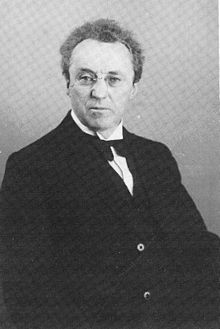
Vincent O’Brien

In the summer of 1939, Dr Vincent O’Brien, the distinguished musician, who taught John McCormack and others, spent a holiday period in Brookehill.

The next tenants were the newly married Dr Michael O’Boyle and his wife Mary Rogers, in 1942.  Mary was a cousin of Allan Rogers.

Thomas Charles Gilmore came to the Ulster Bank, Killybegs,  in 1911 as cashier and found lodgings with the widow Mary Nixon on Upper Main Street.  Mary was a daughter of retired Coastguard carpenter, Grant Dudgeon whose family consisted of five girls and a boy. In 1867 Mary had married Thomas Nixon, a police constable based in Glen, but he died within three years. With her two unmarried sisters, Kate and Sarah, Mary ran a drapery shop to make ends meet. Sarah died in 1908, and Kate in 1909, and so Mary was left alone. The house in which they lived is located immediately to the east of Mrs B’s Coffee House, and has been vacant for some years. Several tenants have occupied this premises, which was the former residence and shop of John Carr, grandfather of Eileen Kennedy, Conlin Road, Gerard Cunningham, Church Road, and Joey Cunningham, Kilcar.  John, who came from Firbregas, Killybegs, married, in 1902, Ellen McGuinness of Carricknamohil, and, when walking to St Mary’s church for the marriage ceremony, observed the massive blaze which demolished Michael Gillespie’s grocery and hardware store.  This is the building in which Mrs B’s Coffee House is now located. (product placement).

Return now to Thomas Charles Gilmore. He married Lucinda Wilhelmina Ruth Hamilton of Carricknagore, Killybegs.  Lucy, as she had to be called, was a daughter of William Hamilton and Charlotte Wilhelmina Caroline Sophia Barrett, daughter of William Barrett, Crown solicitor, and his wife Mary Sophia De la Tour d’Auvergne Folvil, daughter of Captain Stephen Folvil, R.N., of Carricknagore House. It is not known when Thomas C. Gilmore and Lucy moved to Brookehill, but she died there in May 1945, and her husband died in Paisley in 1953.  They are both buried in St John’s graveyard.

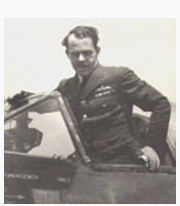
Group Captain Nicolas Tindal
TinPic

As the career details of James Stuart Brooke are not readily available, it must be conceded that Captain Nicolas Tindal was the most distinguished tenant of Brookehill.  Captain Tindal, the father of Charles of Bruckless, had a colourful career as a bomber pilot in the RAF, being shot down over France during World War II, and imprisoned by the Germans from 1940 until 1945.  This prison, Stalag Luft III, was located in what is now Poland, and was used as a place of detention for British prisoners of war.  The British prisoners had dug a series of underground tunnels to escape the prison, but Tindal gave his place to a Polish internee whose wife was pregnant, and living in England.  Tindal was the mastermind who made up fake official papers for the escapees, so that, if caught on the outside, they could ‘prove’ they were ordinary citizens.  The 1963 film The Great Escape, was about this breakout, and starred some of the Magnificent Seven actors, including Charles Bronson, Steve McQueen, and James Coburn.

Captain Tindal retired to Donegal in 1949, taking up a temporary tenancy in Brookehill in the early part of that year.  Ballyloughan House became available by the departure of Major Sinclair, and was purchased by the Captain and his wife, Winifred, and they moved there in April 1949.  They immediately began farming operations, involving a herd of pedigree Ayrshire cattle, and reviving the orchard.  An acre of strawberries was planted, certainly a pioneering effort in this area.  In 1950 Captain had 60 tons of apples ready for sale, but the Department of Agriculture had lifted a ban on the importation of foreign apples, so that the price in Ireland was so depressed that the Ballyloughan apples were difficult to sell.  The Captain became a respected and experienced livestock farmer, and was in demand as a judge at the Glen and other Agricultural Shows.   

The Tindals are well remembered in Killybegs by those of a certain age, whose attendance at church was enhanced by the sight of this elegant family proceeding up the centre aisle of St Mary’s Church, Killybegs, to take up a whole seat on the Gospel side.

The McDevitts

Paddy and Anna McDevitt bought the house as a residence in 1957, while he was the proprietor of the Pier Bar.  The next owner was local man, Seamus Tully, CEO, Killybegs Fishing Enterprises, etc., etc.  Mr Tully later passed it on to Jackie O’Neill, proprietor of Harbour Lights Nursing Home.  Thus ended the first historic period of Brookehill, and it only remains for me to acknowledge the help of Mr Seamus Tully in compiling this short account of one of the most interesting buildings in Killybegs.
A SHORT HISTORY OF BROOKEHILL – PART I.

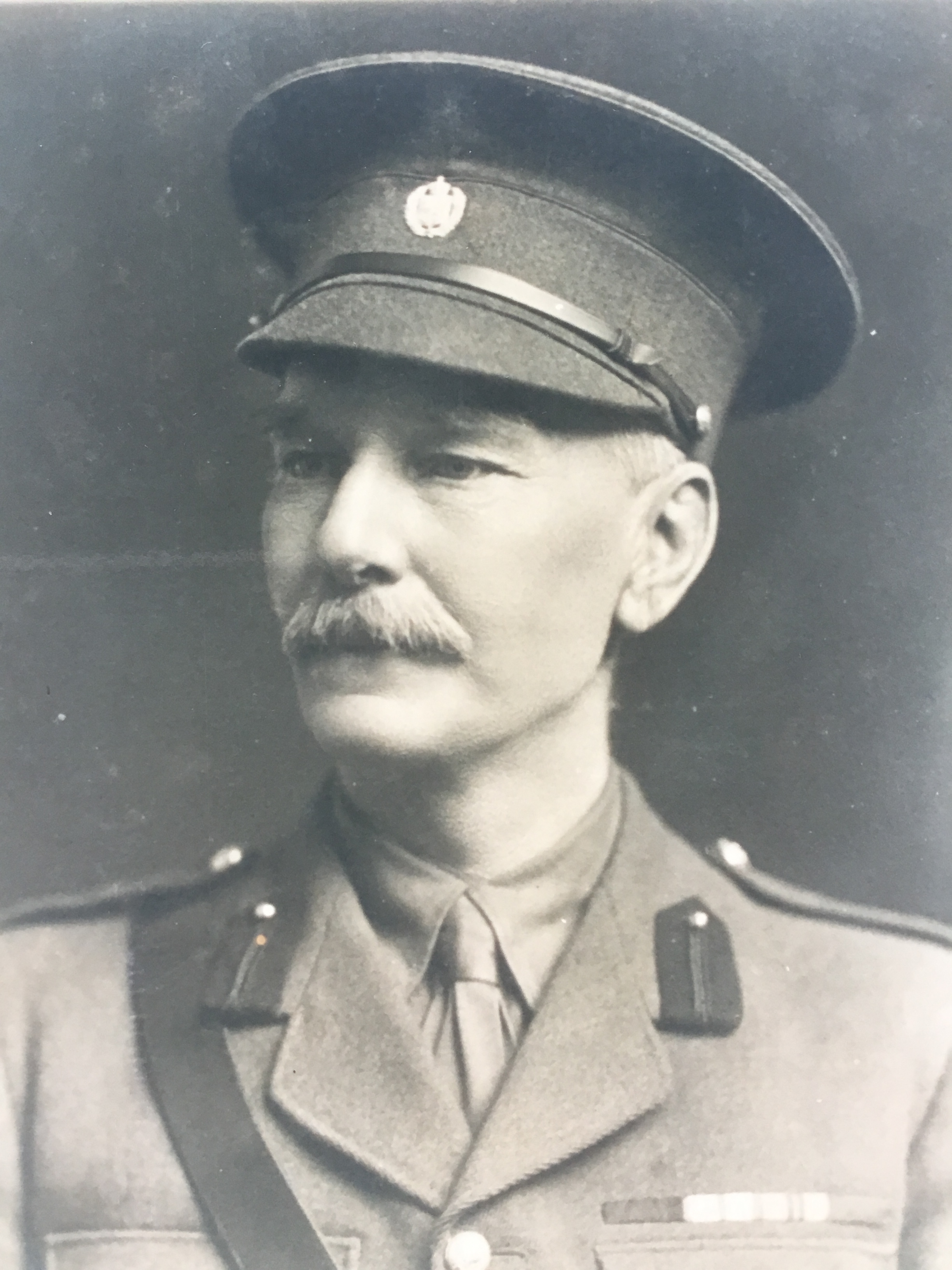
Brookehill House was built for James Stuart Brooke, a surgeon working in India, who planned to retire to Killybegs.

JSB

James Stuart Brooke

As a result of recent developments, one of my grandsons mentioned Brookehill House the other day, and I began to bore him to death with tales of how I, as a child, used to explore Brookehill with my buddies. It was a bit of an adventure to explore those woods, but we never interfered with the house, which was usually vacant.  Sergeant Mark Thornton, a great believer in preventing ‘crime’, used to tail us at a discreet distance, but he never got enough ‘evidence’ to haul any of us in. My grandson used to ramble round that area as well, so I think generations of Killybegs kids did that.  How many reading this can recall rambling through those woods long ago?

Now to the question of the date of building of the house. In fact Brookehill is the only ‘big house’ in this area that can be dated precisely.   In June 1899 building materials started arriving at Killybegs Railway Station for it.  We know this because the building foreman complained to the Railway Company which was charging freight of £2 per wagon load of 2,000 bricks, and they would need from 25 to 30 wagons of them. These were red bricks, manufactured in a location in the Lifford area, and used for the surrounds of windows, doors, and for the chimneys, etc.  Again, as to the date of building, Elizabeth Leschallas, a granddaughter of James Stuart Brooke, told me some years ago that the house was completed in 1902.

The foreman on the site was John Mulreany, who was a grand-uncle of Angela Mulreany Brady, now living in Sligo.  In recognition of his assistance Brooke presented him with a gold pocket watch, which I had the pleasure of examining a few years ago, courtesy of Chrisanna Lynch, Ardara.  I was allowed to photograph the watch, but the image is not great, as the phones then were primitive, and at that time an iPad was something you put over a sore eye.

Recent activity at Brookehill has generated a lot of interest locally, so I cobbled together this two-part background information on the place, and the people who owned it and those who rented it.

There were three branches of the Brooke family in Killybegs, from 1866 until about 1920.  Their residences were the White House, Brookehill, and Carnaween. The Brookehill branch is the subject of this blog.  The family claim descent from Sir Basil Brooke, who was granted Donegal Castle at the Plantation of Ulster.  It is not necessary to go into all that, and besides my readers will have to be introduced gently to the British Ascendancy period of Killybegs history.  You may have noticed down the years that the type of local history being promoted in Killybegs has been almost exclusively concerned with the Catholic/Nationalist culture of our district.  I introduced what was probably the first ‘ascendancy’ history in my book, Bygones, many years ago, but that part of our experience has unfortunately not been followed up since, what with the emphasis on the old McSwyne church and St Catherine’s Well.  So – get ready for a journey deep into British Killybegs.  I will try and make it as painless as possible but those of a strong Nationalist/Gaelic sensibility look away now.

James Stuart Brooke registered his degrees from the Royal College of Surgeons in Ireland, on 11th March 1881, and ‘signed up with the East Indian Railway Company five days later.  His first contract was for four years from 1881, at a salary of 400 Rupees per annum (haven’t a clue). His title was chief medical officer and medical Storekeeper to the Company, and he was also a surgeon Lieutenant-colonel in the East India Royal Volunteer Rifles.  It is thought that he married his wife, Caroline Foster Bradley either before he went to India, or shortly afterwards.

CB

Caroline Brooke

Although the house was finished in 1902, the Brookes did not arrive in Killybegs until 1912.  In the meantime James’s brother, Arthur, Agent of the Murray estate, who lived in the White House, Killybegs, had provided the site, and supervised the building arrangements for the new house.  When his brother was delayed in India, for whatever reason, Arthur advertised the new house for letting (in the Ascendancy papers only – sending out a strong signal that only a certain class would be considered) in April 1904:

ADV

One of the first domestic staff in Brookehill was Mary Anne Kelly, nee McSorley, from Park in Co Derry.  She married Barney Kelly in January 1908 and was employed in Brookehill at a time  not precisely known. At his time of marriage, Barney, 28, was running his elderly mother’s drapery shop on Upper Main Street in Killybegs, These premises are now vacant, and in the ownership of Pat and Celia McGee, M.P.S.I.   It will be well known to those of a certain age as ‘Mrs Thornton’s’, where Kathleen Thornton ran a very customer-friendly drapery, supplying all household linens, and the ladies with their necessaries. She had the large picture window installed, and the black marble surround was pure New York style.There is a period up until 1912 when no records have so far been found of any occupants of Brookehill, but this information is sure to turn up.

At this time Barney Kelly’s mother, Anne, who was a widow, also owned the premises which stood on the site of the present Anvil House. It was a dwelling house, with the entire left side interior configured as the Petty Sessions Court house for the Killybegs district.

In 1908 Anne Kelly gave notice to the Co. Council to quit the Court house premises in order to accommodate Barney and his new wife.  Mary Ann McSorley/Kelly died in the Court House, Barney’s residence, in 1941, being nursed in her last years by this writer’s mother.  Hence the strong relationship with our family and the Kellys.  As you will know, Barney was the late Anne Jane Kelly’s father.  The premises on Upper Main Street, mentioned above, (Kathleen Thornton’s shop) was where Josephine Kelly Rogers, proprietor of the old Bay View Hotel, mother of Gwen Rogers Quaid, (Galway), and grandmother of Siobhan Gordon Clarke, was born. It was originally the home of the Kelly family who had come from Ballyshannon, and were quite prominent people in Killybegs.

To put it mildly, the Brookes of Brookehill kept a low profile, and reports of them appearing in the dock in the Petty Sessions Court House are just not to be found.  The three main ‘crimes’ committed by the locals in Killybegs then were trespass of cattle, allowing a pig to wander on the public road, and being d & d on the public street. The Brookes were never charged with any of these.  Instead, it is possible to find reports of more genteel activities by them, such as getting married to people strictly of their own class.  The usual wholesome names such as ‘Paddy’ and ‘Bridie’ will seldom be found in connection with the Brookes.

The first of that family to be married out of Brookehill, was a daughter, Grace Ledlie Brooke, who married, in 1915, Pierce Grove-White, who was Captain, Duke of Cambridge’s Own Middlesex Regiment, Doneraile, Co. Cork.

Next up was Kathleen Carrie, her sister, who wed, in 1912, Captain Cadwallader Edwards Palmer, of the Indian Medical Service, she being 28, and he 31.  These marriages took place in St John’s church, with the receptions being held in the bride’s house.  As far as Killybegs was concerned, the ceremonies and receptions were high society affairs, and remote from the day to day humdrum life of the village.   The senior Brookes seem to have departed Brookehill in about 1919, and the house was then occupied by the daughter, Grace and her husband Pierce Grove, who may have used it as a holiday home.   A female Grove presided at the organ in St John’s church during a Harvest Thanksgiving service in 1913.

Adelaide Grove, a resident of Brookehill, married, in 1918, Claudius Willoughby Chaloner, of the Royal Irish Inniskilling Fusiliers.

From Independence time Brookehill seems to have been vacant, and changed hands a few times, and was leased out to a variety of tenants.

Next up will be the later owners and some of the temporary occupiers.