Part One: The Life and Times of James Hegarty

This blog was prompted by Maeve McGowan’s photograph of the seven women pictured outside of ‘the Plant’ in Killybegs, published on FB recently. There are always stories behind old photographs, and it would add to our knowledge of people and places if these stories could be brought out. As regards Maeve’s photo, only Kathleen Curran spotted the two who were ‘unknown’- Anna Boyle, Cornacahan, and Cassie Cunningham. Cassie is in the centre at the back. The other five women had long and eventful lives, and they are no doubt well remembered in our locality. This is also an opportunity to offer good wishes to Maura Melly, in front row, on the right, in the photo.
Cassie was a native of Kilcar, and became the wife of Tommy Cunningham and reared her family on Spout Street, Killybegs. Tommy was one of the leading skippers in Killybegs in the early years up until the post war period. Cassie’s father was James Hegarty, known locally as Jimi Phat Ban, a fisherman and a native of Derrylahan, Kilcar, on the east side of the Teelin estuary. This part of the blog deals with James.
Teelin was chosen as a new fishing ‘station’ by the Congested Districts Board in 1897, but that is only half the story. This blog aims to put the record straight, and highlight the part played by Kilcar in that project.
Main Port in North West
At the end of the 19th century the CDB made Teelin the main fishing port in the North West, and this was due largely to lobbying by a local committee. Teelin already had a fine concrete pier, where the CDB steamer, Granuaile, could go alongside. The Towny estuary had a small stone pier but there was no pier at Cladnageeragh creek at the beginning of this period.
Men on both sides of the estuary had a long tradition of trading across to Sligo in sailing Smacks.
The CDB set up a whole new fishing industry in Teelin – new boats and gear; fishing instructors; fish processing (curing); and barrel making.

When the story of Teelin comes to be written, the name Kilcar must also be heard as being part of that remarkable project. The Kilcar townlands of Derrylahan, Curris and Kilbeg supplied numerous crews for the new CDB boats at that time. It was a peculiar feature of the whole arrangement that none of the Teelin fishermen fished on the Kilcar boats, and none of the Kilcar men crossed over to Teelin.
It was from this side that emerged the best skipper in the North West during the first quarter of the 20th century – James Hegarty. James skippered many sail and powered boats, including some motor boats of a size that would not be seen in Killybegs until the 1960s. He went as far as purchasing, along with a partner, a 61ft motor boat in 1915.
Although the first few of the new ‘large’ CDB Zulu boats went to Teelin, one of the early boats allocated to that area went to James Hegarty and his crew from Derrylahan. This vessel was, like the other boats, a sailing vessel, about 40 feet overall length, and was named St Peter. The crewmen were: Patrick Sweeney and John Gillespie, Curris; John McBrearty and John Murray, Derrylahan, and John Boyle, Kilbeg.
The St Catherine
Hegarty made a success of the St Peter, and went on to take over the newly built St Catherine in 1901. At 43 feet, the St Catherine was the fifth sea-going boat to be built in the Killybegs Boatyard. James and his crew took the St Catherine to the summer herring fishing at Downings in 1901, along with the Teelin boats St McBreccan and St Carthach. The St Catherine grossed £210 from mid-September to the end of November, as compared with the St McBreccan (£263), and the St Carthach (£73). James’s daughter, Cassie, was born in 1905, and it is possible that he named her after his boat, and the Saint herself? By 1906 James had paid off his boat and presumably continued fishing with the same crew. Local folklore maintains that he spent some time in ‘the mining regions of America’ during his early years, and perhaps it was at this time he emigrated, He doesn’t appear again until 1913 when he skippered the new Zulu, Pimpernel, and later an older boat, the St Rian. Owen McCloskey of Derrylahan was one of this crew.
Into Motor Boats
James disappears from the record until 1927, when he took on another vessel. This was the 60 ft motor boat, Oliver Plunkett which had been repaired at the Meevagh Boatyard. James skippered this vessel out of Teelin and Killybegs during the 1928-29 herring fishery, and was also mentioned as skipper of the Twilight Star, a very big motor boat at 71 feet in length, which was fished by a Kilcar crew during the 1930-31 season. At some date in 1931 the Twilight Star was laid up at Meevagh, which points to the fact that the Kilcar men did not continue with this venture.

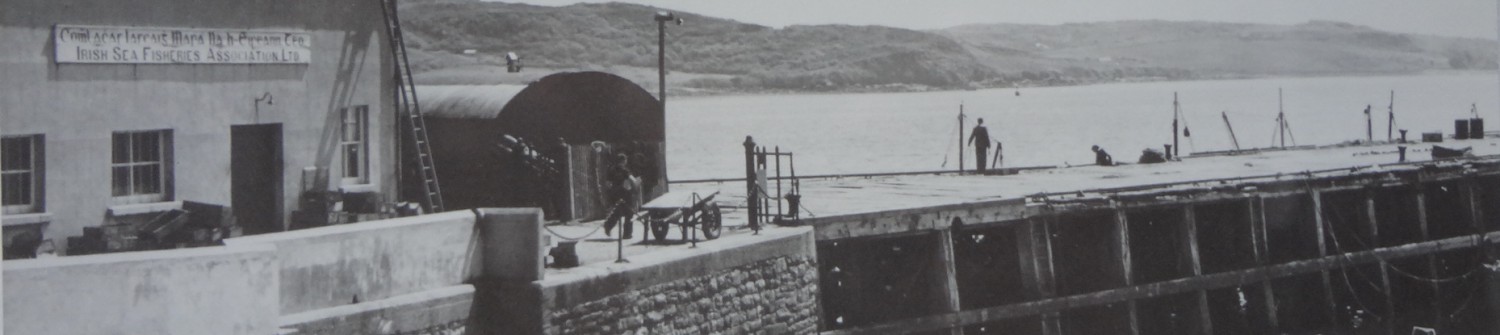
The Sea Fisheries Association began building small motor boats of about 32 feet in the early 1930s in Killybegs Boatyard, and in James, as a member of the Association, applied for one of these. The SFA assessed his application on the 12th April of that year but they did not respond to the applicant. Finally, on 25th July 1934 Micheal Og McFadden contacted the authorities on James’s behalf. He wrote that James was:
one of the best fishermen on the Donegal coast; it is a shame how Hegarty’s application has been shelved. He is anxious to have one of the boats now being built in Killybegs. The SFA replied on the 8th August with the lame excuse that James’s application was one of 20 from Donegal fishermen who were on a waiting list.
It appears that James was so disgusted with this treatment that he abandoned the application.
James now fades from the scene, and is mentioned only once again – in his obituary. He died at Derrylahan on 6th September 1941, at the age of 69, leaving his widow, Bridget, and his three daughters to mourn his loss. I am aware that there are many gaps in this narrative, but there may be some in the Kilcar area who could fill in some missing areas.
End of Part One.
 killybegsbooks
You must be logged in to post a comment.