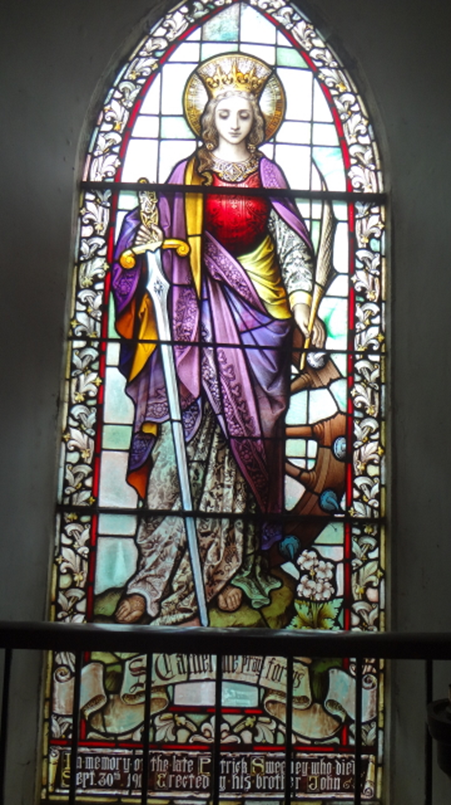
THE FEAST OF ST CATHERINE OF ALEXANDRIA

It’s fair to say that a good proportion of the people of Killybegs visit St Catherine’s Well on this day. These could be called the true believers. There is also the minority, those who do not focus much on the Well and its properties. So, is there anything that these non-participants or ‘observers’ can do on this day to keep the tradition of St Catherine alive in this area? Some of the flaky stories associated with the well are no help to those who might be doubtful of the whole arrangement. There are two accounts which have been told and re-told down the years, neither of which could be said to be watertight. One is the story of holy men being saved from drowning, and dedicating the well to St Catherine. The other, certainly derogatory of the Protestants of the district, is the one about the Minister of the day, the occupant of St Catherine’s Rectory, who filled in the well in an attempt to stop pilgrims visiting it.
The tale of the seamen being saved appears to be one of those unfounded universal stories which attach themselves to various ‘famous’ places or people. One of these can be found in Italy, where, on the shores of Lake Maggiore, there stands the Hermitage of St Catherine of Alexandria. The brochure produced by the Hermitage states that it was founded by a wealthy man who was saved from drowning in the lake through the intervention of St Catherine.
How St Catherine came to be attached to the Killybegs well continues to be a mystery that will likely never be solved. In the absence of hard information it is natural that people will look for a rational explanation of the origins of the well, but so far, the flimsy ‘evidence’ of the saved seafarers is all that we have. Time to rethink this? One or two of them may contain, as they say, a grain of truth.
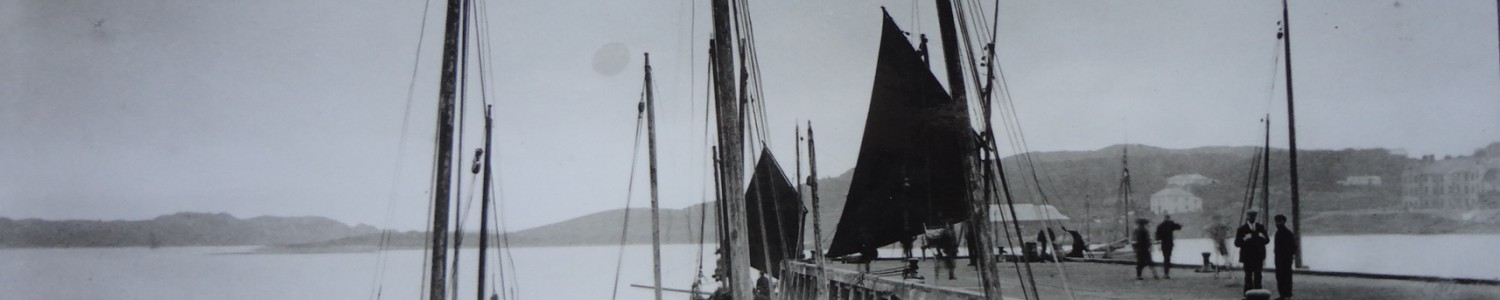
The strongest circumstantial evidence that can be found is that the sailors of the Spanish Armada ships who came into the harbour in 1588 had a very good reason to give thanks for their survival. And, just above their anchorage in the ‘Church Hole’ was the parish church, to which they surely went to give thanks. The strict enforcement of religious observance and ritual on board the Armada vessels reinforces this argument. And, considering the poor state of the food and fresh water the Armada ships carried, the men desperately needed fresh water. That well, whether or not then named for a saint, was a life-saving facility.
(I will deal with the ‘Protestant Minister’ story later)
 killybegsbooks