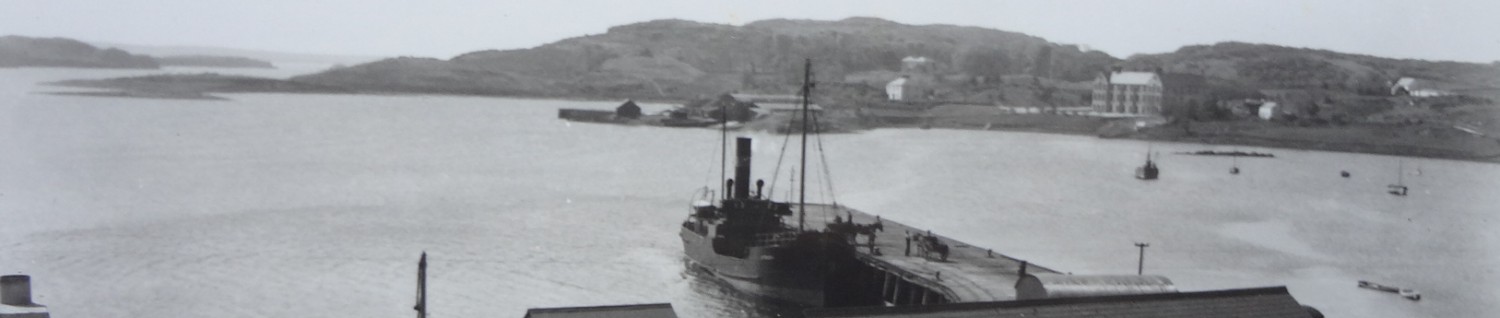
MONTSERRAT ISLAND
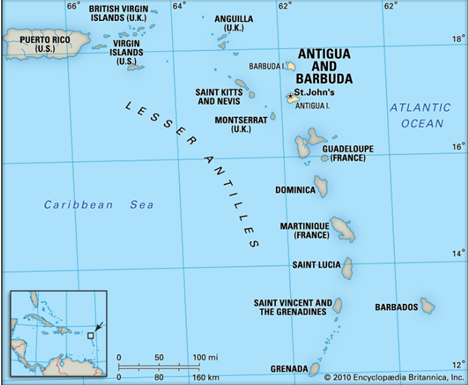
This is part two of my blog on Dodd’s Garden, and features the Island of Montserrat in the Caribbean.
Montserrat is still a British overseas territory situated in the Lesser Antilles chain of islands. Its connection with Killybegs was because of herring exports, a source of cheap protein to feed the servants and slaves on the sugar plantations. Readers of my first Dodd’s Garden blog will have noted the presence of Captain Thomas Atteridge, a resident of Killybegs at the end of the 18th century. He lived with his family in a premises where the Tara Hotel now stands. According to his last will and testament Captain Atteridge had some property in Cork. This would indicate he was one of the Cork merchants who used to re-barrel Scottish and Donegal herring for export to the Caribbean. It is not known how he came to live in Killybegs.
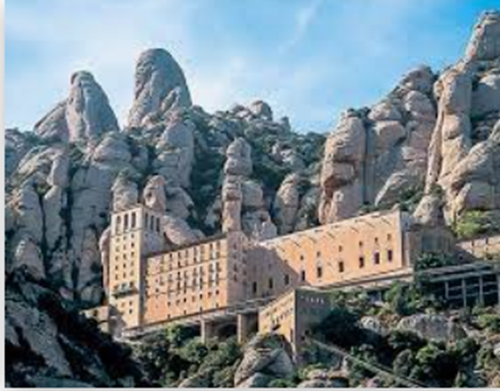
It is claimed that Christopher Columbus when he was sailing in those waters, though that this island looked like the Montserrat area in Spain, and named it after the monastery in that region. For anyone going on a trip to Barcelona the Monastery is well worth a visit, even for the cable-car experience alone. Most people go there to see the Black Madonna, and the fish and chips in the monastery café are a bonus.
Montserrat is known as ‘the Emerald Isle of the Caribbean’. In the 18th century large numbers of Irish ‘servants’ (probably slaves) were transported there by the British tobacco and sugar plantation owners. Later Oliver Cromwell transported Irish people to those parts. Africans were also brought to the islands, but the Irish were in the majority on Montserrat. In the 17th century the Island became a haven for Irish Catholics who were being persecuted on the other islands in the group.
The British owned Montserrat, as they do today, and they applied the same punitive measures to the Catholic Irish living there as they did during the Penal Laws at home. Except on an island ten miles by seven, their draconian anti-Catholic laws were felt much more severely than they were in Ireland. However the British did not succeed in eliminating the religion of the Irish on Montserrat, any more than they did in Ireland.
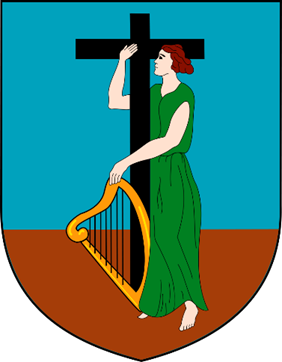
Today Montserrat has many descendants from those first people who were sent there. The island holds a week-long St Patrick’s Day festival where the natives wear ‘Irish tartan’ skirts and Irish national colours.
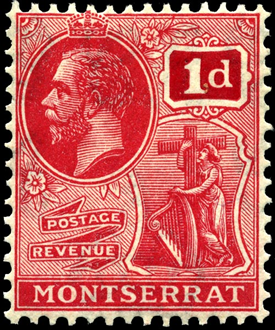
Captain Thomas Atteridge was a Killybegs resident in 1784 when he exported herring to the Caribbean islands. On 2nd October of that year Saunders’s News Letter reported that:
The brig Williams, Captain Atteridge, loaded with herrings, sailed from Killybegs on the first day of June , and after touching the islands of Antigua and Montserrat, where she disposed of her cargo to very great advantage, loaded with rum, and returned to Killybegs in three months and one day.
This was a report from Captain Miller of the British gunboat Langrishe, which had arrived in Sligo following a patrol Donegal Bay in search of smugglers. Captain Miller also reported that:
Not less than 40 sail of sloops and cutters are now on this coast, belonging to the red herring houses of Scotland and the Isle of Man, ten of which lie in Killybegs harbour, partly loaded, and only wanting fair weather to go to Bruckless and Inver to complete their cargoes.
An extract from the Will of Thomas Atteridge of Killybegs.
In the Name of God, Amen.
To my dearly beloved daughter Jane [I bequeath] my dwelling House in Killybegs with furniture & implements of husbandry, except Beds, bedsteads, blankets, sheets and quilts which are to be divided between my dearly beloved sons Philip George and Henry. I bequeath my dearly and best beloved wife Jane Atteridge a hundred and twenty pounds…..
Captain Atteridge’s third son, Henry was baptised in St John’s church, Killybegs, on 29th January 1788. Captain Atteridge’s widow died in Killybegs on 28th September 1834, and was interred in St John’s graveyard, her husband having predeceased her. It is not known what became of the other members of the family.
 killybegsbooks