
STORIES OF KILLYBEGS RAILWAY. PART 1.
The 130th anniversary of the opening of the Donegal-Killybegs Railway occurs this month of August 2023.
As the title indicates, this blog will not be a history of the railway line between Donegal and Killybegs. That line operated for 66 years, and to cover the entire history of it would be a very big task. The building of the line, and the details of the engines and railcars would alone take ages to document. Then there was the economics of running the line, and its usefulness to the communities along the route. The people who performed the day to day tasks might be the most important aspect of the whole business. The social value of the line would also have to be outlined.
Some of the above might make pretty dull reading, especially if the railway events were listed in order from 1893 until it closed in 1959. Therefore the plan is to take a loose approach, and put down what is known about a range of things the line brought to those towns and villages along the route.

Killybegs Railway Station, including dwelling house. (W. Lawrence collection, N.L.I.)
The train brought goods and passengers, some very popular, some very ‘distinguished’ as they said then. Excursions to ‘distant’ places were also arranged by the railway, at reduced rates. Less joyous trips were taken by those emigrating to England or America, perhaps never to return. It will not be possible to identify all the people who worked on the line down through the years, but an attempt will be made to mention some of them. The aim is to give an overall view of the railway, with emphasis on its impact on the Killybegs part of the line. Most articles on the railway focus on the technical and economic aspects, but here it is proposed to give emphasis on the social activities made possible by the coming of the new line.
Father Michael Martin, P.P., and the Chief Secretary
First up, it will be necessary to mention the ‘founders’ of the Donegal-Killybegs line. While there were very many people who contributed to the establishment of the line, two people stand out: they were Arthur Balfour, Chief Secretary for Ireland, and Father Michael Martin, parish priest of Killybegs. Balfour, although unpopular in Ireland, had the power to sanction or to withhold the line. Father Martin had the contacts, and the persuasiveness to convince Balfour to make it a reality. These actors in the drama will be introduced at a later stage.
First, it will be appropriate to mention the morning of the 18th August 1993, when a large group of ‘railway’ people gathered in downtown Killybegs to commemorate the opening of the line 100 years previously. It is good that most of those on the list (already published on FB) are still about, and maybe there are now even more with an interest in that wonderful thing that came to Killybegs in 1893. That August morning was dark, and it soon came on to rain; the group huddled in at the gable of ‘Sweet News’, and decided to head for the Bay View Hotel. There, after a short talk on the railway, breakfast was served in the dining room.
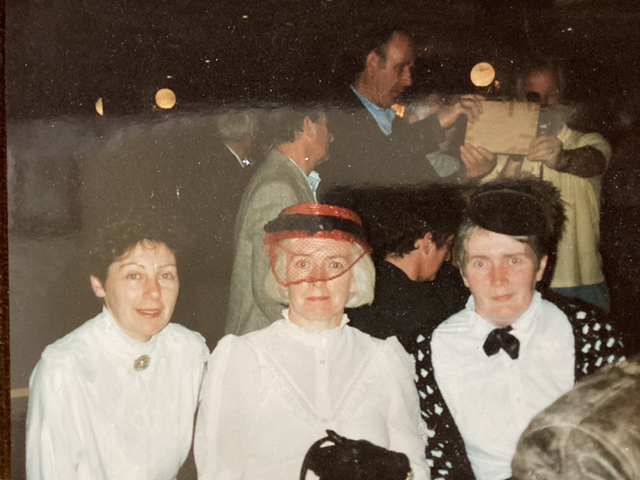
Marian McGuinness, Sheila Harvey and Goldie Conaghan dressed for the occasion, on the morning of 18th August 1993
How many people have railway-related photos that have not been generally seen yet?
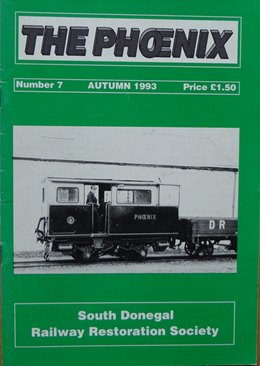
The South Donegal Railway Preservation Society produced a small magazine which they called The Phoenix, and it had some funny articles in its early editions. Below is an image of Issue No. 7.
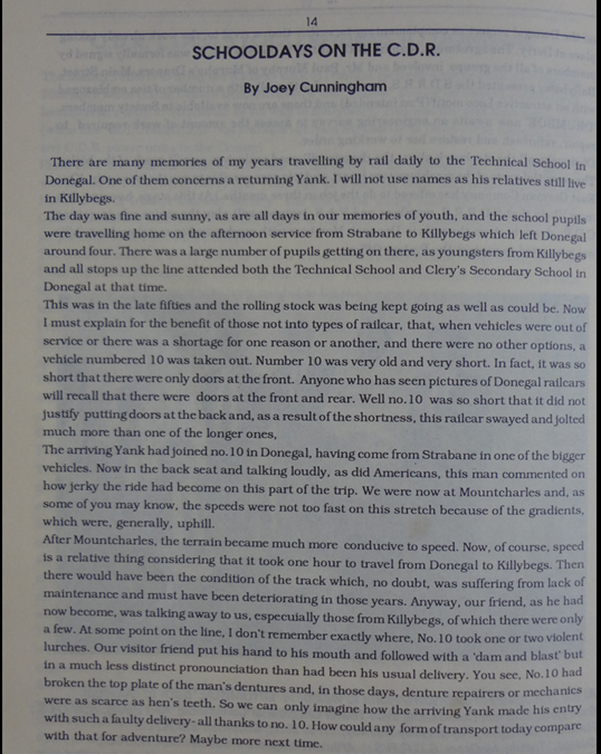
For instance, Joey Cunningham, once of Killybegs, now of Kilcar, and a committee member of that Society, penned an article for the first edition:
Many passengers on the train down the years would have had a story or two to tell; it could be that they are still waiting to be told?
 killybegsbooks
You must be logged in to post a comment.