1930s Houses Allocated Mostly to Fishermen.
Over the years, visitors approaching Killybegs from Dunkineely were often delighted by the sudden sight of the harbour and its lighthouse coming into view. A little closer to town, they would come across five well-kept cottages by the roadside. Positioned on a raised plot overlooking the harbour, with their terracotta-red exteriors and gardens brimming with flowers, these houses created a welcoming entrance to the town. In more recent times, the maturing cherry blossom trees that are planted alongside the footpath, have further enhanced the entrance to the town. With its green and leafy frontage, and view of the harbour and Donegal Bay, it is a pleasant location in which to live.
These five original cottages on Donegal Road were part of a housing scheme initiated by the Donegal Board of Health in the 1930s. Another five of the same scheme were built at the top of the same field, facing Church Road. Although not as prominent as the ‘lower’ cottages, the houses next Church Road are located in an equally desirable suburban setting.
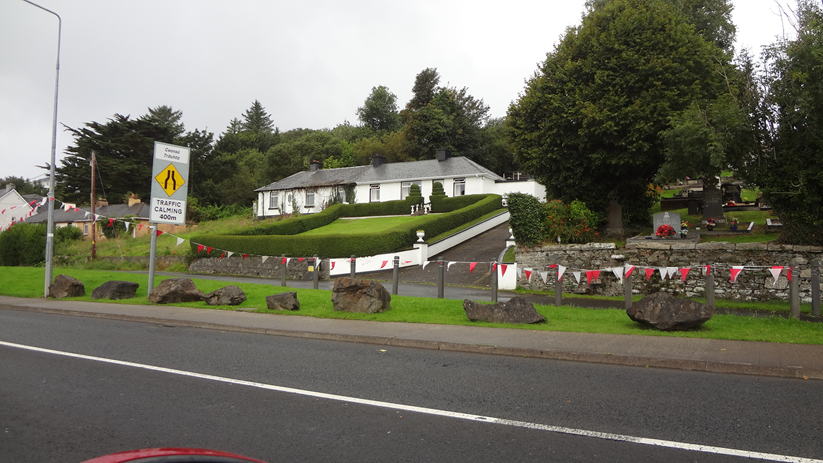
Two of the Donegal Road cottages on the east side, formerly Kennys’ and Patchells’.
In the early 1930s retired headmaster, Patrick A. Mulreany, had been advocating for more housing in Killybegs. Mulreany was the most prominent man in Killybegs in that period, apart from the P.P., and the method he adopted to further this object was a very practical one. He enlisted the help of T. D., Brian Brady, and formed a ‘Sites Committee’ made up of local residents.
The Board of Health was reluctant to build houses in Killybegs, maintaining that there was not a square foot of level ground there. Eventually, responding to the Committee’s pressure, the Board’s architect visited the town in March1933 and was shown the available sites by committee members Patrick Mulreany, Charlie McIntyre (auctioneer), Joe Cunningham (contractor). The chosen site was approved, and Joe, who handled most local construction projects, was appointed as the contractor. Joe was the grandfather of Jimmy White. The large site ran from the ‘top road’ down to the Donegal Road. In those days it was the norm to provide a large plot of ground with each house, for growing potatoes and other vegetables.
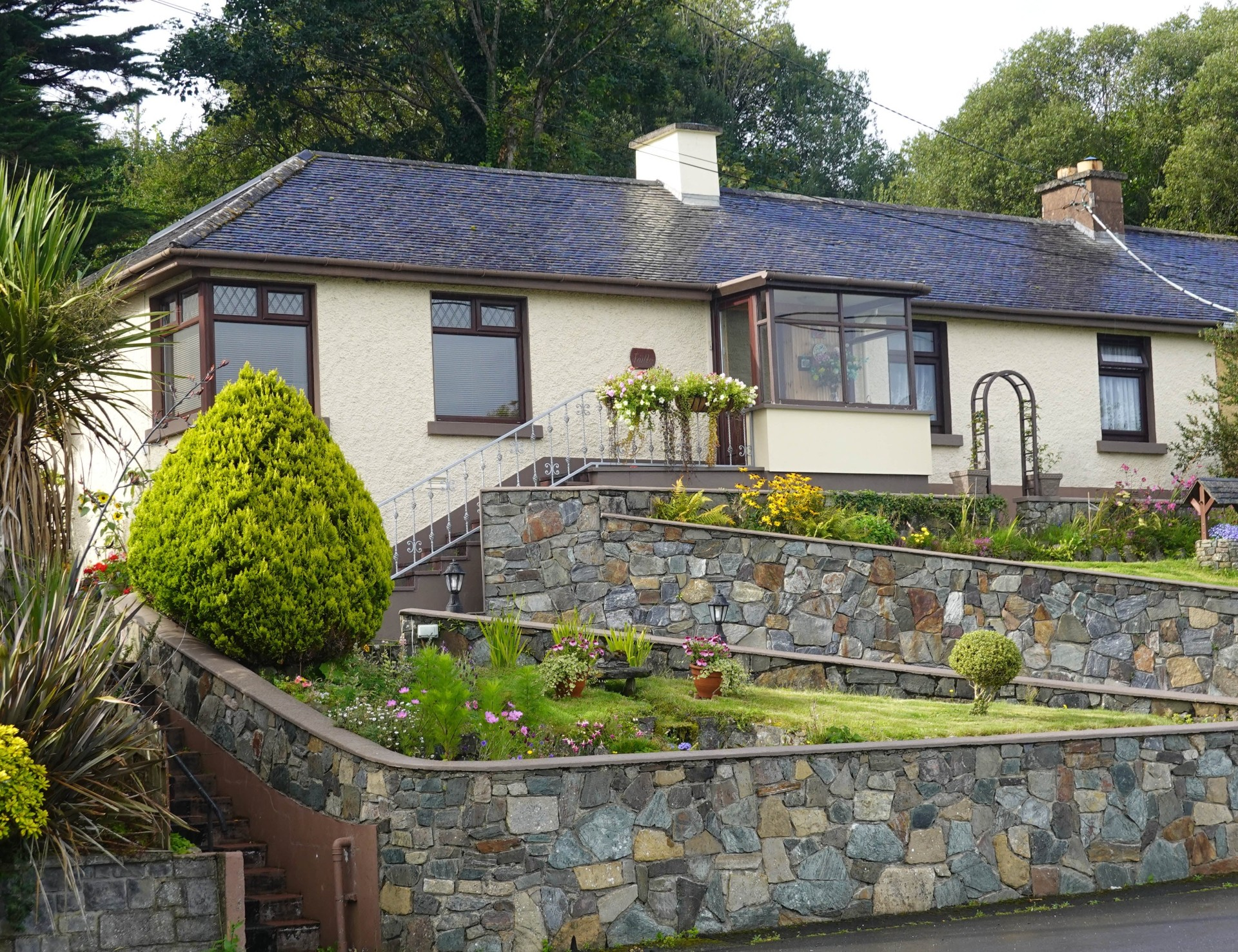
One of the Donegal Road cottages, on the west side, originally Hegartys’. (Photo courtesy of Plunkett Smith)
The local authorities in Donegal, then as now, were not noted for their speed of action, and the new scheme seemed to be bogged down. By January 1934 people were wondering when work would start. But it would be twelve months further on before the contractor got the go-ahead to begin.
By April 1935 the cottages were ready for roofing, and were finished in December of that year. There were twenty applicants for the ten houses, and the successful tenants were chosen on Monday, 20th January 1936. They received their keys on the 1st March. There was one detached house at the town end both on Church Road and Donegal Road.
These are the tenants and their former addresses (from west to east):
Church Road houses: Con McBrearty, New Row; Mrs Eliza Wynne, Coastguard Station; Mrs Catherine Smith, Bridge Street; Patrick Kinsella, Stonybatter; James Conwell, New Row.
Donegal Road houses: John Dowds, St Catherine’s Road; William Hegarty, Stonybatter; Con Hegarty, New Row; Joe Kenny, St Catherine’s Road, John Gallagher, Bridge Street. All the houses on the Donegal Road and one on the other group were allocated to fishermen. John Gallagher did not avail of the offer, and ‘his’ house (next the graveyard) was allocated to Jim Patchell.
Mr Patchell was known in Killybegs as the gardener of Captain Griffith G. Philipps, who lived in Rockmount (now the Parochial house).
Jim, who was christened James William Barrett Patchell, was born in Carricknagore House to Clara Eliza Clementina Theodosia (nee Barrett) and Robert Patchell, a Derry-based commercial traveller. In 1913 he married Marjory Robinson, a servant in Killaghtee rectory, and daughter of Jack Robinson, a fisherman. They had two children, Robert John, born in 1914, and Maria, born in 1916. Unfortunately Marjory died within a week of Maria’s birth; she was buried in St John’s churchyard. Their house was listed as being on Chapel Lane but it is now too late to identify its location. Jim Patchell and his two sons moved into their new cottage and resided there until 1942 when Jim died.
Not much is known about the Patchell family, except that Robert John was a sometime driver for John Joe Gillespie, who ran a taxi service.
The cottage was then allocated to Jim and Madge Murrin who had been living on New Row, and the house continues to be in the ownership of that family today.
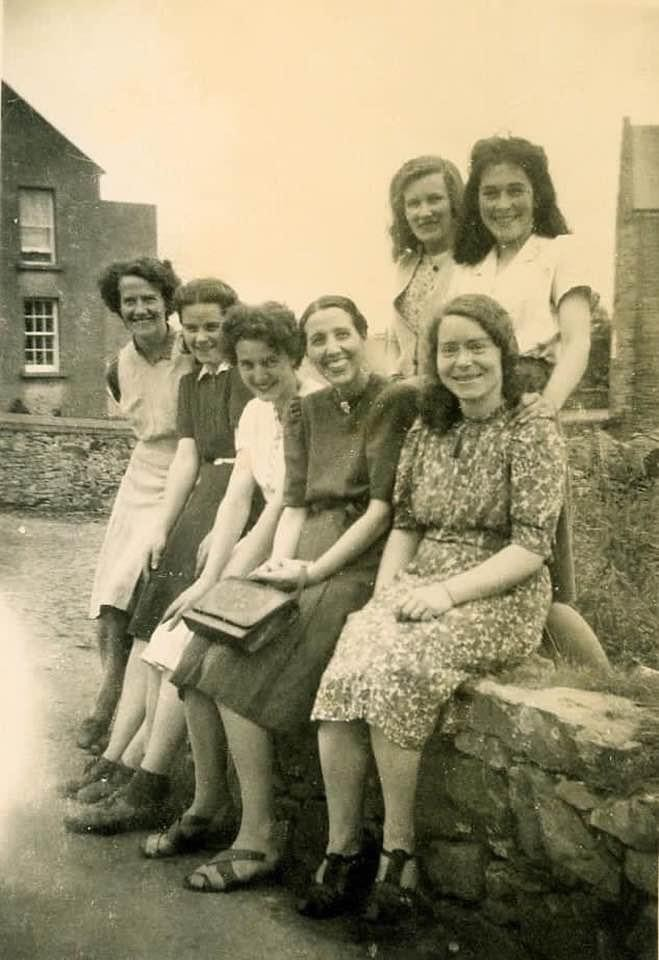
Three of these carpet factory girls in this photo lived in the Donegal Road cottages: Mary Dowds and Nellie Hegarty (second and third from left) and Susan McGowan (top right). Photo courtesy Eugene McHugh.
It was planned to erect twelve more cottages soon after these, but they were never built. It is possible that the onset of the War prevented this scheme from going ahead. It was not until after the War that the Board of Health built the next scheme of cottages in Killybegs. In 1948 they purchased a site at the Grey Rock, Conlin Road, to build houses for the Boatyard workers.
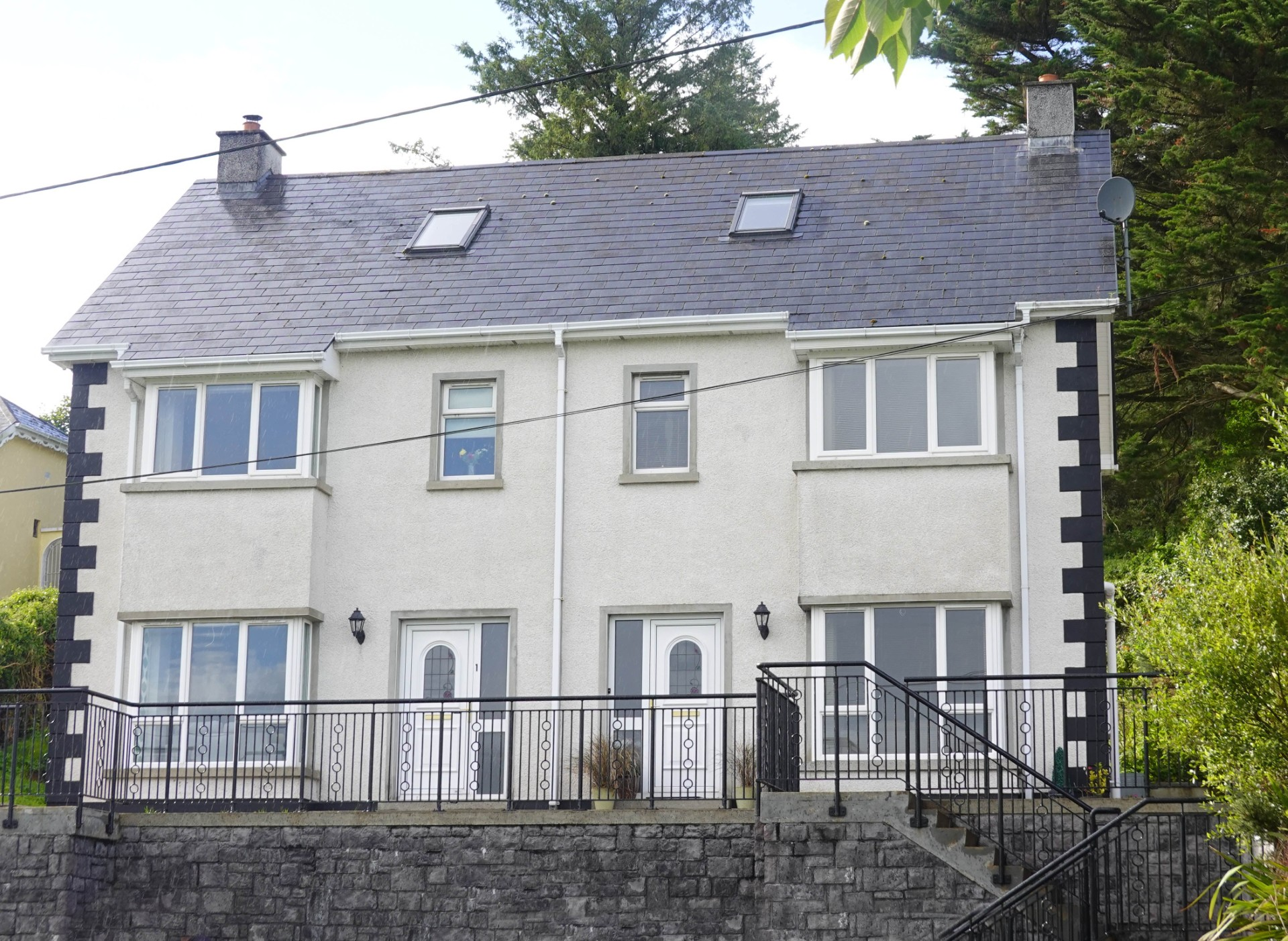
This building is now on the site of the former Dowds detached house on the Donegal Road. Photo courtesy of Plunkett Smith.
 killybegsbooks
You must be logged in to post a comment.