RAILWAY DAYS

Stories of Killybegs Railway, Part 5.

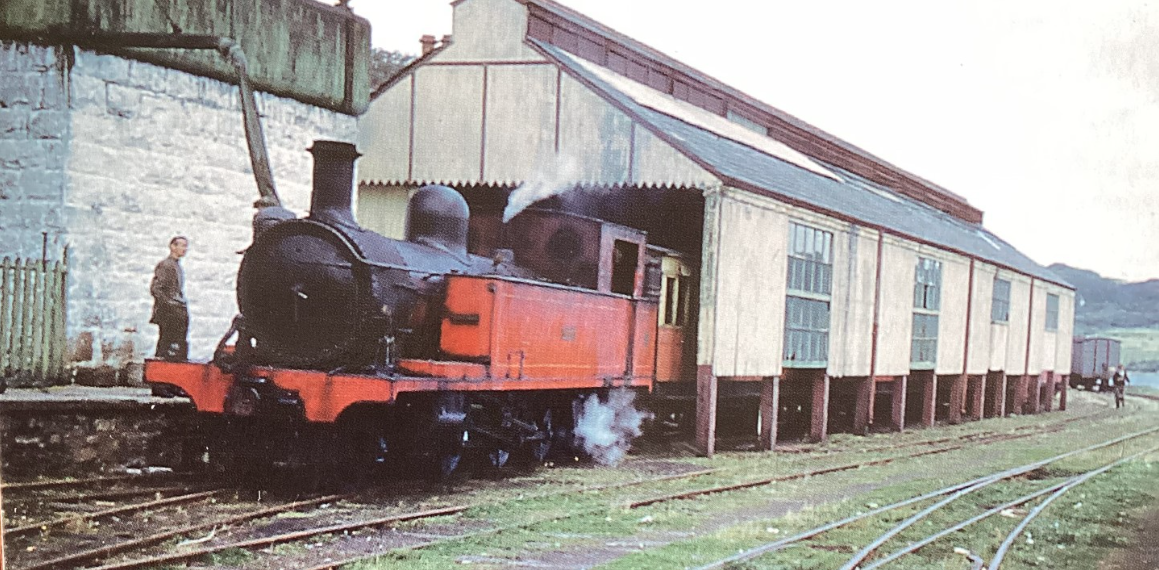
A locomotive being topped up from the water tank at Killybegs station, with Frankie McMenamin looking on. The other figure is not known. Frankie was a son of Frank McMenamin, who is listed below.

It would be difficult to name all the railway people who ran the Donegal to Killybegs line, or even those who worked the trains from Killybegs. Below is a necessarily incomplete list of those who dedicated their lives to the working of the line.

KILLYBEGS RAILWAY STATIONMASTERS

1893: Paddy Martin

1899: J. Hanlon

1902: James Patton

1910: Paddy Martin

1916: Joseph Murray

1921: Bernard McGinty

1922: Henry J. Jones

1924: Mick Kelly

1959: Frank Kennedy.

1965: Cahir Kennedy

Cahir Kennedy drove the last train out of Killybegs, and also drove the first road bus into the town.

Harry O’Donnell was stationmaster in Dunkineely; he died in 1924 at the age of 48;

His wife, Ellen (Nee Kennedy) died the previous year. Harry had strong Killybegs connections.

GENERAL PERSONNEL (Incomplete)

Boyd, Paddy, Railway construction. Tullaghacullion

Boyle, Farrigle, Railway construction. Curraghafeeghan

Callaghan, Patrick, plate layer, The Commons

Cunnea, George, Plate layer, Drumaghy

Gannon, Basil, Railway clerk. Killybegs town

Gillespie, James, Station master, Aghayeevoge

Gillespie, Seamus, Railway operations, Aghayeevoge

Hamilton, William J., Railway porter, Tullaghacullion

Hamilton, Thomas Edward, Railway porter, Tullaghacullion

Kennedy, Cahir, Railcar driver, Conlin Road.

Kennedy, Frank, Station master, Church Road.

Kenny, Tommy, Railway guard, New Row

Lafferty, Mickey, Railcar driver

McClafferty, Peter, Railway porter, Killybegs.

McGinley, Patrick, plate layer, Straleeny

McGinley, Mary, Gate-keeper, Straleeny

McGroarty, Patrick, (Killybegs), Stationmaster, Dunkineely.

McGroarty, Patrick, Signalman, The Commons

McGroary, Daniel, Railway porter, Ballyshannon

McHugh, James, plate layer, Aghayeevoge

McHugh, Margaret, Railway gatekeeper, Aghayeevoge

McIntyre, Michael, Engine cleaner, Bridge St.

McMenamin, Frank, Railway fireman, The Green

McMenamin, Mickey, Station master, Church Road

McNulty, Tommy, Engine driver, St Catherine’s Road

Murrin, James, Ticket collector, New Row

Murrin, Patrick, Railway porter, New Row

O’Boyle, Magnus, Railway Porter, Killybegs

O’Boyle, Michael, Railway construction, Killybegs

O’Donnell, Charles F., Railway Clerk, Elmwood Tec.

O’Donnell, Charles, Engine driver, New Row

Patton, Willie, Railway clerk

Quinn, James, Engine driver, The Green

Sweeney, Charles, plate layer, Straleeny

Sweeney, John, Railway guard, Straleeny & Killybegs

Sweeney, Thomas, New Row, Engine driver

Walker, James, Station master, Ardara Road Station

TWO SWEENEYS, FATHER AND SON

Of the people listed above, one stands out for mention.  He is John Sweeney, the Railway Guard.  John was the father of Jack Sweeney, the trainer of Ronnie Delaney and many others in athletics in Ireland.  It was said of Jack in 1935 that ‘he is capable of taking his place with the greatest athletic coaches in the world today’.

John Sweeney first appears in Killybegs in the townland of Straleeny, where he boarded with his brother Charles in the last crossing-house before coming to Killybegs Railway Station.  (Charles was the father of Tommy Sweeney of New Row, Killybegs).  John is next found at ‘Bradys’ Corner’, where he lived with his wife, Annie, nee Strain.  

John came to notice during the ‘troubles’ of the Anglo-Irish war, when the infamous Black and Tans first appeared in Donegal.  The RIC and the locals were at one another’s throats, which led to widespread searches of peoples’ homes.  On 13th September, 1920 four armed policemen entered the midday Killybegs train at Donegal railway station.  The driver, James Quinn, fireman James Grant, and guard John Sweeney refused to proceed with the train.  Sweeney was dismissed by his employers, and a replacement guard sent for, arriving in Killybegs the next day.  He was refused lodgings and had to return as a passenger on the next train.

John and Annie Sweeney had at least three children, Eithne, and Rita, and Jack, the latter born in 1916.  Jack attended the Niall Mor School, and later St Eunan’s College, Letterkenny. His sister Eithne, who also studied at the Niall Mor, won a scholarship worth £20 for each of two years, to the Loreto Convent, Letterkenny, in 1932.  From St Eunan’s Jack went to U.C.D. where he obtained his B. A. and H. Dip. E., degrees in 1938.  He took his first teaching post as maths teacher at the C.B.S. school in James’s Street, Dublin in 1939.  He afterwards taught at the Catholic University School in Leeson Street.  In 1945 he was appointed athletics coach to Dublin University.  He was also appointed chief coach to the summer school of athletics in Newman House, Dublin.  In his early days in Killybegs he played soccer for the local team, and was a member of the local Sports and Regatta Committee.  He scored two goals in the defeat of Sligo Distillery at Emerald Park on Sunday 26th December 1937.  He was a member of the Killybegs team that defeated Derry 2 -1 at Emerald Park on 30th June 1939.  In Dublin he was a ‘western roll’ high jumper, a long jumper, shot putter, and had a flattering record in the field. In his coaching roles he had a gift of imparting knowledge.

During his coaching career in Dublin he played a major part in the development of Ronnie Delaney, Eamonn Kinsella, and Brendan O’Reilly.

He also turned out half-miler Kelly of Phoenix Harriers, Gerry O’Gorman, and Val McGann, all of whom have topped every record in Irish sports books. Others, too numerous to mention, were trained by him. “The greatest personality in Irish athletics”; “Ireland’s most successful coach”; “Mr Athletics”; These are a few of the praises showered on Jack Sweeney. Later he was appointed athletic coach to Trinity College and the St James’s Gate club.  He gave lectures, and showed special athletic films, frequently dipping into his own pocket to purchase films, equipment and other aids in the interests of Irish sport.   He did this not because he was primarily interested in individual performances, but he believed it would improve the all-round standard of athletics in Ireland.  His greatest contribution in this direction was the N.A.C.A. Summer School of Athetics, which he founded in 1953. That year as sole instructor, he ran a course in the grounds of Newman House for men interested primarily in coaching.  Jack married Rita Clery from Kidare, and they had three boys and a girl. It was said of him that ‘he is the finest coach we have ever had in this country’.  He was also a great friend of the famous Teelin athlete, Paddy Haughey. Jack died in Dublin in 1993.

RAILWAY DAYS

Stories of Killybegs Railway, Part 4.

The 130th anniversary of the Donegal-Killybegs Railway occurred in August of this year.

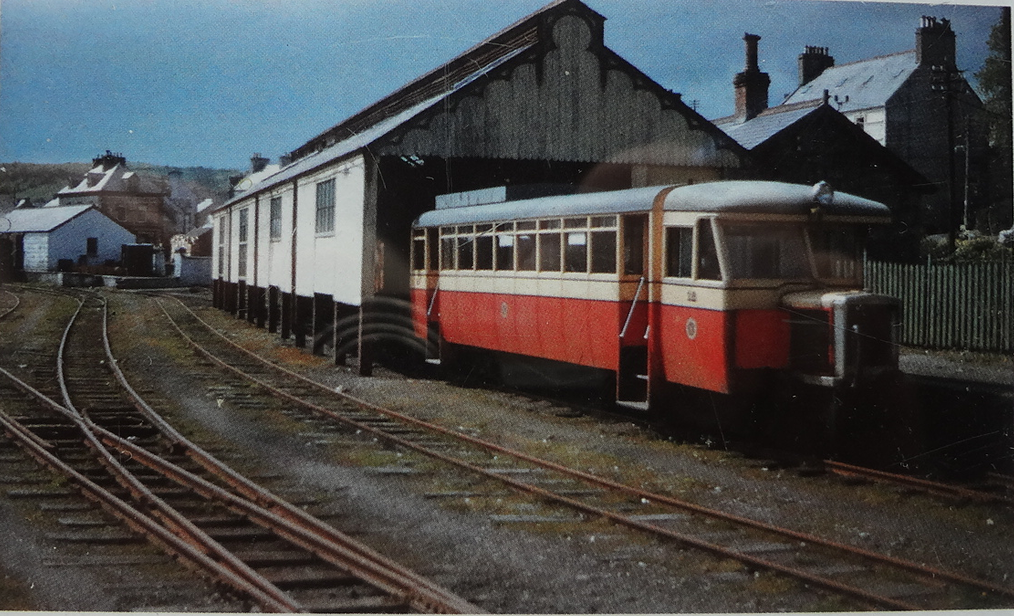
Railcar No 12 at Killybegs, 17 May 1959, ready for Strabane.

NO RAILWAY FOR ARDARA

Although there was a proposal to lay the railway to Ardara, this did not happen.  The parish priest of Ardara, Rev. Bernard Kelly, was a strong advocate of a line to Ardara.  He stated that the railway would help to develop the fisheries at Rosbeg and Ardara, which had no means of export except by cart to Killybegs, where Mr Drummond iced the salmon. (William Drummond was the leading fish merchant in Killybegs in the 1890s; he owned an extensive grocery and hardware store located in the building now occupied by Mrs B’s café).  The original plan was to take the line from Glenties to Killybegs via Ardara, in two sections.  The first section was to be 15 and two eighths miles long, from Glenties to Killybegs town.  The second was to be two furlongs in length, from the town down to the harbour.   The estimated cost of the first was to be £90,057, and the second £3,349.  There were to be a stations at Ardara, Meentullynagarn, and Killybegs.  This proposal was abandoned, and it was said that the Ardara people missed an opportunity of lobbying for an extension from the Ardara Road Station to their town.  The Station which would be called Ardara Road was established in 1910.

SHOCKING ACCIDENT AT ARDARA ROAD STATION NEAR THE FIVE POINTS

It was here in 1902 that a passenger, Peter Boyle, was killed soon after he disembarked from the train, being practically cut to pieces.  Mr Boyle, who was about fifty years of age, and from Meenavally, left home on the morning of Thursday 3rd April for Donegal, where he transacted some business.  He returned by the evening train, arriving at Ardara Road Station at eight thirty six.  At a distance of 108 yards from the station two gates closed off the old public road to Ardara when the train was due.  These gates had lamps which were lit at night.  The Station and the Station door were lighted. 

The Stationmaster, Jim Walker, said later that ten or eleven passengers, including Mr Boyle, got off the train.   He thought that Boyle had remained at the Station also, as he had to pay him for the ticket to Donegal and back.  He (Walker) did not have the change in the morning when starting off.  The deceased appeared to be sober; he walked along the path towards the gates and the road home.  The other passengers did not leave the platform until the train had departed.  The night was stormy with hail showers.

The driver said he blew the whistle while starting off.  When the train was crossing the road the driver, Sam Jones, thought that there was some gravel on the line. He applied the brakes, and when the engine stopped the fireman, James Duffy, got out with a hand-lamp but saw nothing unusual.  The journey was continued for a short distance but the driver told the fireman that there must be some stones on the line.  Duffy disembarked again and informed the Stationmaster.  He examined the line as far as the last Gate-house before Killybegs.  (This Gate-house at Straleeny was then occupied by the Sweeney family; later by the Hegarty family).   He found a parcel and some money between the rails at a point 210 yards from the Ardara Road platform. 

Charlie Sweeney from the Straleeny Gate-house, and Bill Walker also joined in the search. They were horrified to find the mutilated body of Mr Boyle, lying on its back between the rails, with some of the limbs missing.  The police were called, and a further search revealed one of the man’s feet at a distance from the body, while the track for about a hundred yards was strewn with pieces of flesh and bone. Sergeant Fallon of the RIC, while searching the line, found a walking stick, some sugar, a muffler and portion of a sock. He spent over three hours collecting the remains. 

It was thought that the man was walking between the rails when he was knocked down and dragged along the line. The remains were taken to Killybegs.

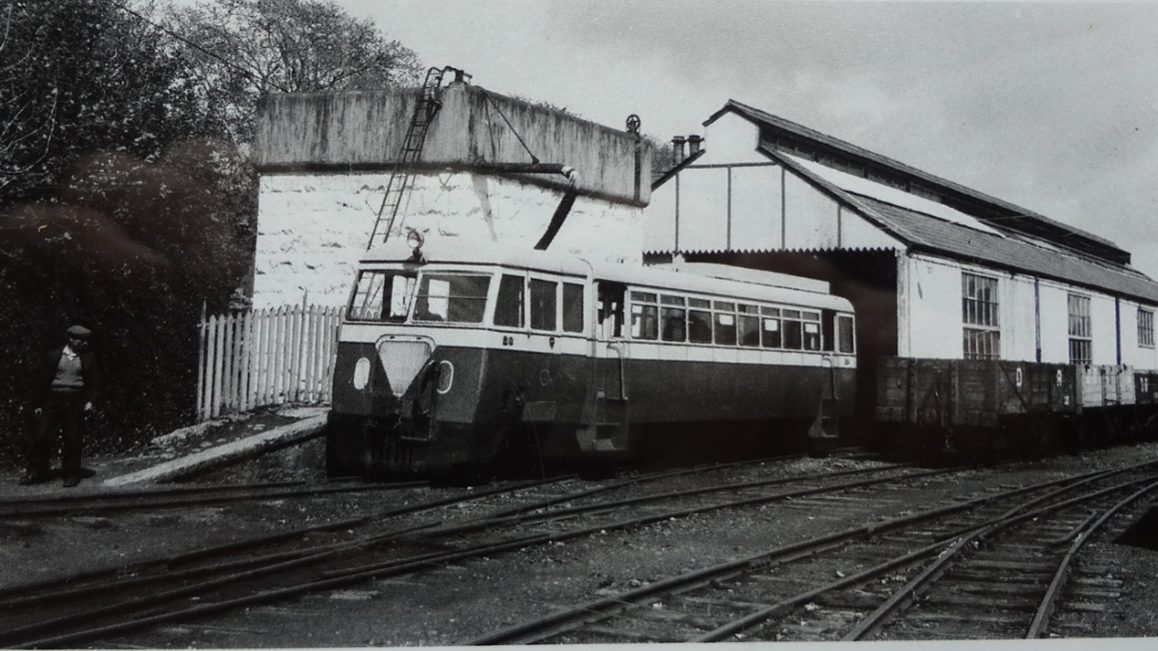
Railcar No 20 at Killybegs Station, 1956. (J. G. Dewing/Ernie’s Railway Archive)

RAILWAY PASSENGERS FINED

At Killybegs Petty Sessions in 1918 two Ardara men, Daniel —– and Patrick —— of Bracky, were fined for ‘having travelled on the railway on the 5th January, between Ardara Road Station and Killybegs Station without having paid their fares, and failing to produce tickets.

Their defence was that they had paid for tickets from Donegal to Ardara Road, which was the stopping place on the line for Ardara passengers going home.  They claimed they were over-carried.  In those days the Guard on the train would call out the approaching stations so that people would know where to get off.  However the men stated that there was no shout, and that they were carried on to Killybegs.  John Sweeney, the Guard, and Joseph Murray, Stationmaster at Killybegs, gave evidence, and the men were fined ten shillings each, with an additional one pound costs.

CALLING OUT THE STATION NAMES

The late Bertie Boyd used to tell a story about the Guard calling out the name of each approaching station.  Two farmers from Tullaghacullion decided to travel to Dunkineely, and got on at Ardara Road. They asked the Guard how would they know when the train had arrived there.  He told them he would shout out ‘Dunkineely’ when they were getting near.  A couple of ‘corner boys’ from Killybegs, who were in the carriage, were listening to this, and when the train was approaching Bruckless Station they shouted out ‘DUNKINEELY’, and the men got off at Bruckless.

RAILWAY DAYS

STORIES OF KILLYBEGS RAILWAY, PART 3.

The 130th anniversary of the Donegal-Killybegs Railway occurred in August of this year.

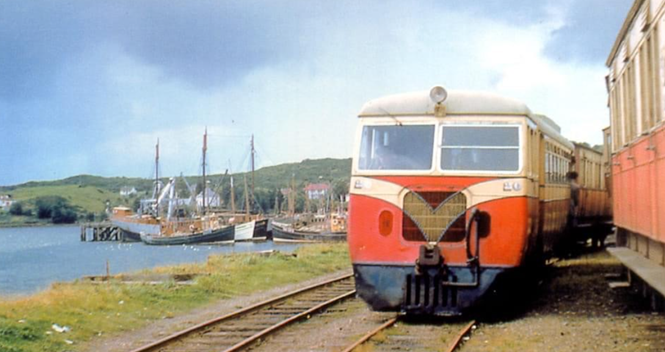
Railcar No 20 leaving Killybegs between 1957 and 1959

Different Routes Proposed for the Line

In the years prior to 1893 the people of Glenties, Ardara, Killybegs, Inver and Kilcar fought to have the railway laid to their area.   The three main proposals were: Donegal direct to Killybegs; Donegal to Killybegs, with a branch at Inver leading to Ardara and Glenties; and Donegal to Killybegs via Glenties and Ardara.

The direct line from Donegal to Killybegs was finally pushed through, and the rest is history.  When the route was agreed, Father Michael Martin, parish priest of Killybegs, persuaded Arthur Balfour, Chief Secretary of Ireland, and ‘provider’ of the railway, to allow work to start on the line even before any contracts were signed.

At the end of 1890 the line was marked out and lockspitted, and the fencing began. The late Bertie Boyd of Tullaghacullion said that his father ‘drove every fencing post’ along the route.  These posts, and later the sleepers, were provided by John Gardiner, who had a steam sawmill at Mountcharles.  

By early January 1891 over 150 men were employed, and excavation of the earthworks along the route was well under way. The folklore of the area indicates that men who lived at a distance from the line would sleep overnight in barns and outhouses – this in the depth of winter.  Even so, the clergy and policemen were urging the gangers to employ extra men.  At Seahill, Dunkineely the line had to be bridged over the Burnlacky River, and the ground filled at each side.  For this work, temporary rails were laid and earth-carrying vehicles used to transport the filling.  Twenty four wagons, with suitable rails came into Donegal Railway Station and were transported to the Seahill site to move earth and stones for the works. On Sundays people came from long distances to have a close-up view of the works.

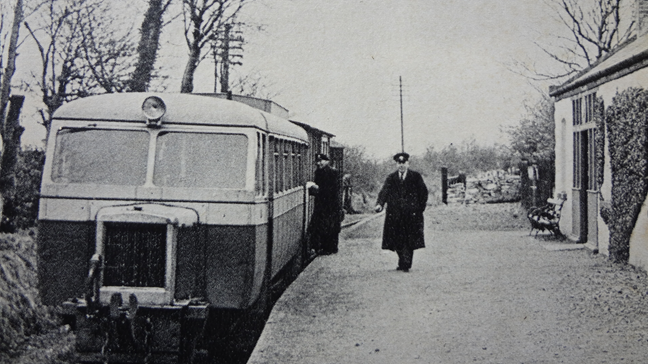
Guard Tommy Kenny and driver Cahir Kennedy at Dunkineely Station

TERRIBLE ACCIDENT ON THE KILLYBEGS RAILWAY

A MAN BLOWN TO PIECES – SEVERAL INJURED.

On Saturday evening, 4th April 1891, shortly before quitting time, a terrible accident occurred on the railway works at Castlereagh, midway between Bruckless and Killybegs. A man named John McDaid, a native of Keelogs, Inver, was instantaneously killed and several badly injured.  The men were blasting rock with dynamite, and had nine charges set.  Eight of the charges went off, but the ninth missed.  They thought that all the charges had gone off, and despite warnings from the ganger, the men approached the workface again just in time to receive the full effect of the ninth charge exploding. McDaid’s head was severed from his body by a clean sweep, and his brains and portions of his skull scattered in several directions for thirty yards. William Hamilton, 20, of Tullaghacullion, had to be carried home. His wounds which were stitched by Dr Gallagher, Killybegs, and Dr Pollard, Dunkineely, extended from the mouth down along the throat to the chest.  The chin was greatly mutilated. John Gallagher had his jaw bone broken, and one of his cheeks and eyes shattered.  Rev. John Doherty, C.C., administered the last rites to him.  Four others, O’Donnell, Harkin, Herreran, and McCallig, were also injured. Medical aid arrived quickly to attend to the relief of the injured, but the situation looked hopeless for Gallagher, who happened to be a neighbour of McDaid. These two men were lodging in the house of William Buchanan, Castlereagh, to which the deceased and Gallagher were taken after the accident.  Rev John Doherty administered the last rites to Gallagher.  He also visited the other sufferers. 

Local feeling was strong against Harkin, the ganger, on the grounds that he should have been more careful. He was arrested by the police.  But it seems that that the inexperience of the victims in the use of dynamite was to blame for the occurrence.

In July William Hamilton took an action for damages against Dixon the contractor. Describing the scene of the accident, he said: ‘We were blasting on the railway works near Killybegs.  After one charge had been fired the men went back to work, and some undischarged dynamite exploded. The plaintiff wore blue glasses when giving evidence, and his lower jaw bore traces of the injuries.  He said that Frank Gallagher, who was known as ‘the blaster’ put several cartridges into holes in the rock prepared for them.  The workers then took cover and Gallagher put a fuse to the cartridges.  The charges exploded and the men were ordered back to work by a ganger named Harkin.   About half an hour later when they were working away with picks, another explosion went off. McDaid was killed. He believed that himself or McDaid must have struck the unexploded cartridge with a pick. Later he went to the eye hospital in Belfast where one of his eyes was taken out.  Dr Gallagher, Killybegs, gave evidence as to Hamilton’s injuries.  The doctor’s fee for attendance was twenty guineas. The jury found against Hamilton but ‘recommended him to Mr Dixon’s consideration’.  He was later employed as a porter on the railway.  John McDaid left a widow and seven small children to mourn him.  She eventually received about £80 from private and public sources.

Mountcharles man injured (1)

On Friday 20th March 1891 Patrick Byrne, of Mountcharles, a Hackman at a cutting near Mountcharles on the Donegal to Killybegs line, was working at the bottom of the excavation.  The sides were undercut, and suddenly a large heap of earth fell from the top, almost burying the unfortunate man and the pick with which he was working. The force of the falling clay came against his leg and broke it.  The labourers at once proceeded to dig away the earth, and had him extricated and removed as quickly as possible.  Dr Smith set the leg, and the poor man was removed on a cart to the Donegal Infirmary.

Mountcharles man injured (2)

Ten months later, on Monday 25th January 1892 a young man named William Campbell, employed on the railway works at Mountcharles, was badly injured.  His job was to remain behind on the wagon filled with clay from the cutting to the tip-head.  Before the wagon reached its destination, and while going at high speed, it tipped up, throwing Campbell right over the waggon.  He fell heavily on his chest on the rail and sustained serious injury.  It was some time before he could rise.  The accident occurred owing to the rails not being level at the joint, one being high and the other low.  The injured man was assisted home in a very precarious state.

RAILWAY DAYS

STORIES OF KILLYBEGS RAILWAY, PART 2.

The 130th anniversary of the Donegal-Killybegs Railway occurred in August of this year.

The First Train Arrives

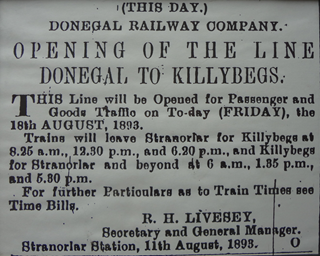
We can be sure that the people of Killybegs were up early on the morning in August to greet the first train from Donegal.  The press reported that about 400 people crowded on to the platform to welcome the new train. Some local people from Killybegs and ‘inside’ would have travelled on the first journey out of the station at 6 a.m. – the excitement must have been great.  The names of the passengers were not recorded, and it seems that those who booked their seats on that first trip have faded from the folk memory.  Only Edward McGuire of Lisnaclea and Teresa McGee (Bella’s mother) are spoken of as having bought two of the first tickets. 

The press reported that:

The first train to depart Killybegs took on a fair complement of passengers anxious to enjoy the run along the shores of the lovely bay.  All along the route were knots and groups of the country folk, waving handkerchiefs and other gear as they wished the passengers good luck, whilst many who hitherto had only had occasional glimpses of the steam horse stared with astonishment and wonder at the smoothly and rapidly running train, and the stations and platforms were well filled with local people brought there not only through curiosity, but to give a welcome to the first trippers.

Above: Notice of opening of the line.

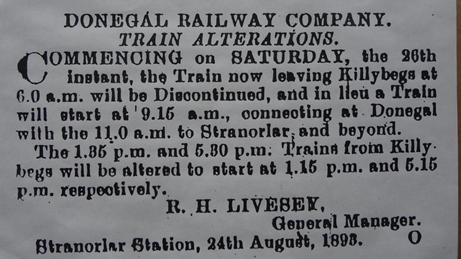
The 6 a.m. train must not have been very popular, because the time was changed to 9.25 a.m. within a week:

Father Martin and Balfour

The first part of this blog stated that the Chief Secretary for Ireland, Arthur Balfour, M. P., was responsible for allocating this new line to south west Donegal.   It was given as a ‘free gift’ at a cost of £116,500.  However the ratepayers of south west Donegal would be responsible for any losses.  Profits had to be divided equally between the Railway Company and the Treasury.

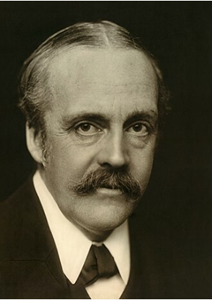
Arthur J. Balfour, M. P., Chief Secretary for Ireland.

Father Michael Martin, P. P., Killybegs, was the person who ensured that the railway came to Killybegs.  To appreciate his efforts, it is necessary to know that Ardara and Glenties were also fighting for the terminus. These new ‘Balfour’ railways were intended to help the fishing industry by going right down to the shore at the ports.  Killybegs was then regarded as a harbour where the Atlantic steamers would make a landfall, being nearer to America than Derry, Glasgow or Liverpool.  Killybegs had a big influx of ‘stranger’ boats and curers during a big herring fishing, but it had no resident fleet of boats as in later years.  Teelin and Inver had much better claims to the new railway, as fishing was the main activity in those ports.  But Killybegs won out, even though it had only 19 fishermen according to the Census of 1901.

No celebration – just a meeting in Niall Mor School

It seems strange today to think the townspeople did not have some kind of celebration to mark the opening of the railway. There were no bands or banners, no flags or bunting. Part of the reason might be that there was no venue in town that would accommodate a large gathering.  The Murray Schools on the Donegal Road were too small, and the Foresters’ Hall had yet to be built.  Father Martin did decided to release a statement, and arranged for a public meeting to be held in the old Niall Mor School.

The Engine Shed

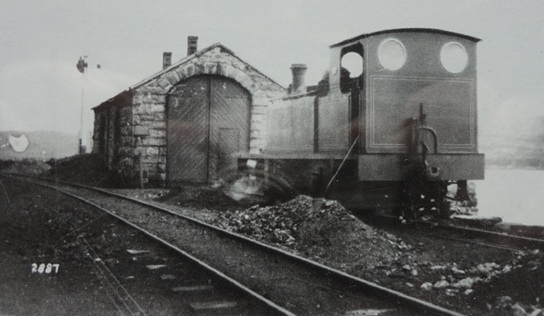
The engine shed and the ‘Meenglass’ engine. Photo courtesy of Jim McBride/Harold Eadie, CDRRS.

The engine shed at Killybegs where the steam engines were prepared for the next journey  The shed was sited on the old ‘Murray’s Pier’ which was built in the 1840s for landing fish for curing in the White House yard.  The shed was demolished in October 1957 by a runaway steam engine.

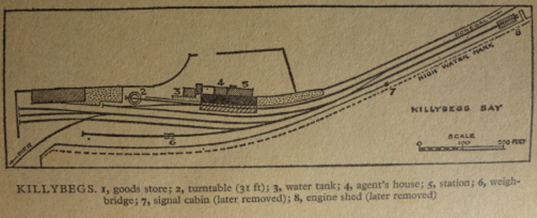
Below: Killybegs Railway Station Layout

The layout of Killybegs Railway Station and tracks.  The engine shed is at the top right.

Ardara Road Station

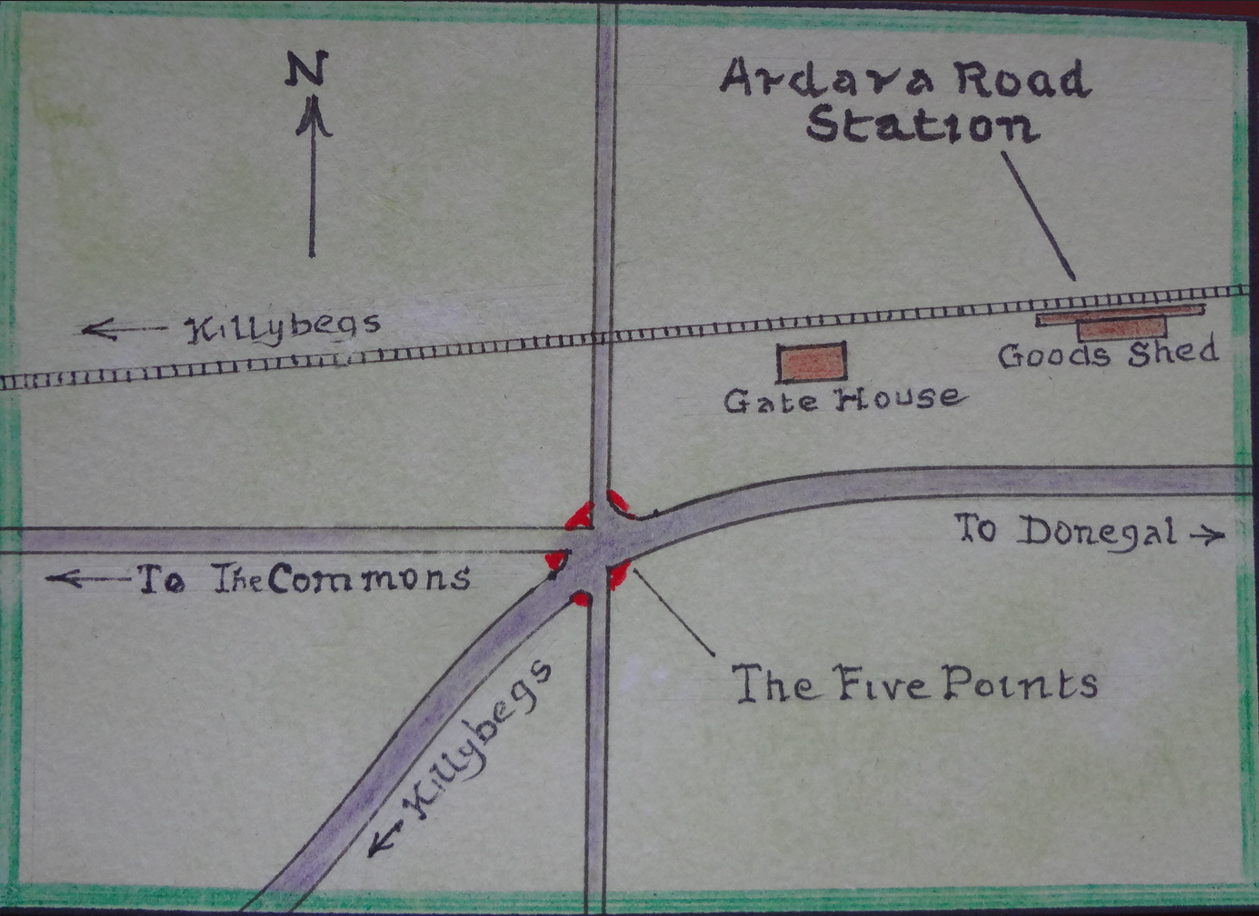
The Ardara Road Station was located at the Five Points, about 2½ miles short of Killybegs.  Here the old road to Ardara was crossed by the railway line, and a crossing-house and gates had to be sited at that point.  The first occupant of the gate-house was Jim Walker, a native of Carntullagh, who was listed as ‘Station master’, although it was not a station as such until later.  The people of Ardara continued to press for a railway line to their town, but it was considered that such a line would not pay.  Instead, they were facilitated by making the Ardara Road gate-house a ‘Stop’ from 1910, and building a goods shed there.  Carters from Ardara could then transport flour, etc. from there.

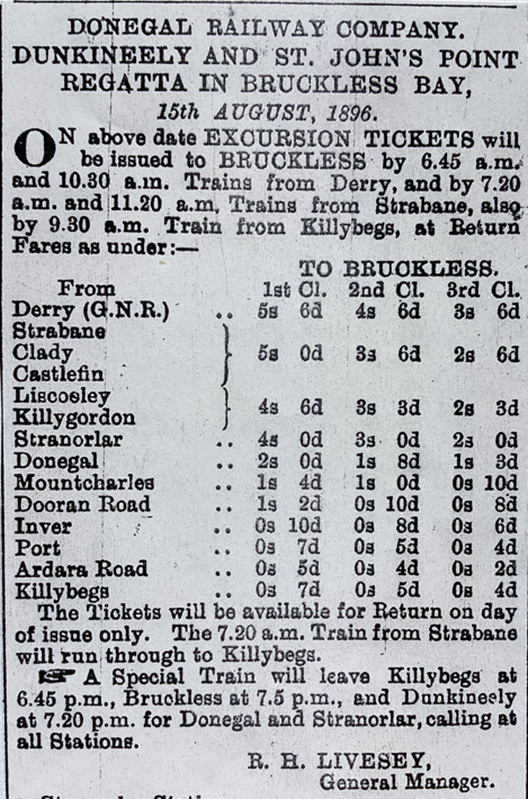
One of the early excursions. St John’s Point Regatta, 1896:

Third class train fare on the 9.30 a.m. from Killybegs to Bruckless Station was 4 pence in 1896.

RAILWAY DAYS

STORIES OF KILLYBEGS RAILWAY.  PART 1.

The 130th anniversary of the opening of the Donegal-Killybegs Railway occurs this month of August 2023.

As the title indicates, this blog will not be a history of the railway line between Donegal and Killybegs.  That line operated for 66 years, and to cover the entire history of it would be a very big task.  The building of the line, and the details of the engines and railcars would alone take ages to document.  Then there was the economics of running the line, and its usefulness to the communities along the route.  The people who performed the day to day tasks might be the most important aspect of the whole business.  The social value of the line would also have to be outlined.

Some of the above might make pretty dull reading, especially if the railway events were listed in order from 1893 until it closed in 1959.  Therefore the plan is to take a loose approach, and put down what is known about a range of things the line brought to those towns and villages along the route. 

Killybegs Railway Station, including dwelling house.  (W. Lawrence collection, N.L.I.)

The train brought goods and passengers, some very popular, some very ‘distinguished’ as they said then.  Excursions to ‘distant’ places were also arranged by the railway, at reduced rates.  Less joyous trips were taken by those emigrating to England or America, perhaps never to return.  It will not be possible to identify all the people who worked on the line down through the years, but an attempt will be made to mention some of them. The aim is to give an overall view of the railway, with emphasis on its impact on the Killybegs part of the line.  Most articles on the railway focus on the technical and economic aspects, but here it is proposed to give emphasis on the social activities made possible by the coming of the new line.

Father Michael Martin, P.P., and the Chief Secretary

First up, it will be necessary to mention the ‘founders’ of the Donegal-Killybegs line.  While there were very many people who contributed to the establishment of the line, two people stand out: they were Arthur Balfour, Chief Secretary for Ireland, and Father Michael Martin, parish priest of Killybegs.  Balfour, although unpopular in Ireland, had the power to sanction or to withhold the line. Father Martin had the contacts, and the persuasiveness to convince Balfour to make it a reality.  These actors in the drama will be introduced at a later stage.

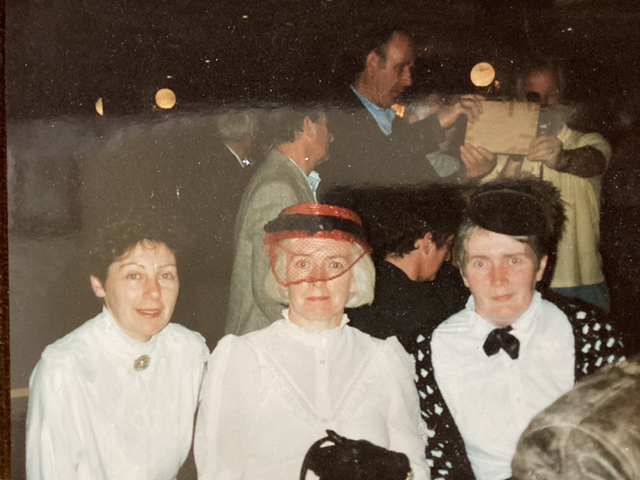
First, it will be appropriate to mention the morning of the 18th August 1993, when a large group of ‘railway’ people gathered in downtown Killybegs to commemorate the opening of the line 100 years previously.  It is good that most of those on the list (already published on FB) are still about, and maybe there are now even more with an interest in that wonderful thing that came to Killybegs in 1893.  That August morning was dark, and it soon came on to rain; the group huddled in at the gable of ‘Sweet News’, and decided to head for the Bay View Hotel.  There, after a short talk on the railway, breakfast was served in the dining room. 

Marian McGuinness, Sheila Harvey and Goldie Conaghan dressed for the occasion, on the morning of 18th August 1993

How many people have railway-related photos that have not been generally seen yet?

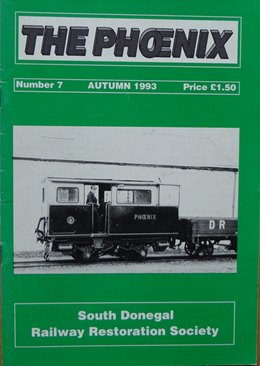
The South Donegal Railway Preservation Society produced a small magazine which they called The Phoenix, and it had some funny articles in its early editions. Below is an image of Issue No. 7.

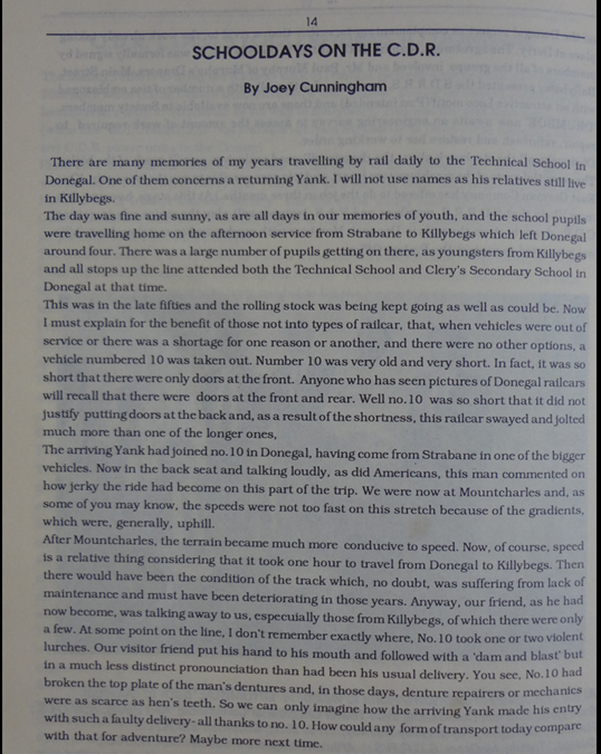
For instance, Joey Cunningham, once of Killybegs, now of Kilcar, and a committee member of that Society, penned an article for the first edition:

Many passengers on the train down the years would have had a story or two to tell; it could be that they are still waiting to be told?

A SHORT HISTORY OF ELMWOOD TERRACE, PART 8 – THE SHRUBBERY

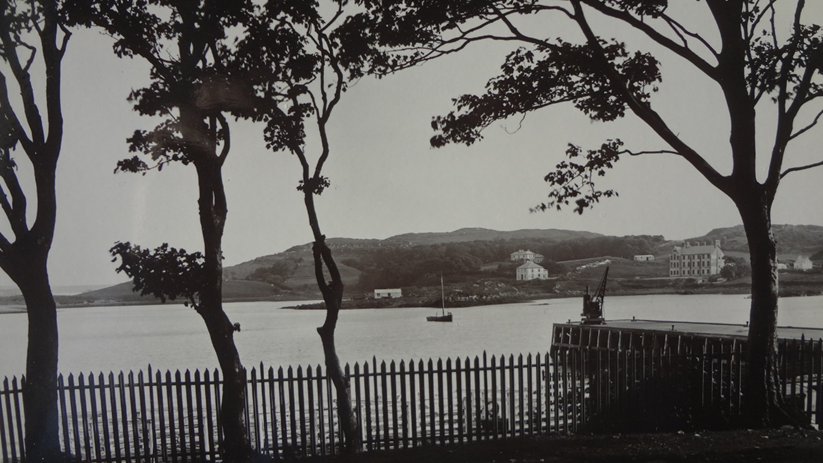
Lawrence photo, taken from the Shrubbery - the first decade of the 20th century.

Lawrence photo, taken from the Shrubbery – the first decade of the 20th century.

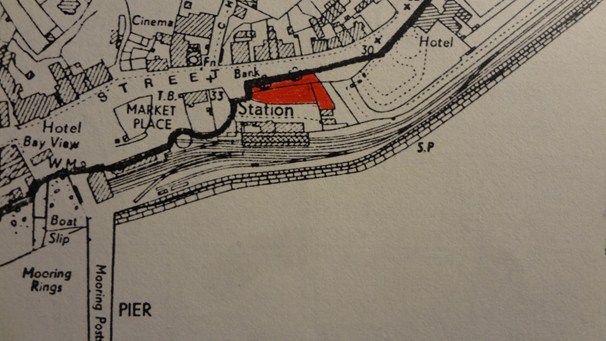
The Shrubbery was a kind of garden which was planted with elm trees.  It was located on the site where outdoor dining area and flower beds of the Tara Hotel now stand.  It was originally created on a piece of ground that was once the foreshore on the south side of the street.  Before that area was developed the tide came up to the southern edge of the street opposite the houses.  To accommodate the Railway Station a large area of the foreshore was filled in opposite Elmwood Terrace.  When the railway works were completed, with station, etc., a piece of the filled-in ground next the street was ‘left over’, and this became the ‘Shrubbery’.

 In memory it was enclosed by green-painted iron railings which were removed over time, and the trees gradually disappeared.  It is likely that the residents of the Terrace were allowed to plant shrubs in the plot.  As the Murray Estate claimed all the ground down to ‘the low water mark’, the Estate deemed themselves owners of this ‘left over’ piece, even though the Railway company had filled it in.

The site of the Shrubbery beween Elmwood Terrace and the Railway station.

The site of the Shrubbery beween Elmwood Terrace and the Railway station.

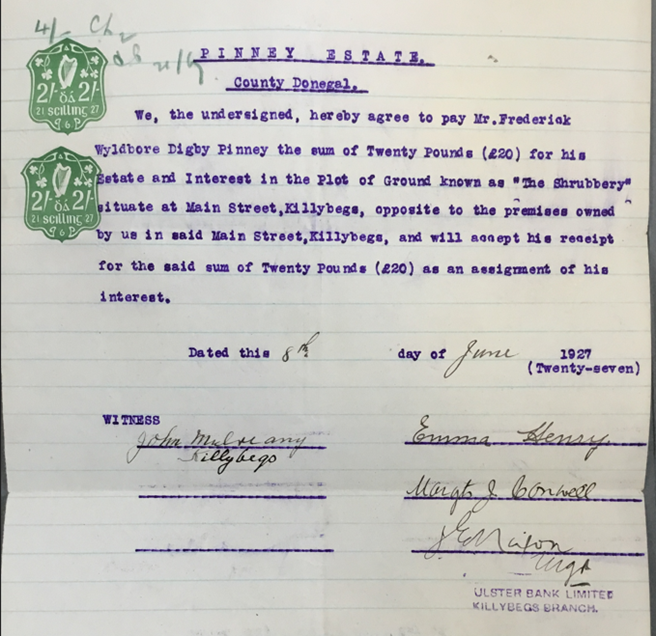
In 1927 some of the residents of Elmwood Terrace entered into an agreement with the trustees of the Murray-Stewart estate to purchase the ‘Shrubbery’.

This is the agreement between the remaining trustee, Frederick Wyldbore Digby Pinney, and the residents, dated June 1927: 

Courtesy of Donegal County Council Archives.

It was signed by Emma Henry, Margaret J. Conwell, and James Nixon, then manager of the Ulster Bank.  Margaret Conwell, known as Maggie Jane, was one of the O’Donnell family of House No. 6 who married Paddy Conwell from what is now Hegartys’ Centra shop.  Maggie was a grand-aunt of Mary and Kathleen Cunningham. The document is witnessed on behalf of the Murray estate by John Mulreany. 

As time went on it fell to the Killybegs Development Association to maintain the Shrubbery.  In the very early 1970s the late Paddy Keeney made some magnificent concrete and wood summer seats, and these were placed on the plot.  In 1973 the Department of the Marine purchased the remnants of the Murray-Stewart Estate to create Killybegs Harbour Centre. The Shrubbery, as part of the Estate was included in the transaction, and remains part of the Harbour Centre.

A SHORT HISTORY OF ELMWOOD TERRACE, PART 7.

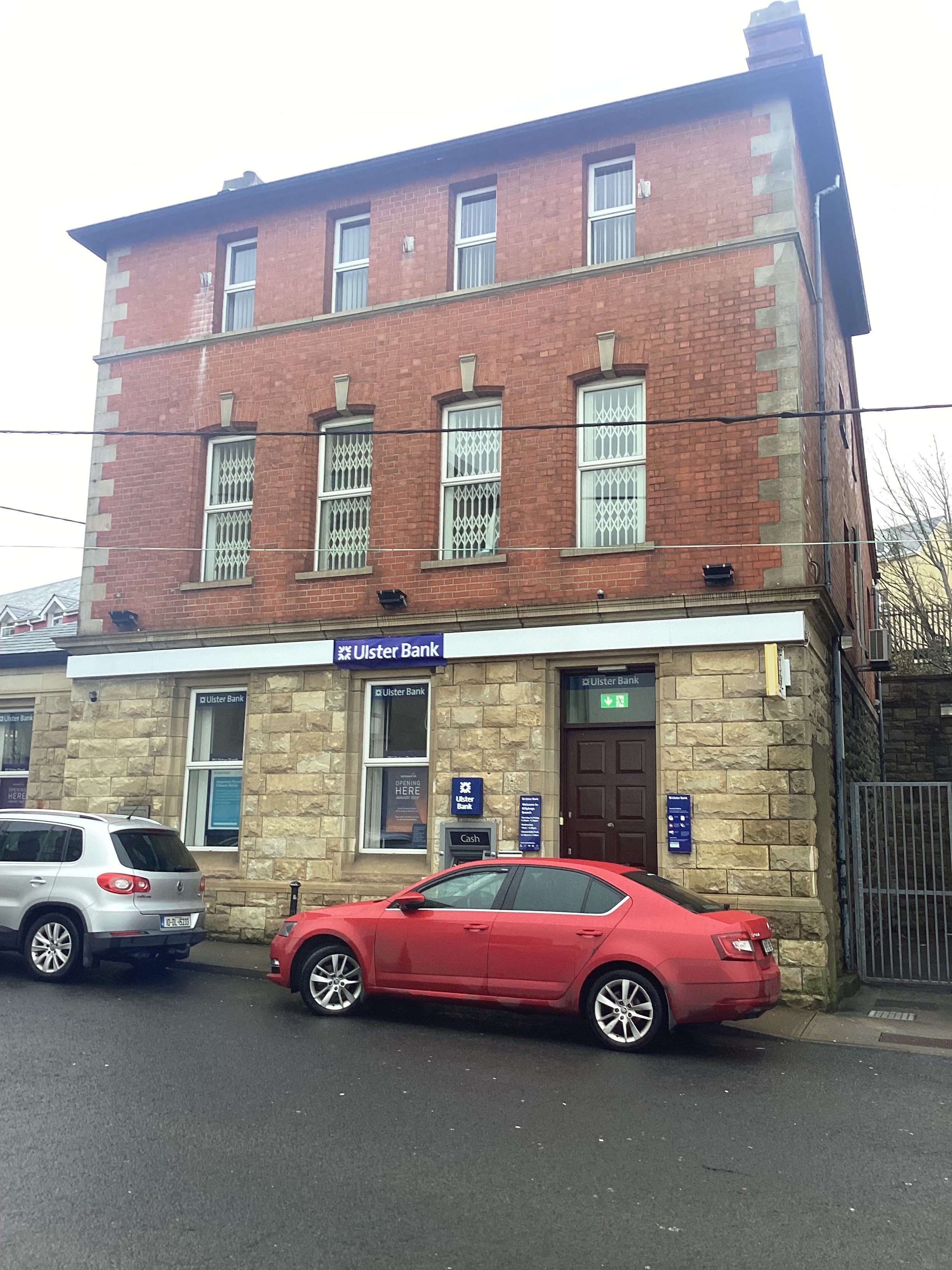
HOUSE NO. 7. THE ULSTER BANK.

The Ulster Bank has occupied the site on the corner of Elmwood Terrace and Chapel Lane for just over 120 years until it changed hands in February 2023.

The piece of ground was occupied by several tenants down through the years, but reliable information is available only from the beginning of the 19th century.  Followers of this blog will remember two out-of-town names from my piece on Dodd’s Garden – Atteridge and Battesby – they lived where the Tara Hotel now stands.

To return to Elmwood Terrace – another such name now comes into play – William Henry Babington, who ran a business in a premises on the corner where the Ulster Bank was later built.

In 1814 Babington was established in Killybegs as a fish merchant.  Before settling in the town he had operated mainly on the north coast of Donegal from late in the 18th century (1789).   In his early years he had been a soldier, but eventually returned to the fish business, owning his own vessel which engaged in the herring fishery at Killybegs.  There will be more about Babington in a different blog.

The First Rogers

The first of the Rogers Hotel family to come to Killybegs was Frank.   When Babington moved on, Frank took over the premises, and traded there for a few years. He then moved to the Diamond and became the proprietor of an establishment which he called The Bay View Hotel.  He sold the former Babington premises to Cornelius McGill for £92 in 1842 in order to concentrate on his hotel, which included a public house and grocery. 

Cornelius McGill carried on a grocery and hardware store but he died in 1847, and his wife Mary died ten years later.  They are both buried in ‘St Catherine’s’ graveyard just inside the entrance gate.    Their son, Michael took over the business – he was about 24 when his father died – and continued the grocery.  In 1865 Michael married Mary, a daughter of Paddy Ramsay, a Killybegs tailor. Mary and Michael had thirteen of a family which included three sets of twins. The names of the children are given at the end.

Michael’s expertise in running the grocery shop is not known, but in 1888 when he was about 56, he received a loan from the Ulster Bank, amounting to £290 11s 4d.  The bank was then located in what is now the Sweet News premises.  There is evidence that Michael was paying off the loan in the normal manner.  The McGill and Rogers families were on friendly terms, resulting from their business dealings.  Michael was in the habit of visiting Rogers’s hotel in the evenings, leaving in the early hours.  Sometime after midnight on the morning of the 2nd February 1892 his body was found floating in the tide opposite the hotel.  One of his legs was broken and his neck injured. He had fallen into what was later called the ‘dock’ between the old stone pier and the small boat slipway.  Both the pier and the slipway are now covered by the Shore Road.  There were no lights near the pier at that time, and there was no wall or fence to stop people falling into the tide on a dark night. 

Although a significant businessman in the town, not much is known about Michael.  It is known that he removed his children from the Murray Schools on the Donegal Road, and sent them to other schools.  The parish priest of Killybegs, Monsignor James Stephens, had opened his new Niall Mor School in 1879 in opposition to the Murray Schools.  The Murray and the Niall Mor were essentially denominational schools.  The McGills had five children of school-going age at that time, and they most probably were attending the Murray Schools.  Monsignor Stephens needed to fill his new school, and exhorted parents to withdraw their children from the Murray Schools.  Michael McGill withdrew his sons Charles (10) and Joseph (9) but sent them to the Commons School.  Presumably he sent the others, Catherine (7) and Patrick (5), to the Niall Mor. 

Michael served on the local relief committee during the famine of 1880, when their meetings were held in Rogers’s Hotel. He continued his long-term friendship with the Rogers family, and was appointed treasurer in 1881 of a committee which presented a purse of sovereigns to a Rogers son.  This was Patrick E. Rogers, grandson of Frank, who was emigrating to the far west, i.e. America. 

The McGill girls in the social and cultural activities of the time in Killybegs, mainly by performing in concerts.  Before the Foresters’ Hall was built the Niall Mor School served as the main venue for community events. It is recorded, for instance that Ellen and Annie McGill took part in concert and performed in a sketch entitled More Blunders than One.  The concert was organised in 1894 by Master Patrick Mulreany, headmaster of the Niall Mor to raise funds to repair the storm-damaged roof.  Ellen and Annie were only two of a big number of young women who lived within yards of each other in that part of town, and were the mainstay of the local concert scene.  The Rogers family of the hotel had Lizzie (30), Christina (23), and Mary (21). The Conwells (Hegartys’ Spar store) had Ellie (30), Kate (25), Lizzie (22), Maggie (20), and Rose (16). The McGills had Mary (33), Catherine (29), Ellen (24), Annie (24), Teresa (21), and Christina (20). The O’Donnells (Mary and Kathleen Cunningham) had Maggie J. (23) and Susan (31).

Ulster Bank takes action.

Despite two of Michael McGill’s sons being in their early twenties when their father died, the family business hit a setback. The Ulster Bank held a mortgage on the premises based on the loan.  Michael had died without making a will, so the Ulster Bank stepped in to protect its investment by calling in the unpaid portion of the loan. It might be said that they saw an opportunity to secure a site for their new bank building.  This meant the end of the McGill business.  Not enough records have turned up to explain how the McGills vacated their premises in favour of the bank.  Mary, the widow, does not seem to have figured in any transaction.  The older children were old enough to run the business, but they don’t appear to have played any part in retaining it.  The only one who seemed to defy the Bank was Mary, the eldest girl, who would have been 24 at that time.  She refused to vacate the premises until she received compensation, but there is no record of how she fared.

Charles Held Liable

The Bank’s legal advisers deemed Charles McGill, the eldest son, as the successor to his father, and held him liable for any debts. The Inland Revenue also stepped in to levy Charles with inheritance tax even though there was no documentation naming him as inheritor of the premises. 

The Ulster Bank obtained ownership on foot of the money owed, which was, at the time of the tragedy, which was £262 6s 5d.  The Bank put the value of the premises at £700.  Michael’s daughter, Mary, the eldest, decided to stay put, and claimed half of the premises or £200, but it seems she did not get anything.  No record has yet turned up indicating a payment to her.  While the public records of these activities are very scarce, there is no suggestion that the Ulster Bank acted in anything other than an honourable manner.

The Revenue Commissioners decided that Charles owed them £337 6s 5d but what emerged after that is not known.  The bank took over the property soon after September 1900, and began at once to build their new red brick premises.  

It appears that all of the McGill family except two had emigrated to the U.S. shortly after the events described above. Those who remained in Killybegs were the daughter Mary, and Charles but they have yet to be traced.  The evidence for the family’s departure for America is slight, only resting on this report from the press of April 1941: ‘Sorrow was expressed at the death in the U.S. of Miss Teresa McGill, a native of Killybegs’.  This may or may not have been the Teresa, twin sister of Cornelius, who was born in 1879 in Killybegs.

New Bank Premises

The Killybegs branch of the Ulster Bank was established at the end of 1870 in one half of the building best known today as Sweet News.  The building was then owned by Neil McLoone, the most prominent merchant in town, and he lived there with his family. The house was so large, he was able to lease half of it to the Ulster Bank. As indicated above, the bank exercised their rights under mortgage agreements between themselves and the McGill family. They took over the McGill premises and site on the corner of Elmwood Terrace and Chapel Lane.  The old McGill store was demolished and the present red brick building was erected during 1901/2

TO BUILDERS.TENDERS ARE INVITED FOR THE ERECTION of a New BANK OFFICE at KILLYBEGS, County Donegal, for the Ulster Bank Limited.Bills of Quantities may be obtained from Messrs.W. H. STEPHENS & SON, Donegall SquareNorth, Belfast, and Plans and Specification may be seen at our Office.Tenders, endorsed “Bank Office, Killybegs” to belodged with us before Ten o’clock Thursday,October 18th, 1900.The lowest or any Tender not necessarily accepted. LEPPER & FENNELL, Architects, 33, Waring Street, Belfast

Although a fine enough structure, the building itself, with its city-like red brick exterior, was always out of harmony with the two-storey slated houses of the Terrace.  It would appear that the bank prospered, although how profitable it was cannot be known.  In what many regarded as a fishing town, the bank took the fishermen’s deposits but there was no question of them advancing money for a boat. This remained the situation for about 96 years, until the continuing success of the fishing industry forced the Ulster Bank to compete with other lending institutions.

There should be McGill descendants?

During the last century Irish death notices often contained the phrase ‘American papers please copy’.  Well, here’s an upgrade to that: American descendants of the McGills please Google this blog, and let us know what became of that family in the U.S.

The family of Michael and Mary McGill:

Mary, Charles P., Joseph, Catherine Agnes & Annie Gertrude, twins, (Annie G. died in 1874), Ellen Jane, Michael James – (died in 1880, aged 4½), Eleanor Cecelia & Anne Gertrude, twins, Cornelius Francis & Teresa Gabriel, twins, Christina Margaret, Michael John.

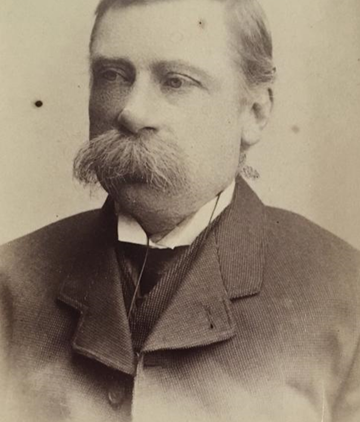
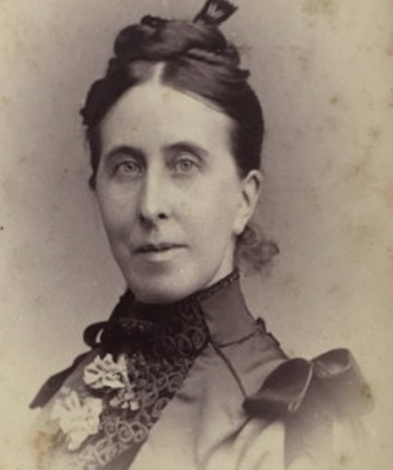
The First Manager of the Ulster Bank, Killybegs.

Thomas Clark Hope. Photo courtesy of Laura Hope.

Emily Jane Hope. Photo courtesy of Laura Hope.

Thomas Clark Hope was born about 1837, and married Emily Jane Higginbotham of the same place, in St Anne’s Cathedral in 1867.

In November 1870 T. C. Hope was assigned to the new Killybegs branch from the Ulster Bank, Ballymoney.  The Hopes arrived in Killybegs with two infants, Emily and Thomas, and rented Croaghlin House for their accommodation.

The Cashier was Stuart Cochrane, who was recalled to the Ballymoney branch in 1875.  To mark his departure they held a dinner in Coanes’ Hotel (now the Cope House), where he was presented with a beautiful engrossed address.  T. C. Hope gave the main speech of the night.

From 1872 Mr Hope was recorded as a Vestryman at St John’s church, Killybegs, and was appointed treasurer in 1884.  His daughter, Emily, received the rite of Confirmation in the same church on 13th September 1883.

T. C. Hope retired as manager in 1898, and moved to a house in the Lough Head area. He died in a Dublin nursing home in 1901, just as the new bank building was under way.   He was replaced as manager by J. F. Harris.  In February 1899 a celebration was held to mark his retirement.  During this event he was presented with a purse of sovereigns and an address by the Rev John Sweeney, P. P., on behalf of the townspeople:

ADDRESS AND PRESENTATION

TO THOMAS CLARKE HOPE, Esq.,

Late Manager, Ulster Bank, Ltd., Killybegs.

DEAR MR. HOPE – Your many Friends in Killybegs and throughout the extensive area in which you worked in your official capacity for twenty-seven years take the opportunity of your retirement from business to express to you their feelings of affection and esteem.

Some of us have known you during the whole of that lengthened period of service, whilst others of our number measure the time of our acquaintance with you from later dates; yet, be our acquaintances long or short, we have all experienced in your manner towards us, both officially and privately, the same courtesy and friendliness, accompanied by a manifest desire to oblige all with whom you had dealings to the utmost of your power; and we are gratified to learn that your services have been generously recognised by the Directors of the Bank.

It afforded us no small amount of pleasure to learn that, on retiring after your many years of service in the Bank, you had decided to settle down amongst the friends you had made in Killybegs.

May Almighty God, in whose hands are the issues of life and death, spare you for many years to enjoy your well-earned leisure.  We ask your acceptance of this Illuminated Address, accompanied by a Purse of Sovereigns, which we feel are but very inadequate tokens of our feelings of goodwill towards you.

(Signed on behalf of the Subscribers by the Members of the Committee)

T. J. Hamilton Gorringe, J. P.       Arthur Brooke, J. P.

Rev. W. Baillie, M. A., Rector.     Rev. John Sweeney, P. P.

Dr J. W. Gallagher, J. P.                John Rogers, J. P.

Samuel Cassidy, J. P.                    James Coleman, J. P.

Rev. H. St G. McClenaghan         Rev. Michael Ward, C. C.

John Gunn                                     Henry Judge

Patrick Conwell                             John Ward

William Houston                           John McGarrigle

Dr W. O’Donnell                           J. A. Thompson

Joseph Murrin                               John C. Ward

Patrick Dorrian                              John McGettigan.

                      J. F. Harris, hon. Treasurer

                      Charles Rogers, J. P., hon. Sec.

Killybegs, 13th February, 1899.

REPLY.

MY DEAR FRIENDS – Surely nothing can be more pleasing to a man in retiring from the work to which he had devoted his life than to receive such expressions of goodwill as those embodied in your Address from those amongst whom he had worked.

I value most deeply your kind words relating to myself and my work.  I value your gifts far more on account of the feelings which prompted them than for their intrinsic value.  It shall ever fill me with thoughts of pleasure to behold this beautiful Address and to read the very familiar signatures which are appended to it.  These names placed beneath such terms of affection shall ever be before my mind and fill my thoughts with the faces and voices of very true friends.

It is indeed a matter of intense gratification to me that my new home and continued presence amongst you should give you pleasure.  May He whose blessing you so tenderly and lovingly ask upon me make me daily more worthy of your kindness.

Your sincere Friend,   THOMAS C. HOPE.

A SHORT HISTORY OF ELMWOOD TERRACE, PART 6.

HOUSE NO. 6.

This is the home of Mary and Kathleen Cunningham who conducted the local Post Office there. The house was built on a site that changed hands several times.  In 1843 James Coane, a brother of Roger, the proprietor of Coanes’ Hotel, later the Cope House, sold it to the Parish Priest of Killybegs, Dr William Drummond, for £10.   Then, in his will made in 1863 Dr Drummond left the site to Patrick McLaughlin of Castlemurray, in the parish of Killaghtee.

The present house was built on that site in 1893 by an unknown builder, and the first owner was Anthony O’Donnell. He was born in Enniskillen in 1837, chose the police as his career, and was eventually posted to Killybegs.  He married Margaret McGonagle, daughter of Pat ‘McMonagle’* and Catherine McShane, They had a family of thirteen, eleven of whom can be identified.  Anthony’s wife Margaret died suddenly in March 1905 while attending a concert in the Niall Mor School.  From the beginning Anthony O’Donnell ran a grocery shop in the premises until he died in 1925.

*The name ‘McGonagle’ seems to have changed to ‘McMonagle’ over the years.

Prominent among the O’Donnell family were the brothers Joseph and Frederick both of whom entered the Church.

The Family of Anthony and Margaret O’Donnell.

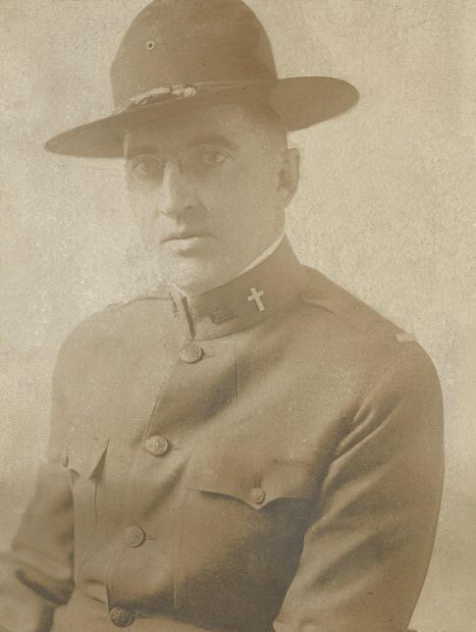
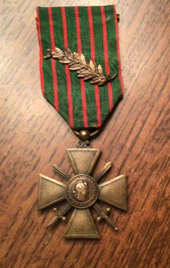
Joseph. After attending the Niall Mor School, Killybegs, studied in St Eunan’s College, Letterkenny.  He entered Holy Orders following a period of study at All Hallows College, Dublin, and was ordained by the Most Rev Bishop Davis on the last day of 1905 in St Mary’s Cathedral, Davenport, Iowa.   He enlisted in the U.S. Army as Lieutenant Chaplain, and left for France in June 1918.  Rising to Captain Chaplain, he had a short but distinguished career in the Army, being on duty at the battles of Aisne, The Marne, St Michel, and the Meuse-Argonne Offensive.  This last battle was the largest American offensive in France in World War One, with over a million soldiers participating, and about 26,000 soldiers killed in action.  Father O’Donnell was wounded in September 1918 during this battle, for which he received a gold chevron.  He was later presented with the Croix de Guerre by the late King Albert of Belgium, being cited for courage and coolness under fire.  Father O’Donnell was appointed to St Francis de Sales parish, Keokuk, Iowa, in 1934, and died there on 27th March 1939. The funeral took place at Keokuk, and was attended by the Bishop, six Monsignori, and 150 priests, plus members of the Knights of Columbus and the American Legion.

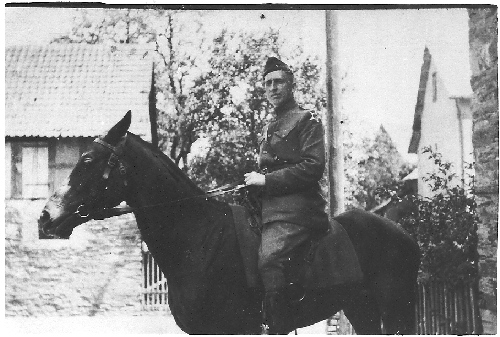
Once, when home on a visit, Father O’Donnell had his batman with him, who stood outside the door all night.

Father Joseph O’Donnell. Photo: Paul Cunningham

The Cross de Guerre

Father Joseph O’Donnell in military uniform. Photo: Paul Cunningham

Fred became Superior of the Oblate House in Inchicore.  He was ordained in Liege in 1910, and ministered first in Winnipeg, Manitoba. He returned to Ireland in 1919 and conducted Missions throughout the country, as well as in England and Scotland. He also gave Missions in the Diocese of Raphoe in the year before he died.  While conducting a Mission in Co Cavan he became unwell, and died in the Mater Hospital, Dublin, on 7th October 1937.

Bridget married John Flanagan, and the Flanagan line was established. She died in 1929 at age 50.  John, who died in 1936, was the father of the well-known Leo Flanagan, Killybegs. Leo resided in The Moorings, the former private residence of Captain John Gunn, Divisional Officer of Coastguards for the Killybegs District, on Church Road.  John Flanagan’s daughter, Kathleen, married James Cunningham, who served as Killybegs Postmaster.  Kathleen and Charles O’Donnell’s widow, also Kathleen, (see below), were keen card players, and won very many first prizes at the Whist Drives which were held in the Niall Mor School between the Wars.

Patrick, the eldest son, trained as a teacher and began his career in the Niall Mor School.  He married Agnes O’Connor, of Killybegs, who was listed as ‘a milliner’, in 1895, in St Mary’s church.  Their friends from ‘next door’ (Sweet News premises), brother and sister, Neil J. and Lizzie McLoone, were Best Man and Bridesmaid.  Patrick went on to teach in Rathmullan, but failing health forced him to return home, and he died at Elmwood Terrace in 1930.  His widow returned to Rathmullan and died there in 1934 aged 72; she was buried in Bruckless cemetery.

Susan Mary.  In 1930 when her brother Patrick died at Elmwood Terrace, Susan was living in Glasgow.  She had married James Mulhern of Meenreagh, Killybegs.  He was born in 1881, and entered the Commons School at age 7. He emigrated to Glasgow in about 1900 and joined the police force.  Subsequently he married Susan, probably in Scotland. He rose through the ranks, and was appointed in 1922 Lieutenant in the St Rollox Division.  In 1928 he was transferred to the Central Division, where he often performed the duties of Superintendent. He also acted in the absence of the Procurator Fiscal, and frequently conducted the prosecutions in the Stipendiary Magistrates’ Court.  James retired from the force in October 1932.

Maggie Jane. When she was 36 in 1914, she married Paddy Conwell from the grocery shop where Hegartys’ Centra store is now located on the Diamond.  They had one child, Patrick Raymond who died on the 6th September 1917 at seven days old.  Maggie was one of a group of girls who joined the women’s branch of the Foresters in 1910, along with her friend Josephine Leeson.  Josephine and another sister, Kathleen, are mentioned below under Charles O’Donnell.  Paddy Conwell contributed largely to the commercial and social life of Killybegs, being, at various times a grocer, conductor of the Killybegs Brass Band, fish salesman, angler.  He was renowned for his acting ability on the local stage.   Maggie Jane died of the flu in 1929 at age 41, and Paddy died in 1944, aged 72.

Maggie Jane, along with her sisters and friends, plus the Conwell girls of Main Street (Hegartys’ Spar shop) were frequent performers (acting and singing) at the concerts before the First War, which were held mostly in the Niall Mor School.

Charles worked as a clerk in the Killybegs Railway office, directly opposite his home.  He married Kathleen Leeson in 1911 in St Michael’s church, Dun Laoghaire, bride and groom being 27. The officiating clergyman was the Rev. Fred O’Donnell, O.M.I., brother of the groom.  Kathleen, known as ‘Kit’, was a sister of Josephine Leeson, the wife of Mick Rogers in House No. 1.  Charles joined the British Army, 2nd Battalion, Rifle Brigade, and went to war.  He was killed in action in France on the 19th November 1917, aged 33.  His widow spent the rest of her life in Killybegs, for a time living in one of the houses next to today’s Boathouse Restaurant.  She took a prominent part in the local social scene and was noted for her skill at Bridge and other card games.  Kathleen also wrote poetry.  Anne Marie Ellis has drawn my attention to this poem of Kathleen’s:

Remembering Donegal
Oh to feel again the magic of those hills,
Cloaked in mauve and purple heather. Embroidered bracken green
Above lanes perfumed and narrowed with woodbine-pinky cream
Long slanting rays of westering sun,
Weaves a veil of dear designing; a misty sapphire hue the many ridges show,
Some towering bleak and sentry-like, foundations ‘neath the tide:
Some gently sloping to a cliff with samphire covered side,
And there far off like giant dolphins petrified.
Then gazing o’er the valley, placid valley of one’s dream
Where peat smoke slowly rising from cabins in between
Weaves a veil of dear designing; a misty sapphire hue
Changing mountains brown and loamy to a wondrous shade of blue.
And yonder torrent, crashing down with creamy spume and spray,
Enhancing all that loveliness while hurrying on its way
Beneath the arched bridges to the embrace of the sea.
So, whether through an April shower or Autumn gleam descried
Some impress of that picture on the memory abide.
(K. O’Donnell)

To Continue the O’Donnell family:

Anthony was a pupil of the Commons School, died in 1884 aged 13 years.

Cornelius Francis was born in January 1880; died at 7 days.

Rose Anne married a Mr Walker; she died at Elmwood Terrace in 1937, a widow, aged 70.

John. Born in Ballyshannon in 1864. Nothing known about him.

OCCUPANTS OF THE SHOP

Anthony O’Donnell ran a grocery shop in his house from the time he occupied it in 1893.  He also sold delph and china, and was an agent for the sewed muslin (sprigging) trade from 1900.  His was the only shop in town that sold the newspaper, United Ireland.   Anthony died in 1925, and the business was taken over by his daughter, Maggie Jane and her husband Paddy Conwell. (See above).  Tragedy struck the O’Donnell family in March 1929 when two sisters died.  First, Bridget, wife of John Flanagan, died on the 24th, followed five days later by Maggie Jane Conwell. (See Maggie Jane above).

There is a period of about ten years when the occupants of the shop cannot be confirmed.  It is possible that one of the O’Donnell family, Maggie Jane, and her husband, Paddy Conwell, moved in to run the business.  It is thought that Paddy was running his family shop (where Hegarty’s Spar shop is now located), at that time.

Meanwhile in Glasgow, James Mulhern had retired from the police force in 1932, spending a few more years there until Susan and himself, returned with their family to Killybegs.   The approach of the Second World War may have influenced them in their decision, because they arrived back in Killybegs in the summer of 1939.  They immediately re-opened the shop as a newspaper and magazine outlet, with James himself behind the old-style counter which was on the left side of the entrance.

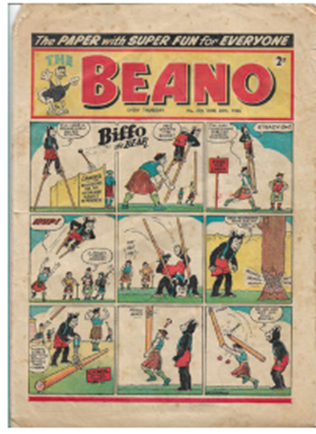
The existing shops in town were already selling the ordinary newspapers, so James had to sell magazines and comics.  Luckily for us kids he had the Beano and the Dandy, the best reading available in Killybegs.  When you went in to get the latest episode of Dennis the Menace or Korky the Cat, Mr Mulhern would be there behind the counter wearing his hummel doddies.

All went well until James’s wife Susan died in 1951, and he never re-opened the shop, selling the contents of the house by auction on the premises.   The Mulherns had four of a family – Vincent, Rose, Patsy, and Eithne.  Vincent married a teacher, and they had two girls. Both Rose and Patsy were very good-looking, Rose being tall and red-haired.  Rose, who at that time was teaching in St Cuthbert’s School in Glasgow, married Edmund Rogers of the hotel dynasty in the same year she returned from Glasgow, and they had four of a family.  The wedding took place in St Mary’s church, the bride wearing ‘a beautiful turquoise blue frock, with brown coat trimmed with fox fur, crocodile shoes, suede gloves, brown turban hat, and accessories to match.  She was attended by her sister, Patsy Mulhern, and the Best Man was Michael Rogers, the groom’s brother. The wedding reception was held in the bride’s home on Elmwood Terrace, there being ‘upwards of twenty guests present’.

Edmund returned to Killybegs to reside in his retirement home on Church Road.  One of his regular visitors was John McGilloway, who played with him on the Killybegs teams of the 1930s.  They recalled the old days when, e.g. they were team-mates on the Killybegs side that won the final of the Holmes Cup at the end of 1931. Edmund was a genial host, putting out three glasses which he filled with the ould stuff spiked with warm milk.

Patsy Mulhern, brown-haired and handsome, married, as his first wife, Dr Malachy McCloskey of Glenties, and they had two of a family, Malachi and Claire.   Eithne Mulhern was tall and dark; she married a soldier, J. Kielty, of Athlone, and went to live in England.  She was noted as an expert card player at Whist Drives in Killybegs.

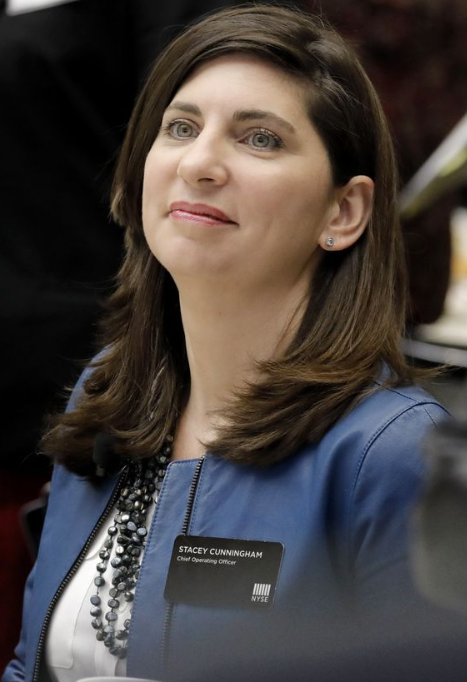
James Cunningham was born in Ballyara in 1895, and, with his brothers Con and Charles, took part in the War of Independence. James was later awarded two medals for his service. The two brothers had to emigrate to the U.S. because they were wanted by the British military between 1919 and 1922. Con Cunningham’s grand-daughter, Stacey, went on to become the 2nd female President of the N.Y. Stock Exchange.

Stacey Cunningham

In the 1930s James married Kathleen Flanagan of the O’Donnell/Flanagan family (see above), and had six children. He was appointed as the first agent of the Sea Fisheries Association in Killybegs in 1935.  This appointment was necessary because the small Dingle trawlermen, who were members of the SFA, came north to fish out of Killybegs. James was appointed Postmaster in November 1952, and his daughters, Mary and Kathleen ran a most efficient operation there until recent times. He died in Killybegs on 12th June 1973 at the age of 78

Other Occupants of The Shop

The Cannon sisters, Cassie and Anne Jane, kept a drapery, dressmaking and millinery shop in Killybegs from 1917.  There is uncertainty as to the location of their first shop, but Killybegs folklore suggests that they conducted their business in O’Donnell premises at some time. Cassie retired in 1940, and she died a year later.  In 1943 Anne Jane married Tom Small, an Insurance clerk, and went to live in Dublin.  She was known in Killybegs as ‘Nan Small’.   The sisters were aunts of the late Peg Murrin of Conlin Road. 

Rooms were taken in House No. 6 by P. J. O’Gorman, dentist, who had a visiting practice on Fair days in 1930.

House No. 6 has remained in the ownership of the same extended family.

Thanks to Paul Cunningham and Elaine Quinn, Killybegs; Marie Thornton, Burt; and the late Moira Mallon, without whose help this blog could not have been compiled.

Note: The Paddy Conwell mentioned here should not be confused with another prominent businessman of the same name, who was the owner of the former Central Bar and a great grandfather of Mary Fitzgerald Lafferty.

A SHORT HISTORY OF ELMWOOD TERRACE, PART 5.

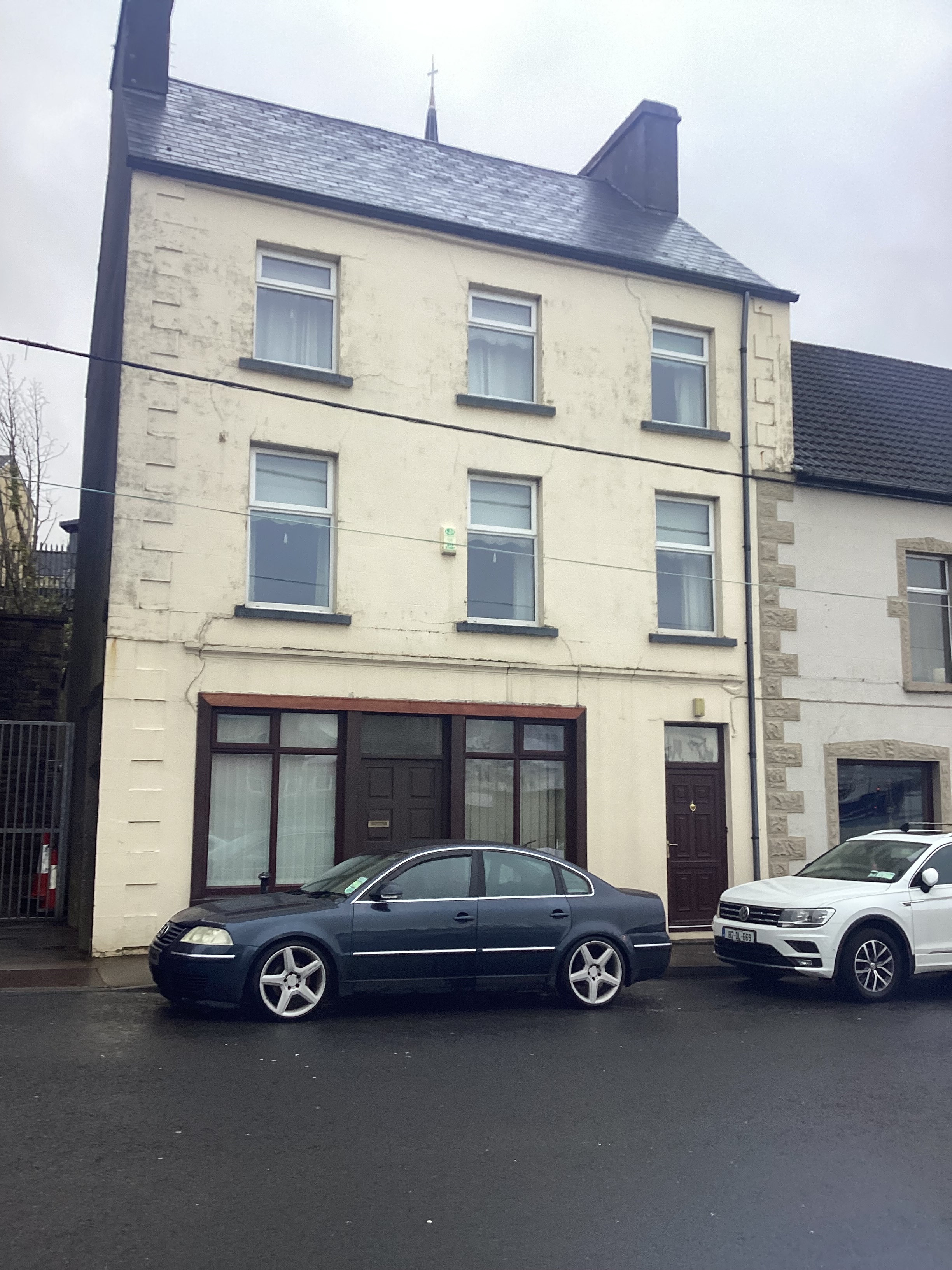
House No. 5.

House No. 5.

This house on Elmwood Terrace is now occupied by the Anderson family.  Some owners of the site on which it stands can be identified from the 1840s.

John Rogers of Keelogs, Inver (no relation of the Rogers family of the Bay View Hotel) is first up.  In 1842 he owned this site just east of where the Ulster Bank now stands.  John Rogers sold the plot to James Coane on 2nd August of that year.  This is an extract from the agreement:

In consideration of £20 sterling paid [by James Coane] to John Rogers ….  ALL THAT AND THOSE that piece of Building Ground in the town of Killybegs containing in front 60 feet and in the rear 42 feet From front to rear 95 feet bounded on the East by the said John Rogers’s premises, on the West by Cornelius McGill’s premises, on the North by the Reverend Doctor Drummond’s premises and on the South by the Street.

James Coane was a brother of Roger who built Coane’s Hotel, now The Cope House.  Then, on 28th February 1843, James sold the western half of the site to the Rev. Dr William Drummond, Parish Priest of Killybegs, for £10.  It remained vacant until Dr Drummond died in 1863, when, by his Will he left the site to Patrick McLaughlin of Castlemurray, St John’s Point.  McLaughlin was a wealthy and deeply devout person who was the occupier of many properties in Killybegs and Killaghtee.

The next reliable record comes as late as 1894 when William Houston, a Killybegs auctioneer, offered two houses for sale on Elmwood Terrace. This is the auction notice for House No. 5:

WM. HOUSTON,
Auctioneer and Valuator, Killybegs.
VALUABLE LEASEHOLD PROPERTY FOR SALE,
BY PUBLIC AUCTION,
IN THE TOWN OF KILLYBEGS, COUNTY DONEGAL.
I HAVE received Instructions to SELL BY PUBLIC AUCTION, on TUESDAY, THE 4TH DECEMBER, 1894, at ONE o’clock on the Premises, in Two Lots,
Those TWO NEW HOUSES, immediately opposite the Railway Station.
Lot No. 1 –Large Two-storey DWELLING HOUSE, with commodious Shop and Nine spacious Rooms, with a Frontage of 42ft., and 60ft. in rere.
A New Lease will be given for Ninety-nine Years, at the Annual Rent of £4 4s sterling.

The First Owner of the House

Dr Joseph W. Gallagher, a Glenties man, was appointed medical officer in Killybegs in August 1890.  He purchased house No. 5 when it came up in the above sale in 1894.  He was listed as living there in 1901 with his wife Janie, (nee Verschoyle), his two daughters and a son.  1904 was a tragic year for the Gallaghers- Janie died in February at age 38, and the doctor died of a heart attack in August.  He was attending a patient, Patrick Cunningham, in Tullid, when he died, probably of heart disease. He was just 42 years old.  

Joseph W. Gallagher II

The eldest son, Joseph W., joined the British Army as an infantryman, returned to Ireland and entered the insurance business.  He started with the Hibernian Insurance Company in 1921, and eventually rose to the position of managing director. Holding this position from 1945 to 1960, he became a prominent figure in the Dublin insurance sector.  He also served as President of the Insurance Institute of Ireland, and President of the Dublin Chamber of Commerce.  He was also a director of the Dublin Port and Docks Board, and a Governor of the Skin and Cancer Hospital, Hume Street.  He was a member of the Lansdowne and Monkstown Rugby Clubs.  He died in December 1974.

The Second Owner

Readers will remember Henry Judge who lived in house No. 4; he now purchased the Gallagher house from the trustees of Janie Gallagher’s estate in 1905. 

 Henry Judge. Photo courtesy of David Henry.

The first thing he did was to advertise it for letting.  It was he who put the name Elmwood on this house. Dr Gallagher had provided rooms in the premises for the local Medical Dispensary, and Judge promised the health authorities that he would continue to make them available.  However he changed his mind for some reason. When the provision of Dispensary facilities was then put out to tender, Patrick Quinn was awarded the contract.  He agreed to provide accommodation in Drumbeagh House at a rate of £10 per year, providing ‘depot, attendance, and fuel’.  Patrick Quinn was the grandfather of the late Miceal Quinn, electrical contractor, whose shop stood on the site of the present Cara Pharmacy.

The Third Owner

Henry Judge died in 1912, leaving Elmwood House to his niece Emma Henry, who was then married and living in Ballyederlan,  St John’s Point.  Emma continued to reside with her husband and family in the Point, only moving to Killybegs to House No. 4 in 1945. (See previous blog). She sold her two-story house and farm in Ballyederlan in 1959.  It seems that she never lived in House No. 5 on Elmwood Terrace, preferring to lease it to various commercial tenants, the house having been built with a shop window in front.   For the space of 54 years Mrs Henry let out this premises to various people, both private and commercial.

Millinery and Drapery shops were very popular in the early years of the 20th century, and several such shops are listed in Killybegs, such as: The Gillespie sisters, the Cannon sisters, Josephine McLoone, the Leeson sisters, and others.  Josephine Leeson married Mick Rogers who lived in house No. 1, his house, so it is possible that she had her shop in Elmwood House when they first met.

It is probably too late to recover the full list of tenants, but several of them are known:

Customs Officer Prosecutes French Skippers

The widow Sarah Byrne kept a millinery shop there from 1911, being a sitting tenant when Emma Henry inherited the house.  Mrs Byrne’s son Thomas was a Customs officer who was stationed in Killybegs from 1910 until 1923.  He was the complainant in 1921 against the skippers of two French lobster boats, Marie des Anges, and Turenne, which were caught fishing in inshore waters.  The charge was that they fished in the neighbourhood of Killybegs, within the exclusive fishery limits of the British Isles.  They were arrested by HMS Newark of the Royal Navy.  The skippers were fined £5 each, with £5 costs, and their pots confiscated.   It is likely but not certain that the Customs and Excise Office was located in House No. 5.

Local barber and musician Connie Gallagher leased the shop part of the premises sometime in 1930, the legal agreement being drawn up by Mrs Henry herself.  He described himself as a hairdresser. He also sold sweets, and taught the fiddle to boys in the winter months.  He was paying £1 10 shillings per month for the shop, but the business failed, and he had to vacate the premises by 1st January 1931.   Connie is remembered in the 1950s for his barber shop on the Back Street where young lads could get a haircut with a sheet of newspaper tucked in around the neck.

There is a gap in the occupancy at this point.

Guard Manning lived there in the 1930s.

Sergeant Frank Flood, G. S., was posted to Killybegs in the summer of 1935, and he lived on Elmwood Terrace with his wife Kathleen and their two daughters Alice and Catherine. 

James McLeod’s father, Neil, came to Killybegs in 1936 to advise James on the purchase of a seiner, and stayed in Elmwood House.

Mrs Kathleen Thornton ran her drapery shop there before she moved to Upper Main Street next to the Bank of Ireland.

Jack Nolan, cashier in the Ulster Bank, & family resided there in the 1950s.

Nora and James Gallagher ran a drapery business in the premises from about 1957 but they moved to Mountcharles in 1961.

Bridport-Gundry sold fishing gear from that shop in the 1960s, with Roger Hutchins as manager.

In August 1966 Emma Henry instructed auctioneers Boyle and McBrearty to offer Elmwood House for sale:

SALES BY BOYLE AND McBREARTY
Town of Killybegs, Co. Donegal
For Sale by Proposal, DWELLING HOUSE, SHOP,
YARD, GARAGE, OUT-OFFICES.

We are instructed by Mrs Emma K. Henry, to receive offers in writing for all that dwelling house, shop and premises, situated on the Main Street in the town of Killybegs.  The premises consist of a large shop and dwelling house, containing drawing room, dining room, kitchen with Rayburn cooker, scullery, etc. On the first floor there are four large bedrooms and three attic rooms, also bathroom and separate toilet.  Main water supply and electricity.  There are several door entrances to the shop and dwelling house and a gate entrance from the street to the yard at the rear, in which there is a good spring well.
These premises are held in fee simple, free of rent, Poor Law Valuation £23, and are situated adjoining the Post Office in the centre of the town of Killybegs, overlooking the harbour and are ideally situated for any class of business as well as residence.  They are in excellent repair and ready for immediate occupation. Anyone interested should take this opportunity which seldom arises of purchasing an excellent premises in this progressive and business town with fishing and other industries, extensive harbour and beautiful scenery. Proposals will be received up to 5 p.m. on 9th September, in writing, to the Auctioneers. For further particulars, apply to Messrs. Reid and Sweeney, Solicitors, Ballyshannon, having carriage of sale.

Boyle and McBrearty, Dunkineely.

The Fourth Owners

The premises were bought by Patsy and Maeve McGowan who operated a B & B business there for a time, before they moved to Donegal Road.   During their occupancy the house was made available to the Kilcar Pipe Band as an ‘away’ base when they came to play at the Regatta and Sports each year, according to Maeve, who might enlarge on this at some time.  Killybegs owes a great debt of gratitude to the members of this Band for their unfailing support down the years when there was nothing here to lead a parade.  Kilcar had a marching band since at least 1875, and no doubt it performed at Killybegs events from that time onwards. However lack of records means that the earliest date now found is 1934.  In that year the Kilcar Band was recorded as playing at the Regatta & Sports in Killybegs.  From then onwards they came willingly and gave their time and their music, receiving nothing in return but maybe a meal in the Coane’s Hotel, later the Cope House.   

House No. 5 was afterwards purchased by Rolf and Siv Anderson and remains in that family today. 

A SHORT HISTORY OF ELMWOOD TERRACE, PART 4.

House No. 4

House No. 4, soon to be home to the Credit Union.

This blog should have started with House No. 2 because of a woman who was known long ago in Killybegs as ‘Mrs Henry’.  Some people thought she was associated with house No. 2, and also with house No. 5, but no one could confirm this.  Also someone reported seeing an elderly lady standing in the doorway of house No. 2 in the late 1950s, and thought it was Mrs Henry.  (The person in the doorway was Mrs Catherine McHugh).  Some of Mrs Henry’s descendants knew she owned one house on Elmwood, but not two.  The answer to part of this puzzle will become clear below.  The other part will be clarified under House No. 5 later.

Emma Kilby Henry. Before introducing Emma K. Henry it is necessary to go back to the closing years of the 19th century. As the 20th century dawned a new era seemed to open up for Elmwood Terrace. The Ulster Banking Company of Belfast played a major role in the layout of the Terrace at that time. The Killybegs branch of the Ulster Bank was then located in what is now the Sweet News premises.  Across Chapel Lane, and on the corner, stood Michael McGill’s grocery and hardware shop, an old and very large establishment.  This premises and the McGill family will be treated under House No. 7 to be posted later.  In the 1890s the Ulster Bank acquired McGill’s premises and also House No. 4 and its garden.  They erected their new red brick bank on the first site, and sold the other one to Henry Judge.  This other site included the (still) vacant yard between House No. 4 and House No. 5.

A reproduction of a plan of 1900 showing the sites sold by the Ulster Bank.

The ‘Gallagher’ house refers to House No. 5, and the ‘O’Donnell’ house

refers to House No. 6 in this blog.  These houses will be dealt with in later blogs.

Who Was Henry Judge? Henry Judge was born in Donegal town in about 1844, and worked in the offices of solicitor James Dunlevy as a clerk. He first appeared in Killybegs in 1894 as a Commissioner for Oaths but his day job is not known.  Soon he was appointed Clerk of Killybegs Petty Sessions (Court). He married Margaret McClintock in the Methodist Church in Donegal town in 1882.  By 1897 Henry and Margaret were living on Main Street, Killybegs in the house immediately to the east of the present Boathouse restaurant.

The census of 1901 shows the Judges living there, and their 14 years-old niece, Emma Kilby McClintock, Margaret’s niece, in residence with them.  In 1910 Emma married James Oliver Henry of Ballyederlan, St John’s Point, and set up house there. In the following year their first child, Henrietta, was born.  James Oliver was a local magistrate who sat on the Bench at Killybegs Petty Sessions. He was involved in an unusual case concerning a pound note in 1912. (See this story at the end). The late Naul Henry of Dunkineely was a son of James Oliver and Emma.  Naul married Elizabeth Boyd of Loughros Point in 1950. They are not part of this story.

Henry and Margaret Judge lived in house No. 4 until his death in 1912.  Margaret died there on 17th January 1924 at age 76, and was interred in St John’s graveyard, Killybegs.  Henry is buried in the Abbey cemetery, Donegal town, this separation being the result of ‘a family dispute’ it is said.

He left the house to the niece, Emma, and she moved to House No. 4 following the death of her husband in 1945.  The occupancy of the house between Margaret Judge’s death in 1924 and 1945 is not known at this time. 

(Henry Judge had also purchased house No. 5 further along the Terrace years earlier – this house will be dealt with next time).

Henry had also bought the Robertson Schoolhouse on St Catherine’s Road, and bequeathed it to the Methodist Church.  This is how it became known as the Methodist Meeting House.  It has been in the ownership of the John Conaghan family of the Brocky, Killybegs, for many years. 

Electric Light. Before the Electricity Supply Board came along the town electricity was provided by the Electricity Station at the local Boatyard.  The Boatyard and generating plant were owned by the Irish Sea Fisheries Association (ISFA).  Emma Henry had her house No. 4 wired for electricity in 1950. Local contractors were hired to wire the houses for the new AC current of the ESB.  The ESB did not have a high opinion of the people of Killybegs and Kilcar.  They posted notices advising householders that: Houses that are not wired cannot be supplied with electricity (!).  

During the change-over the ISFA issued the quarterly electricity bills, and its officer went around each house collecting the money and issuing receipts. Emma was careful to preserve her receipts, and several of these have survived.  The receipt below shows the local ISFA officer, Sean McGettrick, as the collector in 1950, and the cost of wiring the Henry house.  Miceal Quinn, starting out in his career, had contracts for wiring houses for the new electricity at that time, and it is most likely that he wired Mrs Henry’s and the other Elmwood houses.  Willie McShane of Kilcar was another contractor undertaking this work.

A receipt for £10 0s 5d for work carried out to your instructions from the ISFA, KILLYBEGS ELECTRICTY STATION, to Emma Henry, dated November 1950.

Emma Henry died on Elmwood in November 1970, and was interred in Killaghtee cemetery following a funeral Service in her home.  The house was inherited by her daughter Henrietta Emma Olivia Green.

The Elm Cafe. Soon afterwards Jackie and Philomena McBrearty purchased the house and turned it into a commercial premises by opening the Elm Café. It was they who changed the appearance of the facade by putting in the two large picture windows in front.  In 1977 it was purchased by Andersons Mink Farms Ltd.

McBrearty’s Footwear. The premises was sold in 1981 to Conor McBrearty who began trading as McBrearty’s Footwear in November 1982.

The premises were offered for sale in 1986:

The Case of the Pound Note. Emma’s husband, James Oliver Henry, was a local Magistrate, and he sat on the bench as a Magistrate at Killybegs Petty Sessions Court.   This was before Independence. On Monday 13th May 1912 he was involved in the case of a young man by the name of Erskine, who found a pound note on the street while going in the direction of Killybegs pier. He was charged with larceny by RIC District Inspector Augustus Le Clere MacDonald who resided in the Ardara RIC barracks.  The famous solicitor, James Dunlevy of Donegal town defended the case.  He said the law was well settled, for the finder of an article had good title to it against all the world except the owner thereof, and no charge of larceny could arise or be sustained unless it was found that he had appropriated it to his own use.  A pound note was simply a promissory note payable to bearer on demand, and that no owner had turned up to claim the lost pound.  The man could not be charged with the offence so long as he was prepared to give the owner a pound.  There was no intention of appropriating the money in that case as the man was not hiding it or attempting to hide it.  Everything was above board and publicly given to the finding.  In point of law, the police or no one else were entitled to the custody of the pound, and his client was entitled to hold it until the true owner turned up, and the Court should therefore, order the return of the money now in the custody of the constabulary to the man charged.  The magistrates ordered that the money be returned to Erskine.

At the time of writing Ballyshannon and Killybegs Credit Union is about to move into these premises from their location on Main Street.