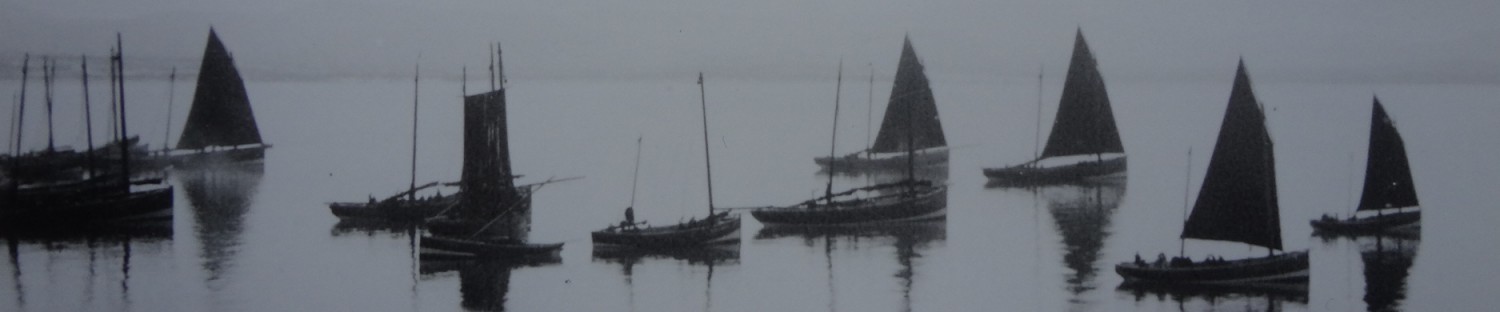
Teacher wanted for Killybegs Industrial School. R.C. Salary £20 yearly, with board and lodgings; good testimonials are necessary. Apply to Manager, stating age, qualifications. 14 January, 1899.
Author: pconaghan
Mistakes & Omissions (2)
| Assistant Teacher, R.C., wanted for St Columba’s Industrial School, Killybegs, Co Donegal. Apply to Rector, stating clearly terms, age, qualifications; trained where; recommendation from PP necessary. 5 June 1897. |
St Patrick’s Day, Kilcar.
We can see the origin of the Kilcar marching bands in this report from 140 years ago:
On St Patrick’s Day, at an early hour, the silence of the morn was broken by the pleasing sound of fife and drum playing favourite national airs along the streets of Kilcar village. Shortly after ten o’clock a procession was formed, preceded by flag bearers, and followed by a fife and drum band. The members of the procession wore green scarfs, with white border and fringe, and a white cross on each end, white sashes, green neckties, and green ribbons around their hats. One of the flags was very beautiful, representing on one side ‘the harp’, with the words Erin Go Bragh; on the other, the Sunburst, Round Tower, and Wolf Dog. A second flag had on one side a representation of our Patron Saint, and on the other the inscription God Save Ireland. The procession being joined by members from Killybegs bearing flags, they marched to the chapel where they attended Mass, after which they marched in the direction of Killybegs, a distance of some miles. They then turned back and marched towards Carrick, followed by thousands of lookers-on, who much admired their good order and conduct. Here they were heartily cheered by the multitude awaiting them; and those of the party who belonged to that district went to their respective homes. The main body of the processionists marched back to Kilcar, where they dispersed, every man going immediately to his house. It is gratifying to find that not one of the processionists, not even the thousands who accompanied them, was known to enter a public house on that day. Much credit is due in this locality to Mr. C. O’Donnell, who presented the party with a beautiful and costly flag; also to Messrs John Gallagher, P. Murray, M. McGuire, and M. Cassidy, the gentlemen who, with Mr. O’Donnell, acted as officers on the occasion. They exerted themselves successfully in organising the party, and must feel happy that all passed off quietly and respectably.
Mistakes & Omissions
My book, St Columba’s Industrial School, was published last year. Perfectly done? Not exactly; here are some of the mistakes that have come to light since:
- The list of Chapters at the beginning does not always correspond with the page numbers – there is a slippage of two or three pages.
- Page 339: The boat, Ard Finnian, D402, was not built for Shemie Corr, but for Paddy Sugrue of Howth.
And here is the first of the things that did not make it to the final version:
Omissions from St Columba’s Industrial School (1).
During my time in the Boatyard each new boat setting out on a passage to its home port was monitored by the foreman, Charlie Conaghan, until it arrived safely.
The smaller boats that had no radio equipment were tracked using the Garda stations on the coast, which were alerted to the approximate time of the boat’s passing their district. The Garda were always very co-operative in this kind of exercise, and went out of their way to report back on a sighting or arrival of the boat and crew. The phone system then was primitive and slow, but the method worked very well. When the Garda at the boat’s destination, who had been given an approximate ETA, reported its safe arrival, the Yard personnel could relax. Before the phone system reached Killybegs, any such scheme had to rely on the Telegraph, and would have been very cumbersome.
In 1929 some Easkey fishermen had a yawl, built at the Boatyard, and set off for home. The bigger boats were always supplied with masts and sails, (Tommy Cunningham of Spout street being the rigger), but the Easky men had oars only. The men on board were: Michael Munnelly, Killeenduff, Easky, aged 30, married, six children; William Leonard (20) Easky, single; Patrick Weir (30), Fortland, Easky; Thomas Killeen (30), Easky.
It was in March when the men rowed out of Killybegs harbour for home, as this report explains:
‘The feared loss of the Easkey fishermen who had left Killybegs in an open boat, and were not heard of for several days caused anxiety in the town. Rev. J. Deeney, Rector of St Columba’s Industrial School, where the boat was built, was in touch with the relatives of the missing men during practically all the time, but unfortunately could not give them any consoling news. On Saturday the Government patrol steamer, Muirchu, arrived in the harbour. Father Deeney went on board and suggested visiting Inishmurray Island. The captain agreed, and a couple of hours afterwards the vessel reached the island. A boat was lowered and a few of the men went ashore. Immediately on landing they learnt of the safety of the missing men. It appears that the boat was not equipped with sails, and that progress by rowing was necessarily slow. Shortly after leaving Killybegs a dense fog enshrouded them. Bereft of a compass, and in strange waters, the crew were absolutely helpless. They continued rowing, but having provisions for only a few hours’ journey, their food supply soon became exhausted, and their powers of endurance consequently curtailed. Fortunately the sea was perfectly calm. After 36 hours of rowing they knew not whether they sighted land through the fog. It proved to be Inishmurray. They landed, and were well looked-after by the hospitable islanders. They resolved to remain on the island until the fog cleared away, but had no means of communicating with their friends. The arrival of the Muirchu was timely in that respect, as messages were sent to Easkey as quickly as possible, and all anxiety allayed’.
Sea Stories (1)
It’s time to leave the land for a while, and post some stories of the sea:
‘On Monday, 12th March, 1827, about noon, during a heavy gale, as Archibald and William Clarke were conveying Miss Margaret Cochrane across the ferry from Greencastle to Magilligan Point, when about a hundred yards from the Magilligan shore the boat upset and, awful to relate, these three individuals were almost instantly consigned to a watery grave. A fourth person on board, a lad named John McKeevers, who had charge of the helm, narrowly escaped death by climbing on the keel of the boat. The two unfortunate brothers who perished were as expert and respectable boatmen as any on our river. One of them was only a few months married. Miss Cochrane was an amiable and interesting young woman; she had been on a visit for some time at her brothers, William Cochrane of Derry, and George Cochrane of Quigley’s Point, and was hastening home to her father in Portrush, who was anxiously looking out for her return, when the dreadful catastrophe occurred’.
The Wee Toon
Not sure if this is Ulster-Scots, but here goes. It was written in 1917:
Am comin’ noo tae a very important place ca’d Killybegs, on the sea coast, an’ yin o’ the nicest wee places yin cud weesh for. This is anither terminus o’ a branch o’ the wee Donegal railway, an’, like ither places, the road an’ the rail rins sidey for sidey. Killybegs has yin o’ the best an’ safest harbours in Ireland, an’ has a depth o’ 24 feet at the deep water pier, which they say cost £10,000. There’s a lichthoose at the entrance, at a place ca’d Rotten Rock, an’ the quay is juist close tae the hotel on the ither side o’ the street. A guid when o’ships o’ the Armada wur wrecked alang this coast, an’ yin o’ the Spanish captains wha escaped frae a wreck said the Irish wur guid luckin’, the weemen beautiful but badly clothed. (I suppose that was afore the days o’ the Donegal tweed). The people lieve on yin male a day o’ oaten breed an’ soor milk, an’ meat on fast days. Weel, there has been a change since then, for ivery body lucks tae hae plenty tae baith eat an’ drink in Donegal.
One Hand on the Wheel (1955)
Michael Dalton, E.S.B. controller in the Ballyshannon Power Station invented a new smoking aid. Realising how distracting it can be when the driver of the car starts fumbling in his pocket for his packet of cigarettes, he produced a neat little bracket which holds the cigarette packet and the matchbox open, and the whole gadget is held neatly and secure by two suction cups on the dashboard in front of the driver. The invention enables the driver to extract a cigarette, and to light the match while keeping one hand on the wheel.
ACROSS THE BAY – A TOUR TO KILLYBEGS AND CARRICK – 1876.
‘A drive of three miles from Ballyshannon took us to Bunatroohan, a small fishing station on Donegal Bay, where we were to embark in a stout open boat for Killybegs. The little fishing community at Bunatroohan possesses about six boats, the owners of which are hardy and industrious men. They are sadly in want of a quay, the building of which would cost scarcely £100. At 6.30 we boarded the boat with the owner and two men. We had three oars and a mast, which could be hoisted in case a breeze sprang up, as it did before we were long out. It took us two hours and a half to cross the bay to the lighthouse at St John’s Point, to reach and cross another and smaller bay, named McSwyne’s.
This narrows into a noble waterway a mile in length and as straight as Sackville Street, at the head of which nestles Killybegs, under the shadow of its mountains. An object of interest was a whale, which followed us a couple of hundred yards off for half an hour, showing in its gambols every now and then its black back, about twenty feet long, above the sea. On nearing St John’s point we observed that the tip of the peninsula is really an island, separated from the rest of the promontory by a channel of about thirty or forty yards. At first we thought of shortening the journey by running through this channel, but the rush and roar of the waters in it and the height to which the foam was dashed against the rocks deterred us from the attempt. We gave it a wide berth accordingly, and rounded the island into McSwyne’s Bay at the head of which, some five or six miles distant, we saw a glimmer of the lighthouse that was out guide into Killybegs. Some sunken rocks lay straight in our course, and manifested their presence by rolling up the elsewhere smooth waters into an angry heap, and sending them furiously scudding eastward half in foam, to the promontory which we desired to skirt. The foam was lifted far higher than our mast, and was driven with a force which would have instantly capsized any small vessel in its way. We bore away, therefore, to the west, and gave our dangerous friend a wide offing.
By and bye, it became necessary to alter our course from west to north, and as the slight breeze was nearly in our teeth, we took down our mast and threw new energy into the rowing. Night fell, and we spent a tiresome two hours more in pulling up to the second lighthouse, from which our run home into the little harbour of Killybegs was comparatively easy. We were very cold and cramped on climbing the quay, but half an hour’s drying at the kitchen fire of the hotel and a refreshing wash-up sent us with hearty appetites to the excellent supper prepared for us by Mrs Rogers. Killybegs is at once wild and cosy. You feel yourself free from all the trammels of gentility, without falling into any of the discomforts of barbarism. The scenery is charming. In front of your hotel, a long water-lane, ending in the Atlantic. A few small craft in the harbour – one of them has brought sawn planks from Sligo, another coal from England, and the rest look like pleasure boats. There are a couple of hundred houses, small, but substantially built, and most of them neat in aspect. At the left, as you face the sea, rises the square tower of the Catholic Church, which dominates the straggling little town, and is a fine object of view from sea and land.
It contains a large and excellent replica of Murillo’s Holy Family, presented by a former lord of the soil, and recently well restored by Mr Lesage, of Sackville Street. There are other interesting monuments in the Church, which the visitor will do well to study with the aid of the Illustrated Hand book of South-Western Donegal, published in 1872 by McGlashan and Gill. Killybegs is, par excellence, a watering place for a family of boys and girls. There are no bathing boxes for the latter, but there are plenty of nooks at a little distance from the town where a modest maiden can prepare for her bath, and the boys can have ‘headers’ into deep water at many still more convenient points.
I spent an hour inquiring into the rent of houses and cost of living. You can get a very fair cottage with a sitting room and three bedrooms for £10 a year, unfurnished, or for £20 furnished. There are plenty of delightful sites which you could get for a nominal sum, and build on at your own discretion, and thus possess a perpetual refuge in the hot summer months, for a sum which would only pay for equal accommodation for a single season at Southport or Brighton. Butchers’ meat, milk, and butter are about seven tenths of Dublin prices, and boats and donkeys are to be bought or hired at very moderate rates.
- There are no social amusements, but there is plenty of fishing with long lines and with the rod, and there are endless excursions within easy reach by land and water. If the excellent hotel had a billiard table it would pay, and be a great resource. The post car leaves for Carrick at 1 p.m., and today it started with a companion vehicle and some emigrants, whose relatives bid them adieu with all the lamentations usual on such occasions. A couple of hours afterwards our party started, not without regret, and after a three hours’ drive up hill and down [dale] and through half a dozen villages unknown to fame, drew up at the handsome and comfortable Glencolumkill Hotel of Carrick. The day was very hot for Ireland – 78 in the shade, I was told – and a tub was most acceptable before dinner, which consisted of half a magnificent salmon, a tiny roast leg of delicious mutton, good new potatoes, without other vegetables, a pudding, and some really excellent claret, at 3s 3d a bottle’.
Captain/Senator James McHugh
Interesting to see the February 1 post on TYFK and the link to the obituary of James McHugh. He was ‘born in Killybegs’ in about 1835, and died in the U.S in 1903. Some of his great- great grandchildren may still be alive there. There are no birth records going back to the 1830s that would indicate exactly where James came from. There were seven McHugh households in the parish of Killybegs in the early 1830s, including the premises where Hegartys’ Spar store is now located on the Diamond. On the other hand, McHugh may have come from Kilcar, as Killybegs was the Post Town for Kilcar back then and many Kilcar people gave Killybegs as their address. The name was very often written as ‘McCue’ in the old days, and was very prominent in Kilcar, especially in the townlands of Croaghbeg and Muckross. Anyway, James got on well in America, as the obituary below makes clear. The American Civil War is very well documented, and a lot of detail about the battles in which McHugh fought can be Googled.
FUNERAL OF CAPT. McHugh. Services to be held at the Church of SS. Peter and Paul tomorrow. The funeral of James McHugh, who died on Saturday night at his home, Meridian and Twenty-second streets, after two weeks’ illness, will take place tomorrow at 9 a.m. The funeral service will be held at the church of SS Peter and Paul.
He was born in Killybegs, County Donegal, Ireland, sixty eight years ago. He emigrated to this country in 1854, and after a brief sojourn in New York, came to Indiana, settling in Terre Haute. From that place at the breaking out of the civil war, he enlisted as a private in Company A, Thirty-fifth Indiana Volunteer Infantry, the Irish regiment. He served four years and two months and came out of the service with the rank of captain, gained by gallantry in the field. He was made second lieutenant for gallantry at Stone’s river; first lieutenant at Chickamauga, and captain for noted service in the Atlanta campaign. At the close of the war he settled in Indianapolis and married Miss Elizabeth Burns, who, with one son, William Todd McHugh, survive him. Shortly after their marriage, Captain and Mrs McHugh engaged in the millinery business in South Illinois street. This business continued until six weeks ago, and in it they acquired a competency. In 1882 Captain McHugh, who had long been recognised as a quiet but effective Democratic leader, was elected a member of the Indianapolis Board of Aldermen, and in 1892 was elected a State Senator from Marion county. IN 1893 he was appointed by Governor Matthews one of the commissioners to assist in locating the position of Indiana troops on the field of Chickamauga. In recent years Captain McHugh had travelled a great deal, both in this country and in Europe. He spent several summers in Donegal, where he took great interest in yachting in Killybegs bay, and was known as the American commodore from the fact that he always flew the American flag from his yacht. (Indianapolis News, 21 December 1903)
This below is from another paper:
SENATOR McHUGH DIES SUDDENLY AT HIS HOME.Born in Ireland, Prominent in Political Circles and Held Many Offices of Trust.AN EXTENSIVE TRAVELLER, Senator James McHugh died last night at 7.45 at his home on Meridian and Twenty-second streets, of haemorrhage of the stomach after a lingering illness of two weeks. Senator McHugh’s death was quite unexpected for a few minutes before his demise he was talking with the members of his household gathered around his bedside and appeared in best spirits. Senator McHugh was born in Killybegs, Donegal, Ireland, and emigrated to this country, landing in New York. After remaining in that city a short time he came West in obedience to the advice of Horace Greeley and after travelling through the West for some time, Senator McHugh settled in Terre Haute, Ind. Mr McHugh enlisted as a private in Company A, Thirty fifth Indiana Volunteer Infantry, and served throughout the war, winning for himself a great name as a valiant and brave fighter. At the close of the war he came to this city to reside and shortly after married Miss M. Burns. Senator and Mrs McHugh opened up a millinery store on Illinois street, which was operated until about six weeks ago. He was planning a trip to the Philippines and the Hawaiian Islands at the time of his death. Surviving him is his wife and one son, William Todd McHugh. (Indianapolis Journal, 20 December 1903)
Captain McHugh is recorded as a judge on the Flagboat at Killybegs Regatta of 1897. He was present again at the 1900 Regatta, where he was Vice-commodore and also a judge. His yacht, Fusilier, came third in one of the races, but it is not known if he sailed himself. His last visit to Killybegs was for the Regatta of 1902, when he was Vice-commodore and also a judge of the yacht races. On the day before this Regatta, young Hugh Cunningham of Spout Street was drowned from his boat while sailing in the harbour. As a result, no Regattas were held for several years.
Poem (2)
This poem by James Conwell of Killybegs was published in Bygones:
Oh, there’s Diana rising over Carn, full
And on the town of Killybegs her golden light she spills,
Reflecting in the harbour St Mary’s on the hill,
A monument of olden days of faith and hope and skill.
Stars are winking earthwards; all is calm and still
Save music sweetly flowing from every brook and rill.
Troutlets ring the crystal pools above their umberbeds
And wild ducks haunt the bracken on the borders of Lough Head.
Across the spawn that reaches to Benroe,
From out the purple heather the Moorcock loudly crows;
The cuckoo sweetly calling from the tree tops ever green
And the corncrake is mimicked from Brookhill to Carnaween.
‘Tis sweet to gaze on Croaghlin when fading from your sight
And sweeter when illumined by the Rotten Island light;
The waves that dash along its base, they hail from Drimanoo,
They spend their force at Roshin and return full charged anew.
There’s music in their dancing, seems a host of angels sing,
Then lustral dews are falling and the Angelus bell it rings;
There is romance in the stillness and a seeming fairy spell
Through the vista near the Rectory and around St Catherine’s Well.
There’s a dullness creeping o’er me, and I must seek repose;
For tonight I will be dreaming e’er my sleepy eyes they close.
Of tomorrow in the offing, and the sunshine on the crags,
Reflecting in the harbour and the church and Killybegs.
 killybegsbooks
You must be logged in to post a comment.