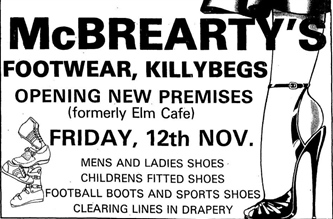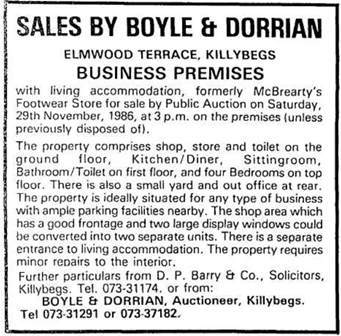
A SHORT HISTORY OF ELMWOOD TERRACE, PART 3

House No. 3

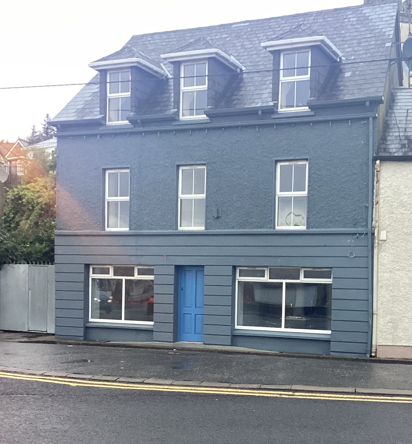
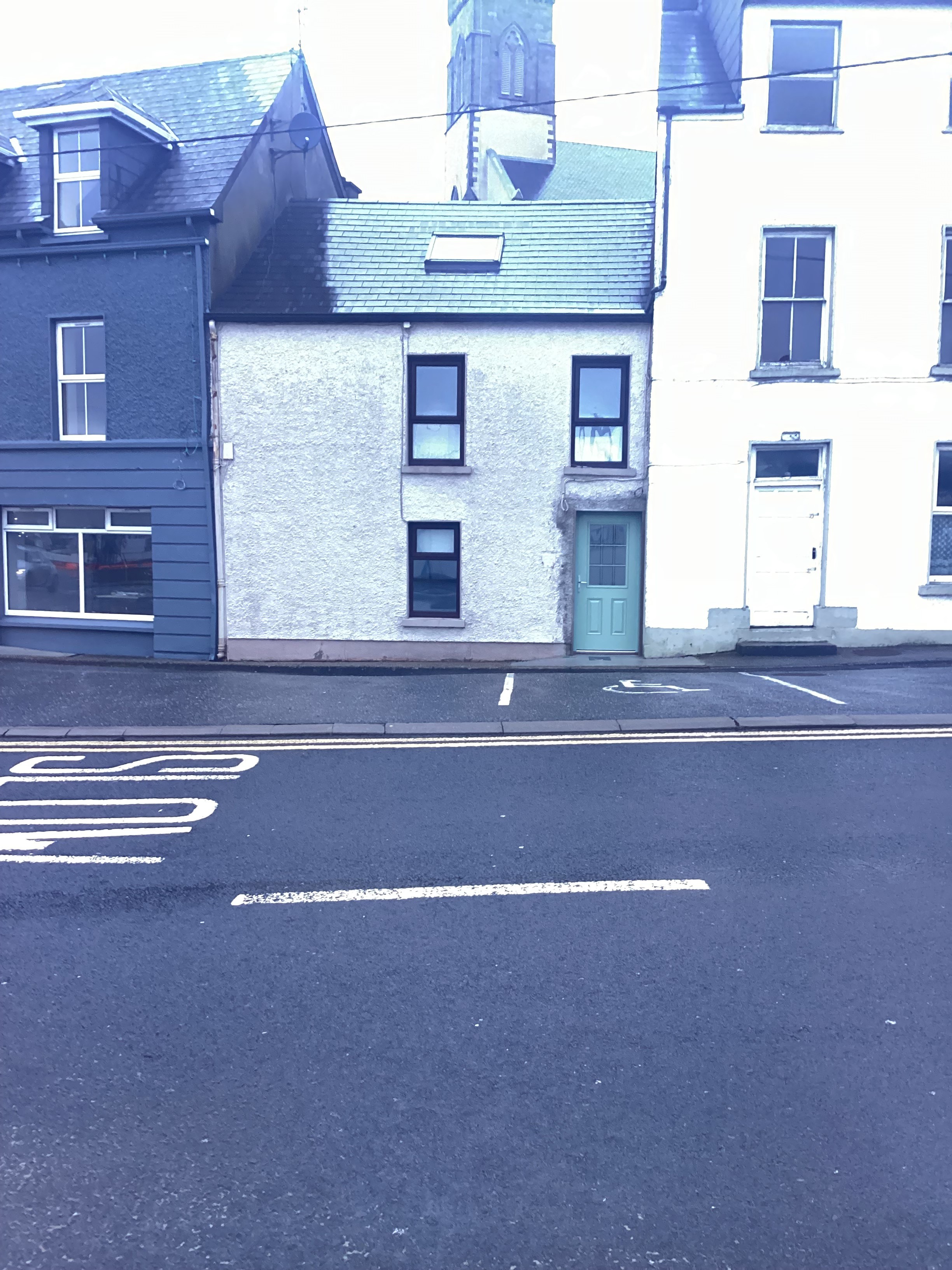
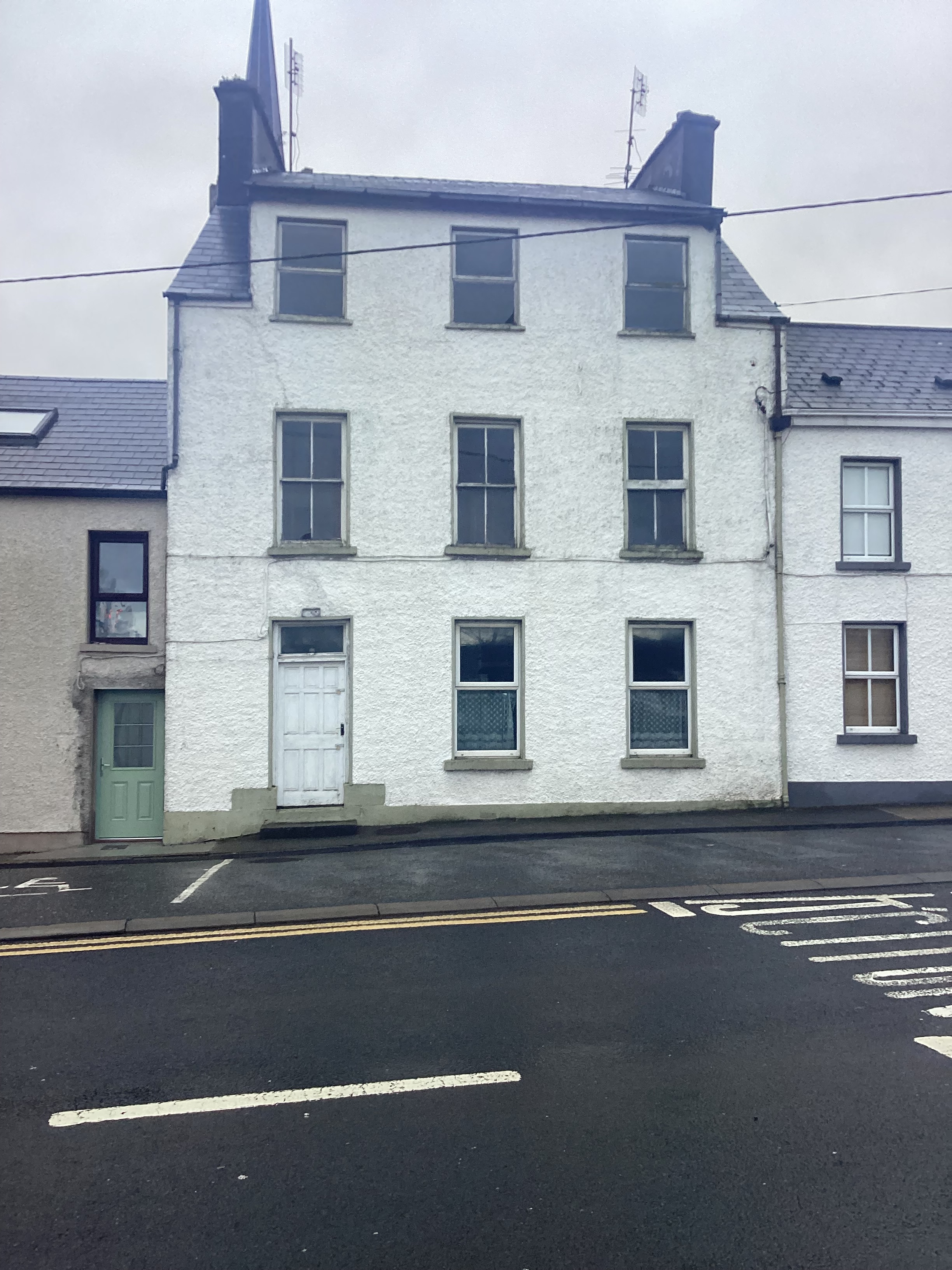
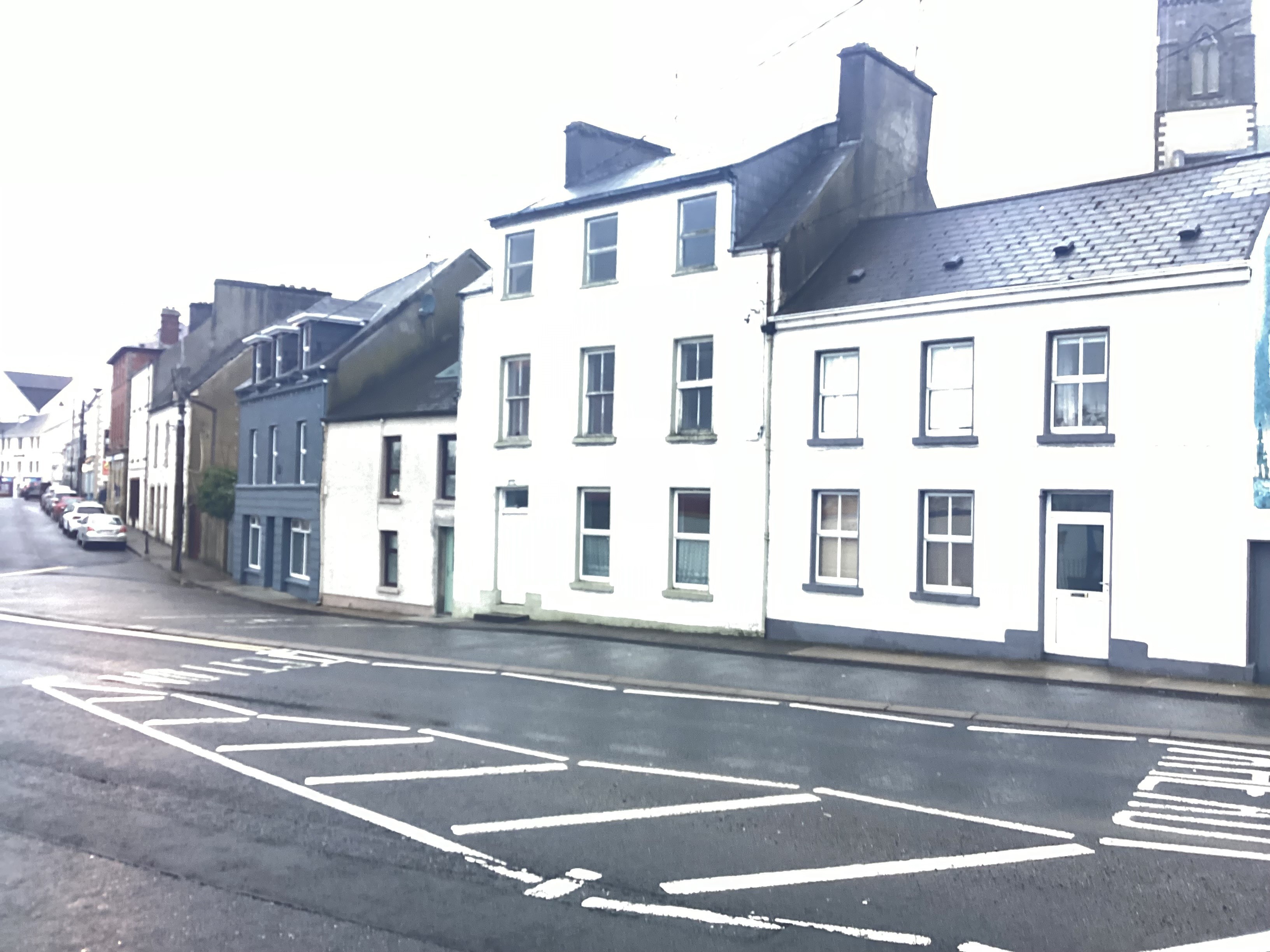
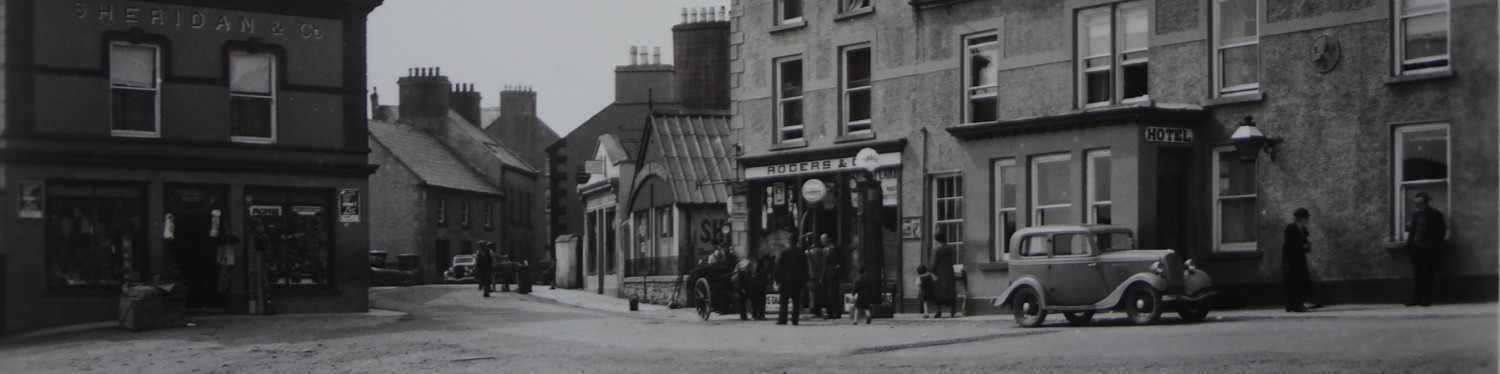
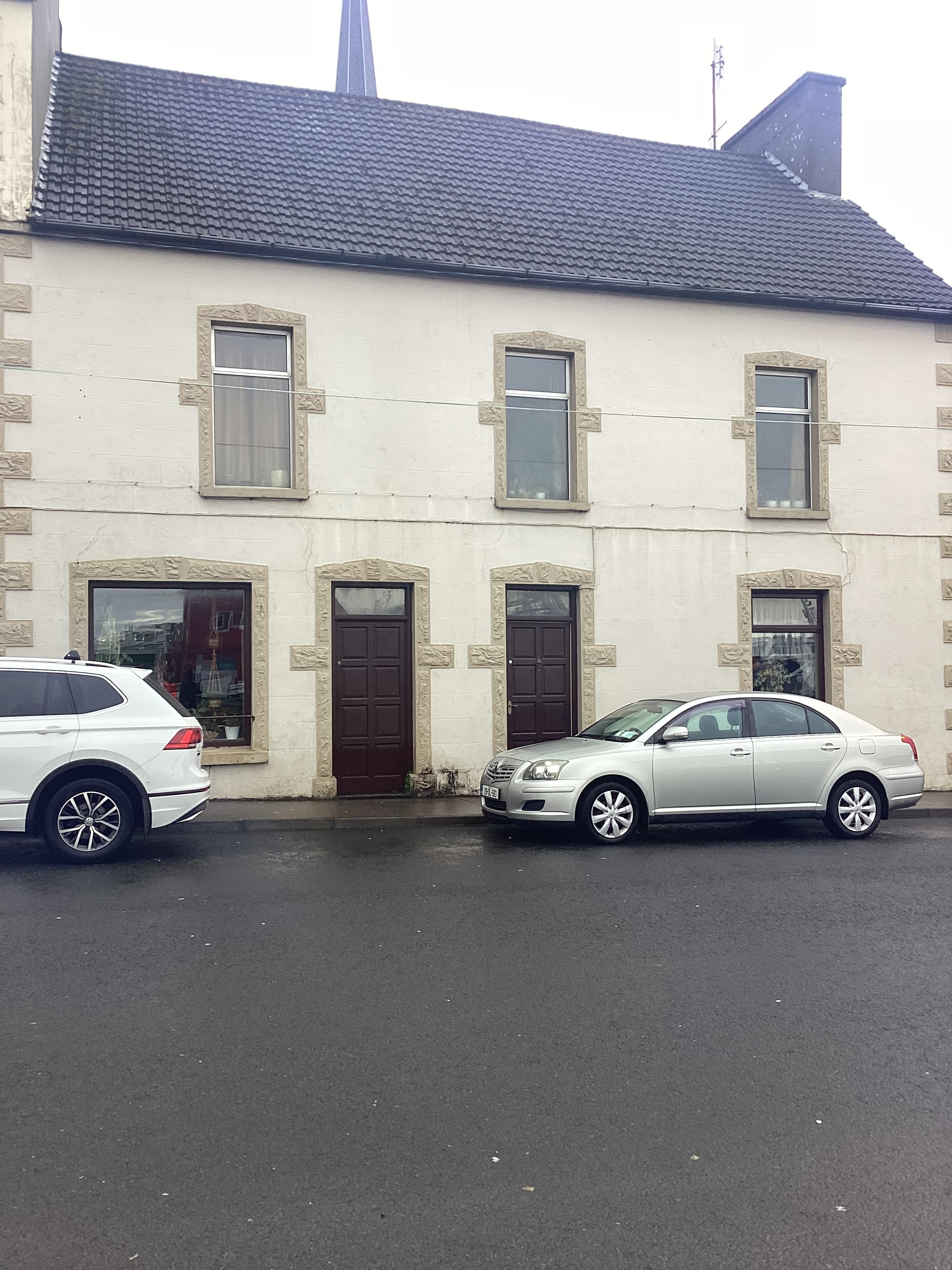
This house is still visible today as it was in the 19th century. The east side of it looks like it has been cut off, but it is, in fact the frontage of a full house, or part of the frontage. Two old, smaller houses were demolished on its east side, and the new house No. 2 was built up against it.

In 1857 house No. 3 was in the possession of Robert Rodgers of Keelogs, Inver, who had other properties on Elmwood Terrace.  The next record appears in the Census of 1901, in which the house is occupied by Mary McCloskey (60), and her son Anthony Conwell, (40). Anthony worked in one of the several bakeries in town. His mother died in 1908, and Anthony was still alive in 1911.  From 1915 house No. 3 seems to have been owned and occupied by a newly married couple, Sarah and Louis Crawford.

Sarah Crawford, the Postmistress

Sarah was the daughter of Anthony and Anne Conwell who lived and ran a grocery store where the Hegartys’ Centra store is now located on Main Street.   Sarah married a Donegal town man, Louis A. Crawford, in 1915, he being 35, and her almost 40. They had no family, so they took up different careers, Sarah taking over as Postmistress.  The Killybegs Post Office was then located in the west end of the Bay View Hotel, where it was operated by Christine and Lizzie Rogers. (Sisters of Charlie who lived in house No. 1)   When Christine died in 1921 the Post Office went out of the Rogers family, and Sarah Crawford was appointed Postmistress.  She opened her new Office in the premises on the corner of Main Street and Chapel Lane, where Sweet News is now located.  Her husband, Louis, acted as an unpaid assistant.  Louis had been Clerk of Killybegs Petty Sessions (Court) under the British system from 1912 to 1922.  Afterwards he held the position of secretary to the Harbour Commissioners from 1930 until 1942.  He was also Commissioner for Oaths, Electoral registration officer, Auctioneer, and certifier for American pensions.  This last was a scheme whereby the U.S. Government awarded Irish-American soldiers a gratuity of 50 dollars.  Crawford’s task was to verify each application.   One of Louis’s assignments as auctioneer was to advertise Corran Lodge for letting at the end of 1936.  Superintendent Thomas Martin and family arrived soon afterwards and leased the house as a temporary residence.  

Louis took ill in 1942, and died two years later.  Sarah retired as Postmistress in 1953, and put her house No. 3 up for sale.  It appears that there were no buyers, as she was obliged to accept a rental tenant.  This was John Joe Gillespie, who moved in there possibly after the death of Louis Crawford in 1944.  At least, John Joe was gone from the old Gillespie home in Cunlin by 1937.   

He operated a taxi service for many years, and was frequently hired by the Industrial School to transport boys to various places.  Bruckless folklore states that a group of boys broke out of the Industrial School in the 1930s, and were ‘recaptured’ in the countryside above Dunkineely.  This would seem to be true, as John Joe was paid £1 5 0 in September 1934 for 2 cars (journeys) ‘after absconders’.

Photography

John Joe also took over as the ‘official’ photographer in Killybegs in 1933, following the death four years earlier of Hugh Kelly, the previous holder of that ‘post’. Hugh was just 24 when he died.  He was the eldest son of Mick Kelly, later Station Master in Killybegs, and was described as one of the most lovable, genial and courageous souls that Killybegs had ever known.   The Kellys lived in the house on Upper Main Street between the Bank of Ireland and the Milis shop.  John Joe Gillespie’s sister, Rose Ann, had married a sailor who was based in Killybegs during the First War, by the name of Charlie Cox.  Charlie was a member of the crew of HMAS Platypus which was based in the harbour during the First World War.  He later became an official Navy photographer based at Rosyth, and he and Rose came to Killybegs each year on holidays.  Rose died in Rosyth in 1939, and it is said that Mr Cox married again later.  It is likely that Charlie Cox’s profession had something to do with John Joe taking up photography.  He concerned himself mostly with the provision of passport photos and local religious events, and some of his glass negatives have survived. It would be good to see them sorted and catalogued, as they would be a precious resource for the social history of the area.

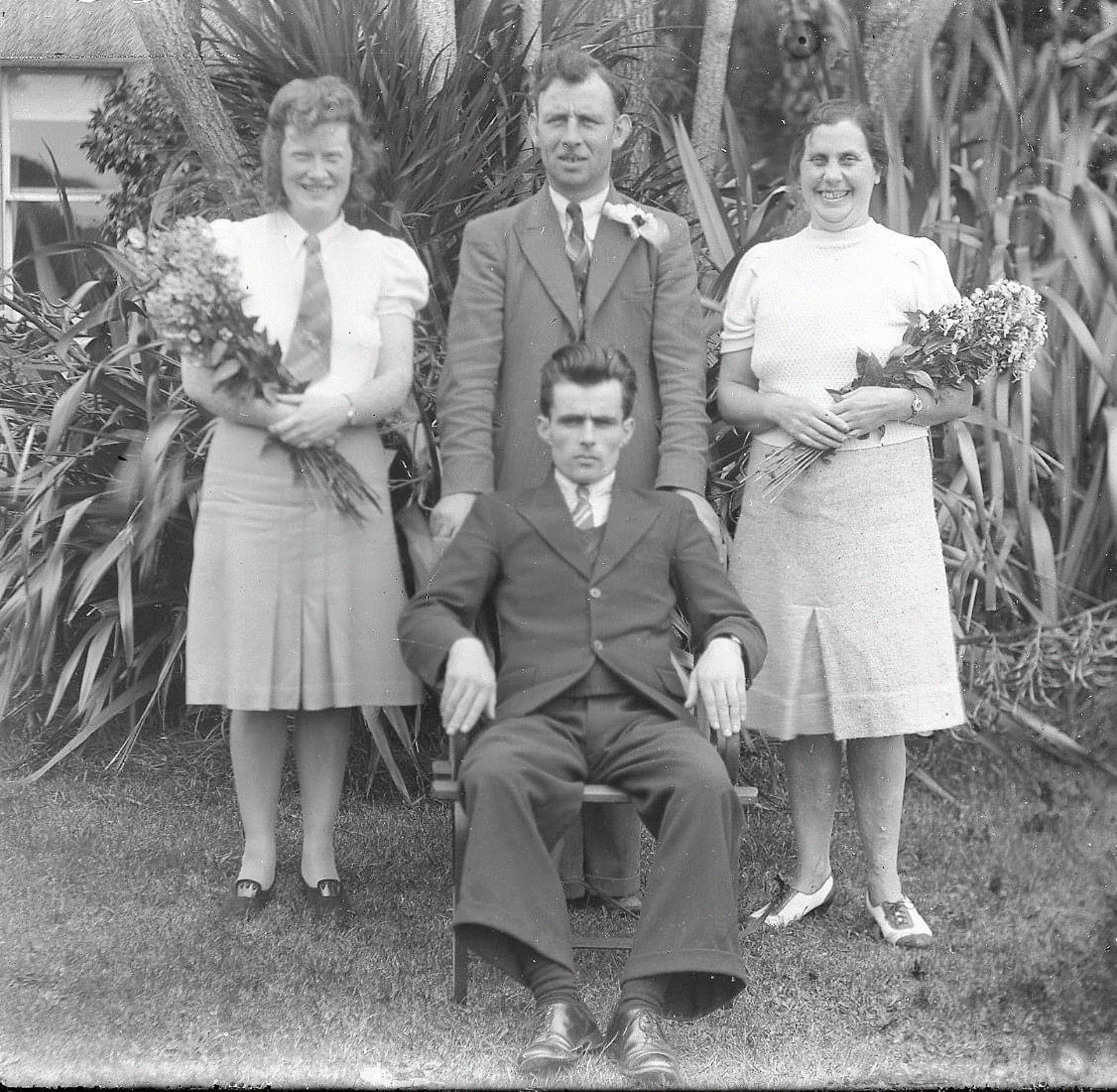
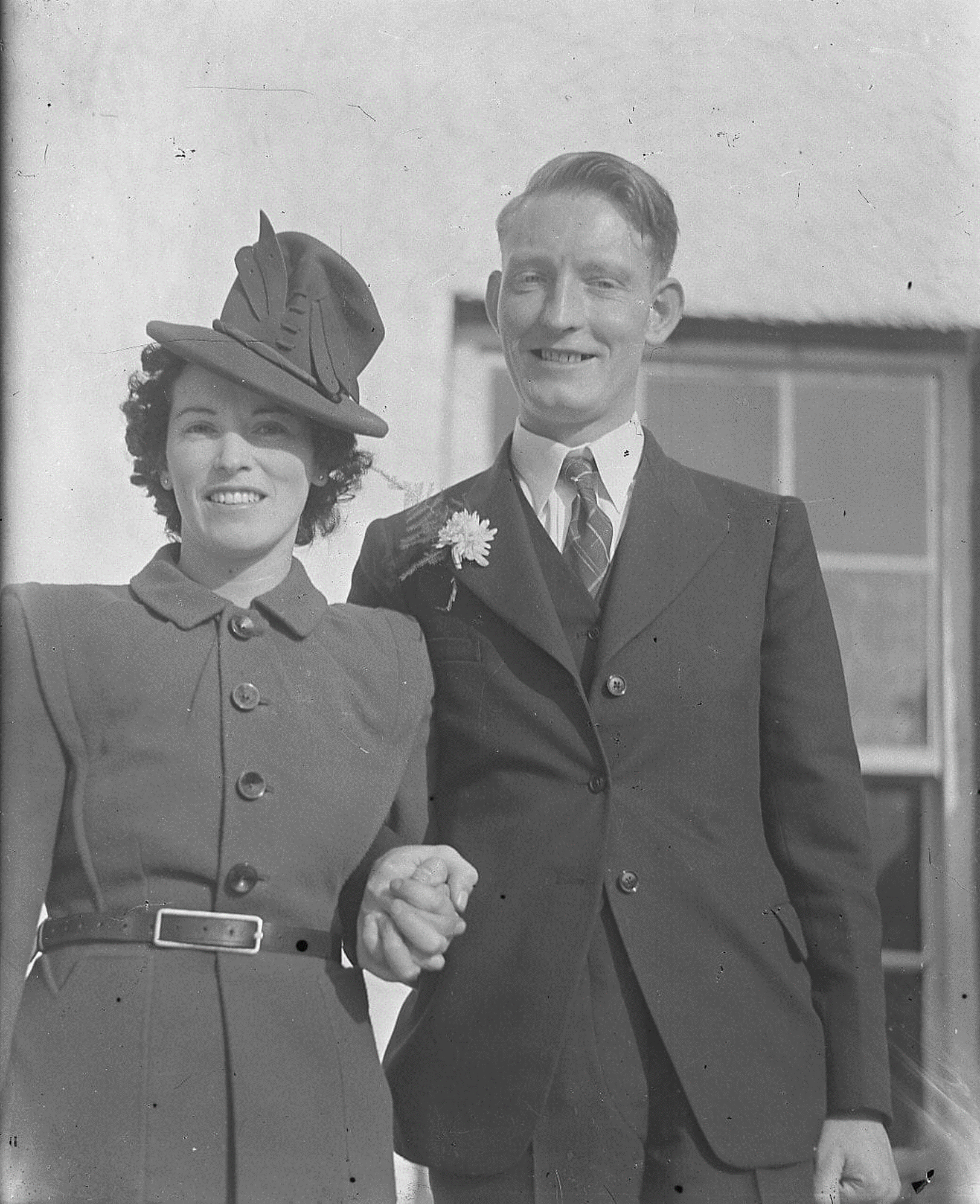
I don’t know who owns this photo, so I cannot credit anyone with for it, so apologies to its owner for using it.

It was almost certainly taken by John Joe Gillespie, as it is set in the garden of the White House, and his sister, Margaret (Dolly), on the right.  It seems to be a wedding photo, and Hugh Callaghan, sitting in front, can be identified as the best man. The question is: Who got married?  Dolly Gillespie married John P. McShane, so is that him standing?  John spent a long time in the U.S., and Margaret’s shoes are kind of American looking.  On the other hand, her sister, Rose, married Charlie Cox; would that be Rose on the left, with Charlie beside her? You can reply to this query through killybegsbooks.com

In the Spring of 1961 John Joe and his wife Bridget Gillespie entered into an agreement with Catherine McHugh next door whereby they would live in with her and take care of her in her old age.  However, Catherine died in July of that year. (See ‘House No. 2’ in this series)

During her retirement Sarah Crawford was living in ‘Cottage No. 77’ in Carricknamohil, and she again tried to sell the town house in 1961. However she died soon afterwards, with the occupancy of the Elmwood Terrace house unchanged.  It is still in the ownership of the Gillespie/Beirne family.

Thanks to Maureen O’Neill and Laura BeirneGormley helped with this blog.

A SHORT HISTORY OF ELMWOOD TERRACE, KILLYBEGS, Part Two.

House No. 2

As stated previously, in the middle of the 19th century Connel O’Byrne lived in house No 1, Elmwood Terrace.  On the 26th May 1856 he also acquired house No. 2 next door.  The seller was Robert Rogers of Keelogs, Inver.  This Rogers had no connection with the Rogers family of the Bay View Hotel.  At this time Connel mentioned in a letter, his two little houses at that place.  It seems that Connel demolished these two small houses and built No. 1 and No. 2 as they appear today on the sites of the old ones.  The houses demolished by Connel were two in a row of three, and it is still possible to see the original third one, which is on the town side of house No. 2.  It was formerly the Gillespie family home.

Connel then moved into No. 2 which became the permanent residence for him and his family. He obtained a lease for ever for this house from the Murray estate on 12th April 1858, paying £3 per year rent. Presumably he leased No. 1 to persons unknown.

The White House, Killybegs

O’Byrne had begun working as a clerk in the White House office in 1847. (Readers will know that the White House stood behind the big tree at the present Playground). From this office Connel and another clerk, Neil McLoone, managed the day to day running of the entire Murray estate.  The estate farms were let to tenant farmers, some of whom lived in the town.  The office also administered several farms solely for the benefit of the estate itself, such as those known as Whistlebear (Rahan Near, St John’s Point), Bavan, and Carntullagh.  This office was the nerve centre of the Estate which ran from Kilcar to Donegal to Ardara. Along with managing the Estate, it financed the building and running of all the schools in the area mentioned. For example the Killybegs Office supervised the building of the Murray Male and Female Schools (later known as ‘the Murray Lodge’) on the Donegal Road.

The best grazing farm in the area was situated at the end of the Binroe peninsula, in the townland of Carntullagh.  The White House Office administered this farm, where Connell O’Byrne was engaged constantly, attending all the fairs for the purpose of buying and selling cattle on behalf of the Estate.

In 1866 Connel succeeded in leasing the Carntullagh farm for himself. This was significant for his earnings because it was one of the most profitable farms in the district, as he well knew.   The farm can be seen today across Killybegs harbour at Ambrose McHugh’s.

Connel’s salary in the White House office was about £70 per annum, and he asked for an increase in 1857. He maintained that he was spending half of it on travelling on Estate business. He and McLoone also visited the surrounding towns on fair days to collect rents from the tenants.  For example the takings of rent money in Ardara on the 23rd October 1855 was £125 17 2½, and they hoped to deposit up to £400 in the bank within a few days.  This money went to the Murray Stewart estate.

 Connel married Louisa McCann, and their first child, William, was born in 1859, five more children being born, up until 1870.  Connell and Louisa were sponsors for Neil McLoone’s first born, Andrew Edward, in 1862.

Connel then took on another job – that of a roads repair contractor.  One of his contracts in 1870 was to keep in repair for a period of 5 years, the main road between the 10th milestone from Donegal to Killybegs, to the Post Office in Killybegs.  This was worth £110 per year to him.  The other contract in the same year was to keep in repair for 5 years, the road from Killybegs to Kilcar, between the limestone quarry at Largy as far as the boundary at Meentakeeraghan and Leitir.  For this he received £27 10 shillings per annum. Connel hired farmers who owned a horse and cart to carry out this work.

He died in 1880 and is buried in St Mary’s graveyard.  On the 23rd July 1895 his widow, Louisa, transferred the house to their son, William. This notice, which appeared in August 1911 may indicate that she left Killybegs then:

FURNISHED HOUSE to Let at Killybegs, Months September and October; nicely situated; consisting of Dining-room, Five Bedrooms, Sittingroom, and Pantry.  Rent moderate.  Apply Mrs O’Byrne, Elmwood Terrace.

Trouble on the Farm

Louisa ran the Carntullagh farm until 1904, when she tried to sell her interest in it to a Francis Kennedy for £400.  She was over 70 years of age at this time. The trustees of the Murray estate, who were actually the head landlords and ultimate owners, objected.  They obtained an injunction preventing Kennedy from ploughing up the meadowland for tillage.  This can be understood when it is realised that the Murray Estate engaged extensively in livestock farming, and this farm supported a good number of stock.  Several court cases followed but ultimately the O’Byrne family retained the farm through the Congested Districts Board, and the Land Commission.  It was eventually sold by Mary O’Byrne in 1921. The auctioneer was Patrick (Padraig) O’Byrne, no relation of Mary’s, who lived in the Main Street house where Eamonn Gallagher’s art gallery can be seen.  Subsequently the Carntullalgh farm continued to loom large in the lives of the inhabitants of the townland, but that is outside the scope of this account. 

It appears that Louisa’s daughter, also Louisa, married, firstly, John McGinley, businessman, Donegal, (citation needed), and secondly a man by the name of Searle. They settled in Killeshandra, Co Cavan.  People by the name of Searle called on the late Moira Mallon some years ago looking for their ancestors.  Louisa O’Byrne, Connel’s wife, died in Killeshandra in 1916. 

The McIntyre family

It is necessary at this point to bring the McIntyre family of New Row, Killybegs, into the story. The brothers Charlie and Jim McIntyre took over the family grocery shop on New Row, Killybegs on the death of their father, in 1912, where they traded as McIntyre Bros.  The locals knew them as ‘Charlie Mac’ and ‘Jim Mac’.  In 1965 or ’66 this premises was purchased by Danny, a tailor, and Mary Anne Tuohy who named it Mardan House.  Mary Ann was an aunt of Rosaleen Boyle, Killybegs. This is a cue for publishing a very nice photo of Mary Ann and Danny Touhy:

Mary Ann and Danny Touhy. Photo courtesy of Rosaleen Boyle.

Mardan House was afterwards occupied by the late Michael Gallagher.  Catherine McIntyre, a sister of Charlie and Jim, who was a teacher, married a Garda, Michael McHugh in 1931.  They settled in Ballintra but her husband died three years later at the age of forty two.

Catherine moved back to Killybegs and purchased house No. 2 on Elmwood Terrace from Mary O’Byrne, daughter of Louisa, on 29th March 1938.  The widow Catherine and her bachelor brothers, Charlie and Jim, lived there, and Charlie died in 1946. Jim died in October 1955 aged 73.  In her will, made in 1951, Catherine had stipulated that Jim was free to reside in the house for his lifetime. Catherine died in Letterkenny on 16th July 1961, aged 70. 

Charlie booked his place in the folklore of Killybegs when he left £300 in his will for a new bell for St Mary’s church.  This bell, weighing ¾ of a ton, was formally blessed on Monday 21st May 1950 by Canon James Brennan, P. P., and his Curate, Father James Carr. The bellringers of the church, their names now mostly forgotten, never sought any recognition or praise. They performed their duty down through the years, and it might be fitting to mention them here. Men such as the late Frankie McMenamin performed this task on time day after day, year after year. The effort they made perhaps not being fully appreciated.

Charlie McIntyre also bequeathed £25 to the Society of St Vincent de Paul towards the cost of a statue of St Catherine to be erected at the Well in time for St Catherine’s Day 1951. 

St Catherine’s Well, Killybegs

Devoted to his religion, Charlie served as one of the four canopy-bearers during the public procession of the Blessed Sacrament on the Feast of Christ the King, and within the church on other occasions.  He was also in business as an auctioneer, and could be seen walking the street ringing his auctioneer’s bell.  One of Charlie’s assignments was the sale of Coane’s Hotel to Paddy the Cope in 1944.  Paddy renamed it The Cope House.  Charlie’s brother Jim was also an auctioneer, but he specialised in the fish trade.

Catherine McHugh’s house No. 2  was purchased in 1966 by the late Micheal Quinn, and the proceeds of this sale were, in accordance with Catherine’s will, bequeathed ‘to the Parish Priest of Killybegs for Masses’ for the souls of various persons.  The Quinn family moved to their new house on Church Road in 1975, and the Elmwood premises was turned into flats.  The house was later purchased by a retired fisherman now living out of town.

Thanks to the following for their help in compiling this blog: Elaine Quinn; Marie Thornton, Rosaleen Boyle; Niamh Brennan, Donegal County Council archives, Lifford.

A SHORT HISTORY OF ELMWOOD TERRACE, KILLYBEGS

Elmwood Terrace looking from east to west.

This blog will outline the history of Elmwood Terrace in several parts, starting from the east end next Mulreanys’ Brae.

The street that became Elmwood Terrace was created when the town of Killybegs was built at the beginning of the 17th century.  The town extended from the Bridge River in the west to Mulreanys’ Brae on the east side.   The Terrace took up the space from the Chapel Lane to Mulreanys’ Brae, which it still does.  The Terrace took its name from the row of elm trees which stood in a green patch on the south side of the street.    This patch was known locally as The Shrubbery, which is now occupied by the Tara Hotel outdoor area.   At present the history of the Terrace can be reliably traced only to about 1800 due to lack of records.

It is proposed in this blog to deal with the Terrace house by house, that is with each building or site.

I have identified the houses by number from the east to west as Nos. 1 to 7 next Chapel Lane.

House No. 1

The first house – that of Una Cunningham – with the Armada mural on the gable – gives the appearance of having been built not so very long ago.  This may be true because early 19th century maps show a row of small houses fronting the street. Griffith’s Valuation of Killybegs, 1857, shows a similar row of houses, with a vacant site at the corner of Mulreanys’ Brae, much as it is today.  It is likely that House No. 1 in its present form was rebuilt on the site of an earlier, smaller house.  There is documentary evidence that Connell O’Byrne was in possession of this site and its house(s) since 1856.  O’Byrne was also closely associated with House No. 2, but that will be dealt with later.

Although O’Byrne was the first occupant of House No. 1, reliable information about its later inhabitants does not emerge until the end of the 19th century.

Occupying the house then was Charlie Rogers of the Bay View Hotel.  Charlie married a native of Co. Clare and Killybegs teacher, Jane Coghlan in 1895.  Jane had been teaching in the Commons School since 1883, and gave up her job to enjoy married life.  It is thought that they moved into House No. 1 on their marriage.  At that time Charlie’s father, old Charlie Rogers, was running the Bayview Hotel on Main Street.  This Hotel incorporated a grocery, pub, etc.  For whatever reason, young Charlie, Jane, and their children, John Joe, Charles V., and Francis, moved to Strabane in 1900 where they managed a public house and grocery.  Two more children, Thomas and Michael, were born to them while in Strabane. 

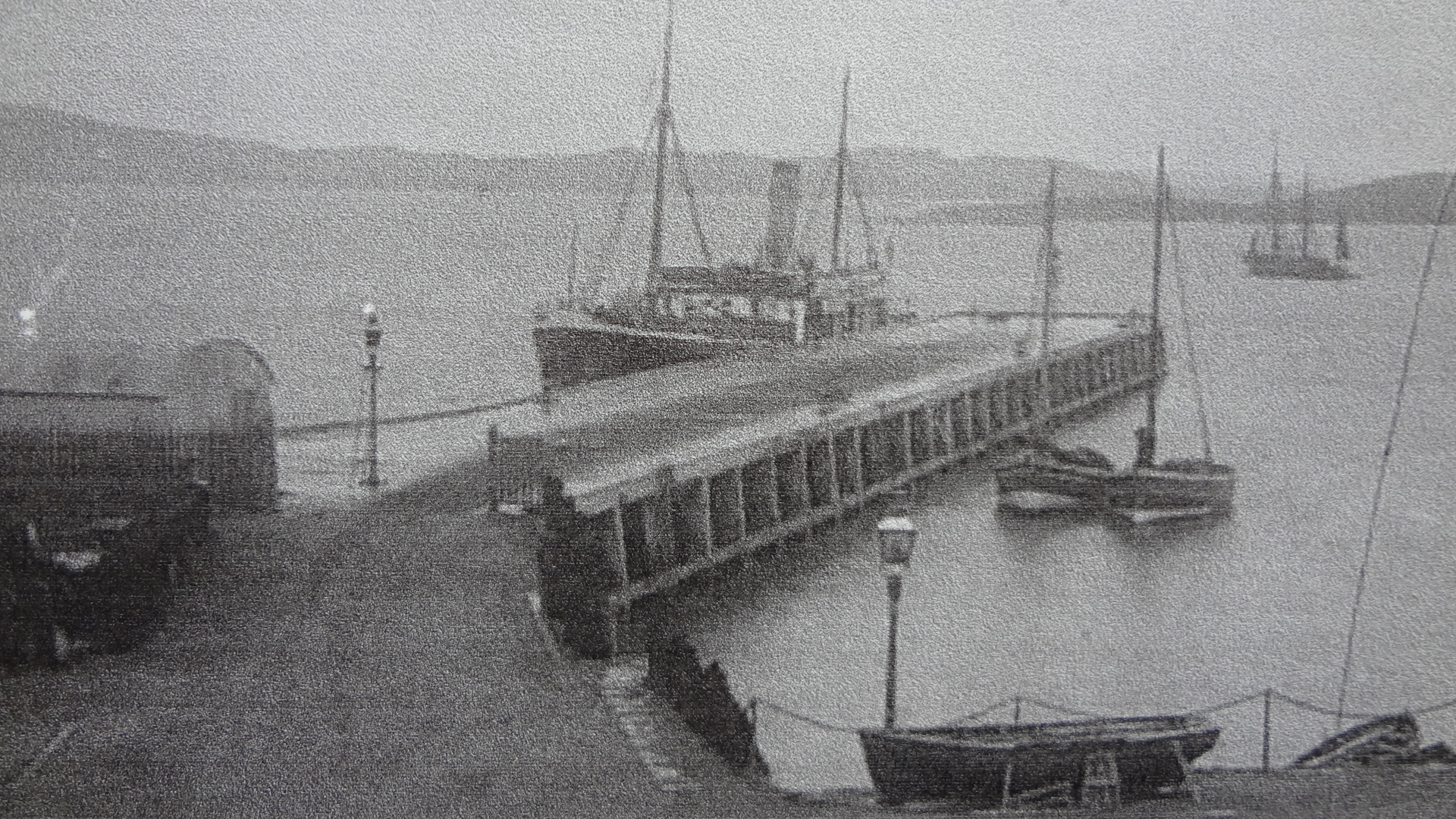
In their absence house No. 1 was let to Henry McAllister, who was chief engineer on the Congested Districts Board steamer Granuaile.  This ship can be seen in this Lawrence photograph, alongside the pier. 

Henry McAllister died in the Elmwood house in January 1901, after contracting pneumonia, leaving his wife, Elizabeth and two young children.  Charlie Rogers’s mother who had been running the Bay View Hotel, died in 1906, and Charlie returned from Strabane to take over the business and to live in House No. 1.  In 1913 his father, who had been ailing for some years, died in the Connaught Hotel, London, where he had gone for health reasons.  ‘Young’ Charlie, being the eldest son of the Rogers family remaining in Killybegs, inherited the hotel, grocery, public house, and coal yard.  This coal yard was located behind the present Diamond Centre next Mellys’ café, and gave its name to the adjacent Coalyard Lane.  Charlie built up the business, making improvements to the hotel, and was seen as a leading businessman of the town.  This success continued through the First World War as the firm was well placed to supply the British Atlantic fleet with coal, food, and other stores when Killybegs was a naval base.  The extent of the business can be gauged by the fact that the submarine support ships, HMAS Platypus, and HMS Vulcan, anchored in the harbour.  The Platypus alone had a crew of up to 800 men.

‘Young’ Charlie suffered a heart attack in 1929, but made ‘a wonderful recovery’.  However he died of the same cause a year later, aged 62, and the hotel passed into the hands of his wife Jane.  At the time it was said of Charlie that-

He was one of the most successful businessmen in Killybegs. By his energy, business acumen and personal integrity he succeeded in maintaining and extending the establishment which is associated with the Rogers family for [many years].

In 1915 his brother Michael had married Josephine Leeson who ran a drapery shop in town, and they took over the Elmwood house on Charlie’s death.  A Killybegs local once said of Michael: he was a big man, and when telling you something he would have your side sore with elbowing you.

Michael and Josephine had four of a family, one of whom, Mary, married Dr Michael O’Boyle and became the mother of Terri Tully and the late Grainne Bach.  Michael Rogers died in 1954, and some time afterwards his widow, Josephine, moved into a smaller house on St Catherine’s Road, purchased for her by her son-in-law, Dr Michael O’Boyle.  This house was built as a retirement home by Maggie O’Donnell, the first Lady superintendent of Killybegs Industrial School.  She chose the exact spot for the house by throwing an Agnus Dei into the field.  Maggie died in 1950, and her house was purchased by Dr O’Boyle.  The house, a bungalow, known as Grianan Muire, still stands, looking out on the harbour on the town side of Seamus Tully’s offices.  Josephine Rogers put her Elmwood house up for sale by public auction in December 1961.  The household furniture and effects were offered for sale at the same time:

bedroom, sitting room, kitchen and hall furniture of excellent quality, as well as china, delph, clocks, mirrors, ornaments, kitchen-ware, etc.

The premises were purchased by Johnny Cunningham, St Catherine’s Road, and there is no doubt that some of these items of excellent quality can still be found in local houses.

[Additions or corrections to the above are welcome. Next up is House No. 2 which will appear soon]

THE KILLYBEGS SEINER BOY ALEX

The Boy Alex was built by Jones, Buckie in about 1935 and was brought to Kilkeel in 1945 by Tom Newell who paid £18,000 for her. She was registered as N19. Mr Newell named the boat after his brother who was killed in the War. 

In 1948 she was bought by a Howth man with a hire purchase agreement from the Sea Fisheries Association, and a deposit of £2,000 by the buyer. This owner was a citizen of the Republic but happened to be in the Royal Air Force. Because of his connection with the ‘Brits’, Fine Gael T.D. Eamonn Rooney asked a Dail question as to how such a man could ‘get a boat from the SFA’.

The Boy Alex next appeared in Killybegs in the summer of 1952, and worked out of the port as a seiner.  She was skippered by the late Ned Heraghty.  She was a troublesome vessel, and spent a lot of time having her machinery repaired. Eventually she gave up the ghost, and was taken around to Port na Croise by, I believe, Peter Murrin and others.

Boy Alex.

CHURH BELLS. (1) KILCAR

The sound of the church-going-bell, summoning the faithful to Mass, had not been heard reverberating among the hills and valleys…..

So wrote Father James Stephens, parish priest of Killybegs and Killaghtee in 1879.  Today the pace of modern life and a move away from a pastoral society has resulted in the absence of men willing to devote time to church bell ringing.

The result is that the musical peals of real bells has disappeared, to be replaced by harsh tone-dead sounds emanating from church towers.

THE BELLS OF KILCAR

St Matthew’s Church of Ireland church in Kilcar has been long abandoned and roofless.  The landlord, Murray Stewart, through his agent, G. V. Wilson in the White House, Killybegs, provided “a stove, a bell, and £18 towards the purchase of a harmonium” for this church prior to 1875. However, details of the bell’s manufacture, purchase, and erection have not yet been found.

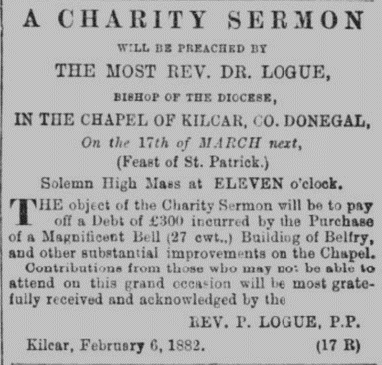
With the excitement (?) of St Patrick’s Day 2022 just past and fast fading from memory it is almost too late to record an anniversary of the provision of a new bell for Kilcar old (R.C.) church. This building is now An Halla Paroiste.  The bell was consecrated on St Patrick’s Day, 1882. 

The old church, Kilcar.

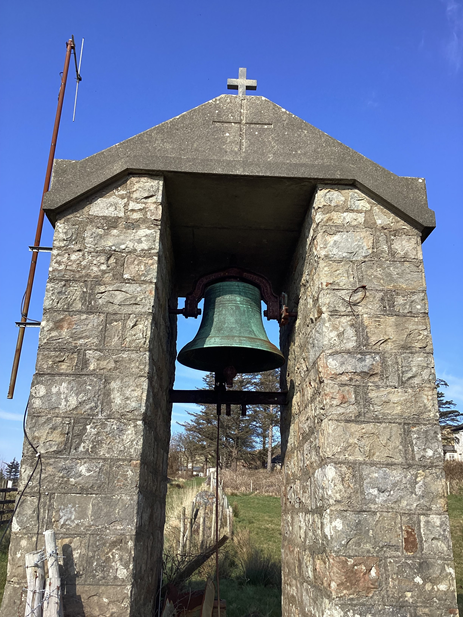
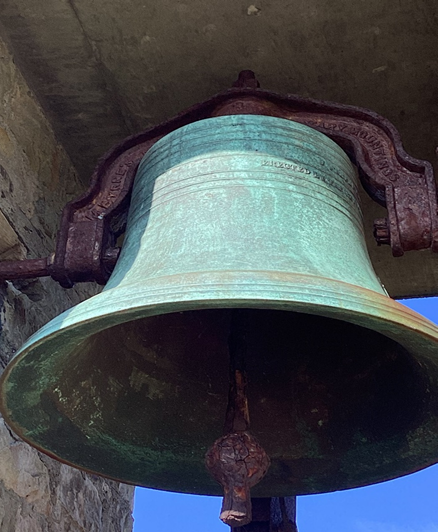
The Very Rev. Patrick Logue, P.P., Kilcar, purchased a bell from Murphys Bell Founders, Dublin, and it was installed in its new tower at the town end of the church.  It was described as ‘sweet-toned and   massive, weighing upwards of 27 cwt.” (1.4 tons) and “suspended in a belfry of elegant architecture, built of the famous fine-grained sandstone of Bavin”.  The bell and associated works were estimated to have cost £300.

The bell as it is today.
Notice of High Mass.

CONSECRATION OF THE BELL

On the day appointed, 17th March 1882, High Mass was celebrated in the old church by the Rev Francis B. Gallagher. His Lordship, the Most Rev Michael Logue, Bishop of Raphoe, was present, and preached a charity sermon, the purpose of which was to inspire the congregation to contribute to the costs incurred.  The congregation was ‘large’ and included ‘not a few strangers from other parishes’.  The music of the mass, taken from Webbe and Bordese, was ‘rendered effectually by the choir under the direction of Miss Martin who presided at the harmonium’.  It was reported that ‘upwards of £170’ was collected within the church.  In a list of contributors published later, it could be seen that the Killybegs contributions amounted to £16 12s 0d. while those of Kilcar totalled £12 16s 0d.  This was no doubt offset by the contributions of those who attended the mass, who would have consisted of mainly Kilcar parishioners.  A list of contributors was published in the press, these consisting of the more affluent citizens of the district.  It might be said that many locals in the congregation likely paid more than some of the sums published, and it may also be remarked that a humble farmer or fisherman’s shilling was a greater contribution than some of the figures published?

KILCAR BAND PARADED

It was a gala day in Kilcar, with the local St Patrick’s Flute Band ‘gaily decorated in sashes of green and gold, carrying in front a large silk banner bearing the figure of the Irish harp, with the motto Eire go Bragh parading the town playing suitable music. (This band was in existence from at least 1875)

In 1904 when the present church was completed the 1882 bell was erected high on a hillside overlooking the town.  It was said that “the bell was blessed so that as far as it could be heard nobody would be killed by lightning”.  The task of transporting the bell from the old church to the high ground was entrusted to Hugh Chestnutt of Derrylahan.  As the direct route to the new tower was too steep, Hugh had to take his horse and cart carrying the bell by the main road, and out along ‘the line’ turning left down to its destination.

CONDITION OF THE PEOPLE

Two years before this, west Donegal was reduced to famine conditions through bad weather and failure of the crops and fishing.  At that time the Quakers were active in providing relief.  James Hack Tuke of that persuasion toured the stricken areas of the west of Ireland in the spring of 1880.  He called on the Rev. Patrick Logue, Kilcar, whom we found almost overwhelmed with the amount of work and extent of distress.  Kilcar, we think, is, as a whole, the most destitute parish we have seen …  they have no seed – some ate all their potatoes as they dug them up…. many families lying on the bare stone floor…….the fishermen have no boats and no tackle; little work was given (by the authorities) except the making of one road…

Now, in this year of 1882 crop and fishing failures had once again brought terrible suffering to south west Donegal.  In Kilcar, the Rev. Logue, once again wrestled with the needs of his parishioners. On Christmas Eve 1882 he pleaded in the press for help for:

The poorest, most wretched creatures in God’s creation.  We have 450 families in a parish of six hundred and fifty who are depending on the alms of a fellow man whom God has blessed with a little of the goods of this World.  Two years ago hundreds of families of this parish were saved from starvation and death by the charity of the world. In 1847 the people had a little money, but no Indian meal to buy.  This year we have the meal but no money, and, alas! no credit.  I can see the plain proof (of famine) in the pale, shrivelled faces of many who crowd me for the price of a few pounds of Indian meal.  As a priest I am in the habit of visiting the sick and dying in their hovels.  I visit many who are in reality suffering nothing but from cold and hunger, and who send for me in the hope of getting some food.  And, oh, what a sad picture to see their looks of disappointment, misery and despair when I tell them my poor funds are exhausted. The severe frost and awfully inclement weather have made the hopeless prospect more hopeless still in their cold and comfortless cabins…  half the individuals in this parish are strangers to the comfort of shoes or boots.  Add to this the many poor starving creatures who, from morning to night besiege my door moaning and wailing their utter state of wretchedness.  These poor, wretched creatures, when asked when did the potatoes give out, say: ‘I had not a potato since the 1st of November’.  How did you live since?  ‘After my children went to bed I sat up and did a little sprigging which brought me a few pence’. Have you any potatoes at all?  ‘Not one, we ate the seed before we would die with hunger’.  Have you any animals for sale?  ‘No, I have not even a hen’. And how will you live until the middle of August next? ‘God alone knows ….  I would be willing to draw stones on my back to earn a few pence to keep the children from starving’.

What am I to do among such misery?  I would ask for the sake of humanity those with a little to spare to send their mite and rescue from the pangs of hunger the most honest, virtuous and moral people on God’s earth.

It is nothing short of astonishing that part of those ‘few pence’ from sprigging went to pay for the church bell.  It says much for the strength of faith in that Kilcar that such pennies were so freely given.

Lest it be thought that Kilcar parish was exceptional, it should be said that the dwellings and circumstances of the ordinary people in west Donegal at that time were broadly similar.

This blog was written with the kind assistance of:

Maeve McGowan, Killybegs, Peter Molloy, and the Kilcar History & Heritage Group.

The staff of Aislann Chill Chartha were more than helpful.

KILLYBEGS HISTORY.  DODD’S GARDEN (3)

THE COFFEE STAND OF 1897

The third and final part of the blog on Dodd’s Garden focuses on the one building that can be proven to exist there in the 19th and early 20th century.  That was a coffee shop or stand that was put in there in 1897.

Although we are surrounded by mobile coffee shops today, Killybegs had its own permanent coffee stand a hundred and twenty four years ago.

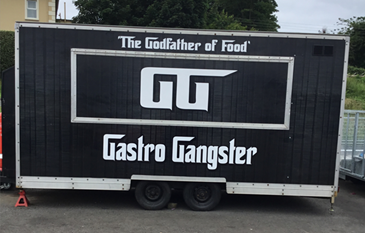
The GG coffee stand in the town car park.

Coffee drinking in these parts is not a new idea – William McGarrigle, who kept a shop on the Diamond, sold Cassell’s coffee there in 1865.  During the last years of the 19th century the Congested Districts Board arranged for local women to sell coffee at a penny a cup to fishermen from Teelin to Killybegs in the early 1890s.  

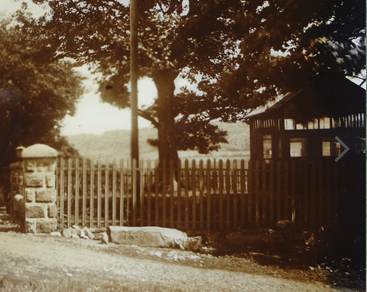
Soon afterwards Killybegs received an actual ‘Coffee Stand’, much along the same lines of those to be seen today, although fixed in position.  This was in the summer of 1897 when the new Killybegs stand was erected in Dodd’s Garden.  Anyone wishing to know where this Garden was located can refer to the first blog in this series.  The stand can be seen clearly in the Lawrence photograph No. 5793.    

Lawrence photo No. 5793, the coffee stand sited in Dodd’s garden opposite the Ulster Bank.  The stone pillar marks the edge of the main street.

It appears that the idea for the stand was got up by the local Church of Ireland Temperance Club, judging by the majority of the names mentioned at the time.  The stand was designed by Young and Makenzie of Belfast, and was built on the site by Andrew Coulter of Mountcharles.

The promoters of the Stand were probably the local Church of Ireland Temperance Society, to judge by most of the names of those who attended its opening.   

Built on a concrete platform, the building was constructed of pitch pine.  The floor was laid in tiles, and there was a white marble counter.  The windows had tinted glass, and the ornamental roof had two revolving ventilators.  Patrons could dine inside or sit on seats in the surrounding garden.  The manageress was Mrs Robert Morrow.

It is not known when the coffee stand went out of business, but Mrs Mary Anne McGilloway used to talk about it.  Mary Anne may have actually visited the stand as a young girl in the 1920s.

KILLYBEGS HISTORY. DODD’S GARDEN (2)

MONTSERRAT ISLAND

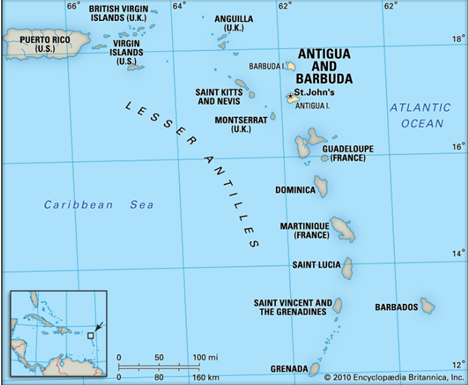
This is part two of my blog on Dodd’s Garden, and features the Island of Montserrat in the Caribbean. 

Montserrat is still a British overseas territory situated in the Lesser Antilles chain of islands. Its connection with Killybegs was because of herring exports, a source of cheap protein to feed the servants and slaves on the sugar plantations.  Readers of my first Dodd’s Garden blog will have noted the presence of Captain Thomas Atteridge, a resident of Killybegs at the end of the 18th century.  He lived with his family in a premises where the Tara Hotel now stands.  According to his last will and testament Captain Atteridge had some property in Cork.  This would indicate he was one of the Cork merchants who used to re-barrel Scottish and Donegal herring for export to the Caribbean.  It is not known how he came to live in Killybegs.

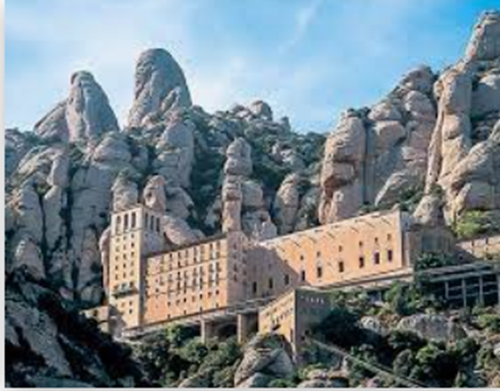
It is claimed that Christopher Columbus when he was sailing in those waters, though that this island looked like the Montserrat area in Spain, and named it after the monastery in that region.  For anyone going on a trip to Barcelona the Monastery is well worth a visit, even for the cable-car experience alone.  Most people go there to see the Black Madonna, and the fish and chips in the monastery café are a bonus.

The Monastery of Montserrat not far from Barcelona.

Montserrat is known as ‘the Emerald Isle of the Caribbean’.  In the 18th century large numbers of Irish ‘servants’ (probably slaves) were transported there by the British tobacco and sugar plantation owners.  Later Oliver Cromwell transported Irish people to those parts.   Africans were also brought to the islands, but the Irish were in the majority on Montserrat. In the 17th century the Island became a haven for Irish Catholics who were being persecuted on the other islands in the group.

The British owned Montserrat, as they do today, and they applied the same punitive measures to the Catholic Irish living there as they did during the Penal Laws at home. Except on an island ten miles by seven, their draconian anti-Catholic laws were felt much more severely than they were in Ireland.  However the British did not succeed in eliminating the religion of the Irish on Montserrat, any more than they did in Ireland.

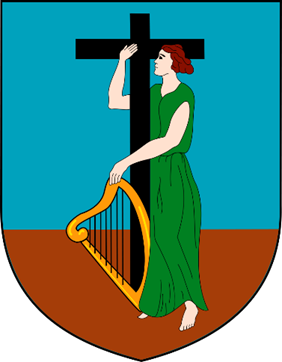
The Montserrat Coat of Arms, showing the Goddess Erin with crucifix and harp.

Today Montserrat has many descendants from those first people who were sent there.  The island holds a week-long St Patrick’s Day festival where the natives wear ‘Irish tartan’ skirts and Irish national colours. 

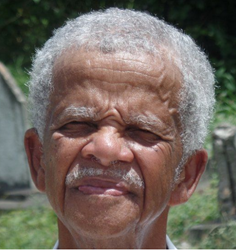
Joe Sweeney, a native of Montserrat, whose ancestors came from Donegal.
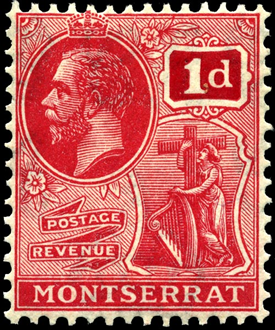
A 1929 Montserrat postage stamp with Irish iconography

Captain Thomas Atteridge was a Killybegs resident in 1784 when he exported herring to the Caribbean islands.  On 2nd October of that year Saunders’s News Letter reported that:

The brig Williams, Captain Atteridge, loaded with herrings, sailed from Killybegs on the first day of June , and after touching the islands of Antigua and Montserrat, where she disposed of her cargo to very great advantage, loaded with rum, and returned to Killybegs in three months and one day.

This was a report from Captain Miller of the British gunboat Langrishe, which had arrived in Sligo following a patrol Donegal Bay in search of smugglers.  Captain Miller also reported that:

Not less than 40 sail of sloops and cutters are now on this coast, belonging to the red herring houses of Scotland and the Isle of Man, ten of which lie in Killybegs harbour, partly loaded, and only wanting fair weather to go to Bruckless and Inver to complete their cargoes.

An extract from the Will of Thomas Atteridge of Killybegs.

              In the Name of God, Amen.

To my dearly beloved daughter Jane [I bequeath] my dwelling House in Killybegs with furniture & implements of husbandry, except Beds, bedsteads, blankets, sheets and quilts which are to be divided between my dearly beloved sons Philip George and Henry.  I bequeath my dearly and best beloved wife Jane Atteridge a hundred and twenty pounds…..

Captain Atteridge’s third son, Henry was baptised in St John’s church, Killybegs, on 29th January 1788.  Captain Atteridge’s widow died in Killybegs on 28th September 1834, and was interred in St John’s graveyard, her husband having predeceased her.  It is not known what became of the other members of the family.

KILLYBEGS HISTORY – DODD’S GARDEN (1)

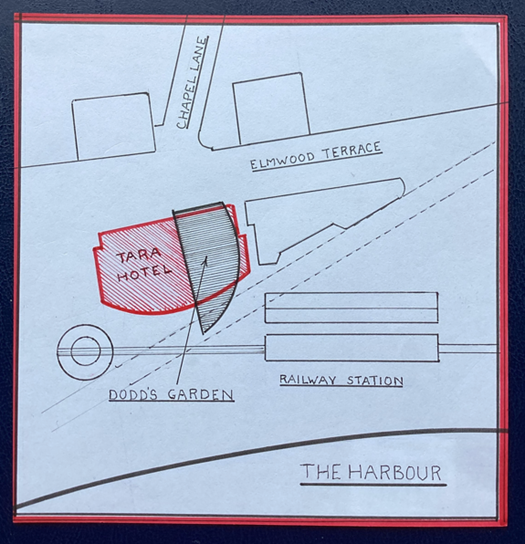
Once there was a place in Killybegs town called Dodd’s Garden, but it disappeared long ago.  I asked around and found that Conor McBrearty knew where it was.  It was sited under the eastern end of the Tara Hotel, and extended from the today’s Hotel frontage seaward to the shore.  The outer or seaward part was known as ‘Dodd’s Rock’.

Composite map showing Dodd’s Garden and the Tara Hotel footprint. (Map not drawn by measurements)

 At that time Captain Thomas Atteridge and his family occupied a large premises which ran the whole length of the site where the Tara Hotel now stands.  Elizabeth Atteridge, the Captain’s wife, died in September 1834, her husband having predeceased her.  She is buried in St John’s graveyard but her husband’s grave has not been found.

In his will, made in 1801, Captain Atteridge left his Main Street premises to his daughter Jane.  Jane Atteridge married a British Navy officer, Lieutenant John Dodd, who was stationed in Killybegs, and it is he whose name came to be associated with the Garden.  John and Jane had a family of at least two sons, one of which went into business in Ardara, and is buried in St John’s graveyard, Killybegs, and two daughters, Elizabeth and Mary.   In due course Mary Dodd married a Liverpool merchant and ship’s captain by the name of William Battersby, while Elizabeth married John McConnell of Rathmullan who became headmaster in the Murray Male School on the Donegal Road.

The Main Street premises and garden now became known as the Battersby property.

KILLYBEGS MARKET HOUSE

By the middle of the 19th century most towns in Donegal had a Market House, where farm produce could be bought and sold indoors.  Some of these Market Houses can still be identified, such as in Ardara, (the Courthouse), Glenties (the purple building opposite the museum), Donegal (the Market House Restaurant), and so on.   Except that Killybegs had no Market House. This was always a mystery, until recent research revealed the reason.

The Murray Estate owned most of the eastern part of Killybegs town, and in about 1855 they decided to build a Market House.  The site they chose was Dodd’s Garden, or the Battersby property.   Because it was freehold property, the Estate had to purchase the Garden from the Battersbys. Mary and William Battersby were paid £200 for the site, and preparations for building commenced.  William Harte, the County surveyor, was hired to oversee the works, and he placed an advertisement seeking tenders.  George V. Wilson was the Murray landlord’s agent in the White House, Killybegs, and Harte would answer to him.

NOTICE TO BUILDERS. TENDERS will be received for the ERECTION of a MARKET-HOUSE at KILLYBEGS, according to Plans and Specifications to be seen at the Office of William Harte, Esq., C.E., Donegal, with whom Tenders, directed to G. V. Wilson, Esq., White House, Killybegs, are to be lodged on or before the 14th day of FEBRUARY [1857].  The Lowest Tender will not necessarily be accepted.

The appointed contractor soon began work, but on inspection by Harte, it was discovered that the foundations for the new House were faulty, not going down to the bedrock.  A row ensued, the parties fell out, with the result that the House never got built.  

 There is a gap of about 36 years in the records during which nothing has turned up in relation to the Garden and site.  Late in the 19th century there was a report that Neil McLoone of the Royal Bay View Hotel, who resided where Sweet News is located, had some old buildings demolished because they were obstructing his view of the harbour. It is likely that the buildings he removed were on the Batttersby property.

In 1893 when the Railway came, an entrance was made at the east end of the Garden for access to the Station. This meant that a retaining wall was built on the right hand side of the entrance as travellers approached the Station.  It was against this wall that the country people left their bicycles while at Mass on Sundays.  Dozens of ‘industrial issue’ black Rudge and Raleigh bicycles were then fair game for the local boy racers as they engaged in some joyriding while the owners worried their beads.

There may have been some developments in the Garden during the 90 or so years up until about 1947, when it was lying derelict.  One of these developments was that a coffee stand was built within the site in 1897, but that will be the subject of a separate blog.

One piece of information in respect of the Garden appeared in 1929, at a meeting of the Ratepayers of Killybegs.  During a discussion on making the Diamond available for the herring curers during the May fishing

a heated discussion took place regarding the action of individuals being permitted to encroach on Dodd’s Garden for the purpose of building – a plot which had always been recognised as public property common to all.  

At that time a Vigilance Committee was in existence in the town, and, apparently this committee had responsibility for finding out who exactly owned the Garden. It appears that the existence of such a committee was a result of someone ‘encroaching’ on the plot.  Another committee had been set up to inquire into the delay in transferring the Diamond to Killybegs public ownership. Three members of that committee, County Councillor Brian Brady, Philip Campbell, and Jim Murrin, were also associated with the site in later years. The latter two were both public house owners. Ownership records have not been found for the Garden and site but it must be assumed that those gentlemen listed by the Valuation Office (see below) acquired the premises through fully proper and legal means, possibly from the Murray Estate trustees.

(Brian Brady was first elected to the 7th Dail which sat in Leinster House on 9th March 1932 – 90 years ago today. He was the second Killybegs-born TD to sit in Dail Eireann)

The Cinema

In the 1940s Dodd’s Garden was, according to the Valuation Office, in the ownership of four people: Johnny Cunningham (John Cunningham & Co grocery store); Charlie Murrin (an uncle of the late Joey), Brian Brady, T.D., and Jim Murrin, publican, and father of the late Brendan.

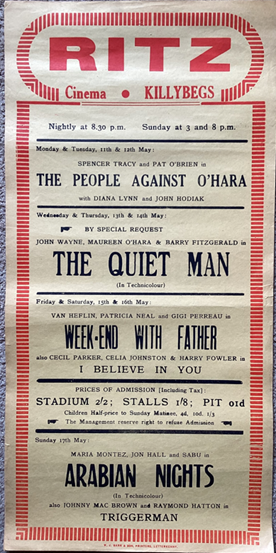
Killybegs folklore had it that these men had planned to erect a cinema on the site, but due to the shortage of materials during the War, the project did not proceed.  In the meantime, Joe McBrearty, father of Claire Tully and Conor McBrearty, fitted out a cinema in a building on his property fronting on to Chapel Lane, and the Ritz Cinema came into existence.

Ritz Cinema poster from 1953
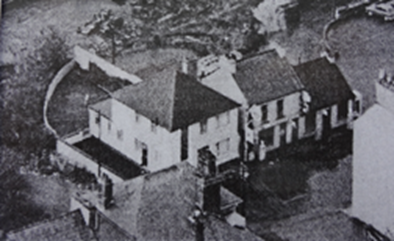
It appears that Dodd’s Garden, at some time, passed to Jim Murrin, and from Jim to his son Brendan who built a house on it.
Brendan Murrin’s house (left) on the site of the Garden, with the old Pier Bar on the right.

As to the part of the site to the westward, where the Pier Bar stood, the first person to run a public house there was Philip Campbell, (already mentioned) a native of Glen.  Philip ran a pub on Back Street since 1913, and he was granted a temporary spirit licence in 1939 to have a pub on the part of the site to the west of Dodd’s Garden.  His reason was that there was to be an AOH Demonstration in town on the 15th August of that year, and Philip knew he would do better business on the Diamond than on Back Street.  The Justice, while granting the licence, ruled that the Back Street premises should be closed, and that the new pub’s opening hours must be from four o’clock until seven.  Philip died in 1950, and the Diamond pub was continued by his son, Michael Hugh.  It was occupied thereafter by a succession of publicans – how many people can name them, down to Johnny Paul McGuinness?  In recent years the McGuinness family demolished all the buildings on the site, and built today’s Tara Hotel, arguably the finest building erected in Killybegs, and a great asset to the town.

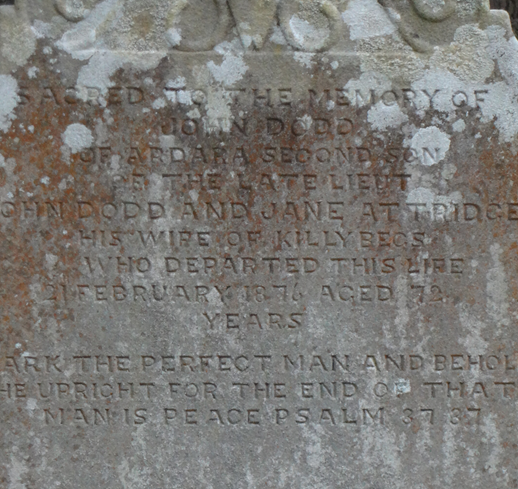
The headstone over John Dodd of Ardara, in St John’s churchyard, Killybegs.
Sacred to the memory of John Dodd, of Ardara, second son
of the late Lieut John Dodd and Jane Atteridge his wife of
Killybegs, who departed this life 21st February 1876, aged 72 years

KILLYBEGS HISTORY.

THE FEAST OF ST CATHERINE OF ALEXANDRIA

St Catherine by Caravaggio.

It’s fair to say that a good proportion of the people of Killybegs visit St Catherine’s Well on this day. These could be called the true believers.  There is also the minority, those who do not focus much on the Well and its properties. So, is there anything that these non-participants or ‘observers’ can do on this day to keep the tradition of St Catherine alive in this area?  Some of the flaky stories associated with the well are no help to those who might be doubtful of the whole arrangement.  There are two accounts which have been told and re-told down the years, neither of which could be said to be watertight. One is the story of holy men being saved from drowning, and dedicating the well to St Catherine. The other, certainly derogatory of the Protestants of the district, is the one about the Minister of the day, the occupant of St Catherine’s Rectory, who filled in the well in an attempt to stop pilgrims visiting it.

The tale of the seamen being saved appears to be one of those unfounded universal stories which attach themselves to various ‘famous’ places or people. One of these can be found in Italy, where, on the shores of Lake Maggiore, there stands the Hermitage of St Catherine of Alexandria.  The brochure produced by the Hermitage states that it was founded by a wealthy man who was saved from drowning in the lake through the intervention of St Catherine.

How St Catherine came to be attached to the Killybegs well continues to be a mystery that will likely never be solved.  In the absence of hard information it is natural that people will look for a rational explanation of the origins of the well, but so far, the flimsy ‘evidence’ of the saved seafarers is all that we have.  Time to rethink this?  One or two of them may contain, as they say, a grain of truth.

The strongest circumstantial evidence that can be found is that the sailors of the Spanish Armada ships who came into the harbour in 1588 had a very good reason to give thanks for their survival. And, just above their anchorage in the ‘Church Hole’ was the parish church, to which they surely went to give thanks.  The strict enforcement of religious observance and ritual on board the Armada vessels reinforces this argument. And, considering the poor state of the food and fresh water the Armada ships carried, the men desperately needed fresh water.  That well, whether or not then named for a saint, was a life-saving facility.

(I will deal with the ‘Protestant Minister’ story later)

Window in St Catherine’s church, Aughrim.

ST CATHERINE’S DAY

With St Catherine’s Day coming tomorrow, it is a good time to look at an old postcard, and try to pin down its year.

This card belongs to Laura Steinke – she guessed that its date was about 1922 and that it was sent from America by her grandmother soon after she landed there.

How accurate is that date?    In trying to find a reliable date, there are several clues. The pilgrims in the photo are wearing clothes in the style of the 1920s or 1930s, possibly in the American style.  Could it be that these penitents are visiting the Well in preparation for a voyage across the Atlantic?  Or returning after a holiday. 

The wall around the graveyard gives a better clue.  In the postcard it has been newly built or repaired.  That wall has been repaired many times over the years.  In 1924 the Glenties District Council proposed to repair the wall.  However, the work was not costed and the plan fell into abeyance.  In the meantime it must have been in very bad condition, because in 1928 some of the people in Killybegs sent a petition to the Minister of Local Government, pointing out the condition of the wall, and demanding that it be remedied. The Minister referred the matter to the Donegal Board of Health, which sought tenders for repairs.  The successful contractors were named as Callaghan and McGuinness.  It looks like the Callaghan was Denis, a grandfather of Anne Fallon and the McClafferty brothers, but the McGuinness is unidentified for the present.   Denis Callaghan was a professional stone mason who worked on many projects, including the construction of the Basilica at Lough Derg between 1925 and 1929.

It is also known that ‘extensive renovations’ were carried out at the well in 1937, but the 1928 date is more reliable seeing that the owner of the postcard placed it in the 1920s.

(As some of the above is guesswork, please feel free to give your views)

St Catherine of Alexandria was revered in Hungary.  This icon of the 14th century shows King Louis and his Queen praying before an image of the Saint.  She holds a wheel in her left hand, a symbol of her torture and death.
St Catherine’s church, Budapest