KILLYBEGS HISTORY.

THE ELECTRIC TELEGRAPH CAME TO KILLYBEGS 150 YEARS AGO IN NOVEMBER 1871.

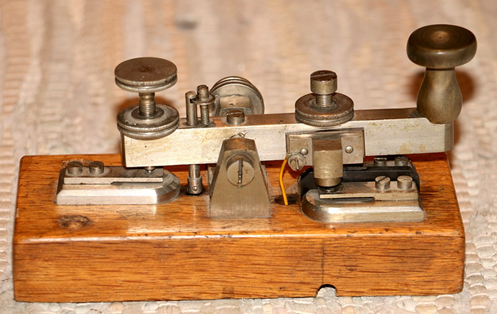
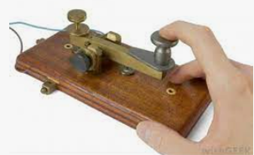
Old-style Morse Sending Key

The Electric Telegraph came to Killybegs in 1871.  On Thursday 28th September of that year the S.S. Alma arrived in Killybegs harbour with a cargo of poles for the system.  The telegraph had already been installed in Donegal town, and the Killybegs line was next to be erected.  They began to put up the poles and wires from Killybegs towards Donegal.  By the 24th October the wires had been strung as far as two miles eastwards of Dunkineely. Information on the works is scarce, but it was reported that the Killybegs Telegraph Office would be opened on or about the 1st of November 1871.  Carrick, Ardara, and Glenties were next for the telegraph.  The Killybegs Post Office at that time was located in Charlie Rogers’s Bay View Hotel, which was on the site of the present one. The Post Office was in existence long before the coming of the telegraph.

Killybegs therefore became directly connected to the outside world for the first time, the telegraph being used by the locals mainly for the transmission of urgent messages, such as a sudden death.  Many a heartbeat was skipped when the postboy was seen approaching the front door with the dreaded green telegram envelope in his hand, for who knew what news it contained. The telegraph office also conducted the business intended for Kilcar and westwards.

The commercial business of the telegraph in Killybegs can be divided into two categories: civilian (as in the bad news), and commercial. The commercial side involved the booking of rooms in the local hotels, (especially Rogers’s), and the communication between the fish buyers/curers and their head offices during the herring fishing season.  The 1906 herring season generated a large amount of telegraph work for the post office assistants, as the landings were very heavy that year.

Some early examples of the use of the Killybegs Telegraph:

In June 1904 the Lord Lieutenant was travelling to Carrick, and driving his own car heading a convoy of four cars (two cars of servants), he overturned his car in the Glen of Mountcharles.  He and his wife were thrown out on the road and were shaken but only slightly injured.  Captain Manus Boyle, (a grand uncle of Michael and Joe O’Boyle of Killybegs), who came on the scene and organised the recovery of the car, invited the Lord Lieutenant and his wife to lunch in his hotel.  However the meal had been arranged for Killybegs, and was declined.  When the party arrived in Killybegs they decided to visit the Industrial School, where the boys were turned out to perform for them.  In the meantime, those in Carrick waiting patiently, were advised of the delays by telegraph from Killybegs.

In July 1905 the Archbishop of Philadelphia, Dr Patrick J. Ryan, arrived into the Railway Station on the 8.30 a.m. train, on a visit to his friend, Bishop John B. MacGinley. The Industrial School Band led the Archbishop and the procession to Seabank House on Spout Street. The local reporter sent the news to the Derry Journal via the local telegraph.

Charlie Rogers, the Postmaster, died in 1913, and his daughter Christina was named as Postmistress, assisted by her sister Lizzie. These women were grand-aunts of the late Gwen, Michael and Nuala Rogers. Annie McNamee was in employment as an assistant in 1911. The Post Office was located at the western end of Rogers’s Hotel, in the grocery shop, where the reception desk is found in today’s hotel.

The Titanic

The late Packie Mulreany related: ‘One day in April 1912 Master McConnell (of the Murray School) asked me was my father home (from the Niall Mor School) yet? When he comes tell him that the Titanic has gone down’.  That message came into Killybegs by the telegraph.

On the outbreak of World War I, four British gunboats were anchored in the harbour.  The fleet Commander received a telegram on the morning of the 4th August, 1914, and the four vessels started their engines in a big cloud of black smoke. This departure was witnessed by the late Tommy Molloy, uncle of Esther Molloy and her sister Mary Goretti.  There was heavy telegraphic business to and from the Killybegs office for the duration of the War, as the port was used by the British as a submarine and servicing base.

Following the deaths of Christina Rogers in 1921, the family gave up the Post Office in the following year.  Lizzie Rogers died in 1923.

The contract was then taken over by Sarah Crawford, and she located her office where the Sweet News premises are located today.  The telegraph apparatus was on the interior wall next Chapel Lane.  There are plenty of people still around who remember listening to the buzz buzz buzz of the telegraph sender just out of sight behind the counter.

Sarah Crawford was one of the Conwells who were born in the premises now established as Hegartys’ Centra store.  She married Louis A. E. Crawford in 1915 and he was employed as assistant in the Post Office. He also acted as clerk to the Harbour Commissioners.  The Crawfords lived on Elmwood Terrace in the house later occupied by the Gillespie family. ‘Mrs Crawford’ as she was known, only took one holiday in her lifetime, to Dublin in October 1950, – her assistant, Madeline McCahill/Crossan, at that time living in the Commons, ran the business when she was absent.  She sold her house in 1953 and went to live in Carricknamohil.

During the big autumn herring fishery of 1928 the Post Office was the busiest place in town according to one report.  About 250 telegrams were sent every day and perhaps as many received by the herring buyers and skippers of the boats.

In March 1929 four Easkey fishermen took delivery of a new yawl from Killybegs Boatyard.  On their voyage to Sligo they got lost at sea and were missing for about twenty hours.  Eventually they were found on an island off the Sligo coast, and the news was transmitted by telegraph to searchers at Killybegs.

There was a large number of telegrams received in Killybegs when the new pier was opened by Sean Lemass, Minister for Industry and Commerce, in October 1952

Sarah Crawford continued to serve Killybegs long past retirement age, and died in 1961 at the age of 82. On Mrs Crawford’s retirement the Post Office passed to James Cunningham and his daughters, Mary and Kathleen, on Elmwood Terrace, who gave sterling service until their retirement.

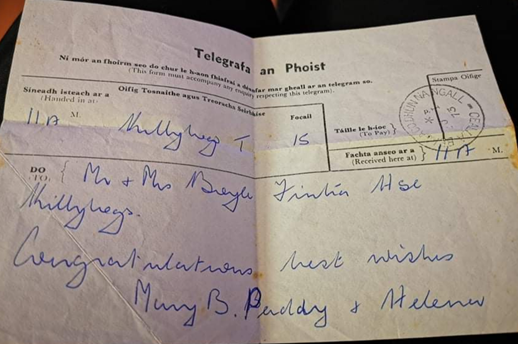
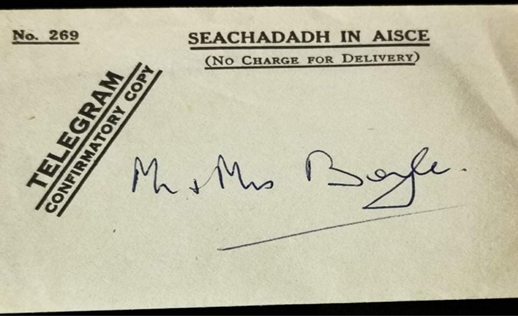
A telegram received in Killybegs in 1975. Not all telegrams brought bad news.
Thanks to Rosaleen Boyle for these images.

KILLYBEGS AND KILCAR HISTORY.

PART TWO:  Tommy Cunningham, top skipper of Killybegs.

Part one of this two-part blog was posted recently.  You will remember that the idea for the blog arose from the posting by Maeve McGowan of a photo of seven Killybegs women taken at the former ‘Ice Plant’ on Conlin Road.  That photo included Cassie Cunningham of Spout Street, Killybegs, whose father, James Hegarty, was the subject of the first part.  Cassie’s husband, Tommy Cunningham of Spout Street is the subject of this part two.

In 1928 at age 23, Cassie Hegarty of Derrylahan married Tommy Cunningham of Spout Street, Killybegs, and raised their family there.  It is probable that she met Tommy while working in the fish industry in Killybegs. There was a big herring fishing in 1928, and workers would have been drawn in from all around.  Tommy Cunningham was one of three brothers who lived in adjacent houses on Spout Street, the name now gentrified into ‘St Catherine’s Road.  He was an uncle of Gerard Cunningham of Church Road, Killybegs; Joey Cunningham, Kilcar; and Jimmy and Paddy Cunningham of Killybegs.  The Cunninghams were a fishing family, and in the early years of the 20th century were always on the water in Killybegs harbour. These activities, sailing in Regattas, and so on, brought tragedy to the family, as two of Tommy’s brothers, Hugh, (14), and Patrick, (22), drowned in boating accidents in 1902 and in 1908 respectively.  John Crowley, a crewman on the CDB steamer, Granuaile, fell in at Killybegs pier in October of the same year and although taken out alive, died later.

To America

Tommy’s father, Patrick Cunningham, spent some time in America in his early years and returned to Killybegs after a short time.  On his return in 1905 he took over one of the CDB Zulus, the St Patrick, with his son, Tommy, then aged about 19, as one of the crewmen. They were successful with this boat, and in 1908 Patrick applied for a new vessel.  This was delivered from the Killybegs Boatyard in 1908. Named St Patrick II.  This was the first sea-going boat built in the home yard for a Killybegs man, and she cost £362 17s 6d complete with gear. A visiting delegation, including the Bishop of Ross, Most Rev Dr Kelly, was conducted around the Boatyard on the 4th May and saw the finishing touches being put to the St Patrick II. 

A Zulu boat similar to the St Patrick

The summer herring fishing was going well, with 30 cross-channel steam drifters and 20 sail boats working out of Killybegs. These vessels landed a total of 300 crans on the 19th May, so Patrick must have been very anxious to take over his new boat.  She was formally handed over to him on the 21st May 1908.  That the St Patrick II did not cash in on the big fishing of 1908-09 is indicated by the fact that the boat was given up in March 1909.  For the ten months fishing the St Patrick II grossed £183 17s 7d.  Why did the crew of the St Patrick II pull out of the fishing after so short a time?  At this period these relatively small sailing Zulus of the Donegal fishermen were being outfished on a large scale by the visiting Scottish and English steam-powered vessels. The powered boats were first on the ‘grounds’ and first back in port with their catches.  The Irish sailboats such as the St Patrick II were unable to compete, leading to discouragement and despondency.  The drowning of his eldest son in July of that same year must have been a devastating blow to Patrick and his family – the second son drowned in the same harbour.

Powered boats

The days of the sailing Zulus were fast coming to an end, and the CDB started to plan for powered boats. The first fishing boat powered with an oil engine was the Ovoca, built by Tyrrells in 1907, and was sent to the Killybegs fishery in the spring of 1908.  This vessel did very well, and was able to outfish the British boats, not to mention the Irish sail boats. The CDB soon got to work and their first motor boat, the Gola, was launched from the Killybegs Yard in 1910.  She was about 52 feet overall, and fitted with a Dan oil engine.  Patrick Cunningham now fades from the scene, and his son Tommy comes into the record.  When he left the St Patrick II in June 1909, Tommy disappears from the record for four years. He turns up again in 1913 when he took over the very troublesome motor boat, the Harvest Star

A motor boat similar to the Harvest Star

This 61ft vessel was built in Killybegs in 1911 with two engines, both different makes.  In the early days of the motor engines they were all unreliable, and this was an attempt to have at least one engine working if the other failed.  This plan caused endless trouble for that boat.  Tommy and his crew started on the Harvest Star on 2nd July 1913, but such were the failures of the engines that after only three and a half months the owners (the CDB) decided to remove both engines and fit one unit.  While this work was under way Tommy and crew were allocated one of the old sailing Zulus, the St Marcellinus.  Seemingly this plan did not work out, and they were given the motor boat Gola, in December of the same year.  This was another troublesome vessel, as the Dan was then a temperamental engine, but Tommy fished her for the winter herring season.  The Harvest Star, now with one new engine, was ready for the May 1914 season, and Tommy & co took her to sea again. 

Tragedy strikes again.

Things seemed to go well, except that tragedy struck again when one of the crew, Mick Keeney, a next door neighbour of Tommy’s on Spout Street, was drowned.   His place was taken by Frank O’Hara, Killybegs, a playing member of Killybegs Emeralds football club.  Frank would be killed in 1917 when he sustained head injuries when a lifeboat fell on him on board H.M.A.S. Platypus, in Killybegs harbour.   Tommy took the Harvest Star again for the 1915 season, but the CDB had by then decided to sell off their share boats.  The Harvest Star was valued at £624, and £148 10s. for her gear, and so Tommy and a neighbour from Spout Street, John Logue, bought the vessel and gear at that valuation.   From this time the Harvest Star and her crew fade from view, and although fish prices went up dramatically during the War, no record of Tommy or the boat has turned up to date.  The post-war depression of fish prices put very many fishermen with fishery loans out of business, though Tommy Cunningham and Logue do not appear on defaulters’ lists.  It would appear, however that the Harvest Star reverted to the CDB, and then to the Department of Fisheries after 1922.   She was recorded as lying on the beach at Meevagh in 1932, and was sold as scrap for one pound, ten shillings.

The sailmaker

Tommy enters the books again as an employee or contractor at Killybegs Boatyard as a sail-maker and rigger, from 1933 to 1937.  This was the period when the Yard was turning out small boats in the 30ft plus range, designed for trawling and drifting. Tommy’s pay for each boat amounted to ten shillings at first, rising to one pound, five shillings later.   Although these boats were powered by engines, no fishermen would accept a vessel without a full set of sails.  One of Tommy’s last jobs for the Yard was making the sails and rigging out the Naomh Ruaidhri (pronounced ‘Rory’) in 1935.  This vessel was built for Thomas Brosnan of Dingle, who was one of the pioneering skippers who came to Killybegs in 1935, helping to revive the white-fish scene in the port.  Thomas Brosnan was the father of Tom Brosnan of Killybegs.

At this time James McLeod, a young Scotsman, came to Killybegs from Belfast.  A Merchant Navy man, and knowing nothing of fishing at that time, he soon picked up local fishery knowledge. He was mentored first by Francie McCallig (great grandfather of Cian Brosnan), and by Tommy Cunningham.  Soon, James and a shore-based partner owned three different boats, (the Martha Helen, Jeanette, and Pursuit) and, needing skippers, Tommy Cunningham was a perfect choice for one of them.  When McLeod went over to Scotland to bring back the Jeanette in 1937 Tommy skippered the Martha Helen.  Then, James went off to join the Merchant Navy again when the War began, and Tommy took over the Martha Helen once more.  It was at the end of this War period that Tommy suffered a horrendous injury on that same boat in July 1945 – both his legs broken when he got caught in the winch and ropes. He lay in the Sheil Hospital in Ballyshannon, in a critical condition, for some weeks, and although severely injured he recovered almost completely.

The Naomh Simon

The Mary Buchan was a well-known boat in Donegal, but her sister ship, the Naomh Simon not so.  This boat was built in Meevagh but there were no takers for her when she was completed in 1947.  So, she was put out at first as a kind of research boat, sent to various parts of the coast trying out different types of gear.   She spent some time in Murrisk, Co. Mayo.  Later, Tommy Cunningham was selected as her skipper and, following a visit to Dingle in May 1950, the boat headed back to Killybegs.   The weather worsened, and the Naomh Simon went into a creek on the Clare coast where she dropped anchor.  The storm was such that the anchor chain broke, and they were driven on the rocks.  The crew consisted of Barney McLaughlin and Benny Moore, and after some time they succeeded in getting the boat free of the rocks.  The ‘magnificent seamanship’ of Tommy Cunningham was cited as the main factor in saving boat and crew.  He was at this time 64 years of age, and nearing the end of his active career.  Among the skippers of Killybegs, Tommy must be considered one of the best, in an era when such skilled men were taken for granted.

KILCAR AND KILLYBEGS HISTORY: JAMES AND TOMMY.

Part One: The Life and Times of James Hegarty

Back: Mary Carr, Anna Boyle, Cassie Cunningham, Justine McGuinness, Kit McGinn. Front: Mary Sweeney and Maura Melly.

This blog was prompted by Maeve McGowan’s photograph of the seven women pictured outside of ‘the Plant’ in Killybegs, published on FB recently.  There are always stories behind old photographs, and it would add to our knowledge of people and places if these stories could be brought out.  As regards Maeve’s photo, only Kathleen Curran spotted the two who were ‘unknown’- Anna Boyle, Cornacahan, and Cassie Cunningham.  Cassie is in the centre at the back.  The other five women had long and eventful lives, and they are no doubt well remembered in our locality.  This is also an opportunity to offer good wishes to Maura Melly, in front row, on the right, in the photo.

Cassie was a native of Kilcar, and became the wife of Tommy Cunningham and reared her family on Spout Street, Killybegs.  Tommy was one of the leading skippers in Killybegs in the early years up until the post war period.  Cassie’s father was James Hegarty, known locally as Jimi Phat Ban, a fisherman and a native of Derrylahan, Kilcar, on the east side of the Teelin estuary.  This part of the blog deals with James.

Teelin was chosen as a new fishing ‘station’ by the Congested Districts Board in 1897, but that is only half the story.  This blog aims to put the record straight, and highlight the part played by Kilcar in that project.

Main Port in North West

At the end of the 19th century the CDB made Teelin the main fishing port in the North West, and this was due largely to lobbying by a local committee.  Teelin already had a fine concrete pier, where the CDB steamer, Granuaile, could go alongside. The Towny estuary had a small stone pier but there was no pier at Cladnageeragh creek at the beginning of this period.   

Men on both sides of the estuary had a long tradition of trading across to Sligo in sailing Smacks.

The CDB set up a whole new fishing industry in Teelin – new boats and gear; fishing instructors; fish processing (curing); and barrel making.

A Zulu boat similar to those supplied to the Teelin and Kilcar fishermen.

When the story of Teelin comes to be written, the name Kilcar must also be heard as being part of that remarkable project.  The Kilcar townlands of Derrylahan, Curris and Kilbeg supplied numerous crews for the new CDB boats at that time.  It was a peculiar feature of the whole arrangement that none of the Teelin fishermen fished on the Kilcar boats, and none of the Kilcar men crossed over to Teelin.

It was from this side that emerged the best skipper in the North West during the first quarter of the 20th century – James Hegarty. James skippered many sail and powered boats, including some motor boats of a size that would not be seen in Killybegs until the 1960s.  He went as far as purchasing, along with a partner, a 61ft motor boat in 1915.

Although the first few of the new ‘large’ CDB Zulu boats went to Teelin, one of the early boats allocated to that area went to James Hegarty and his crew from Derrylahan.  This vessel was, like the other boats, a sailing vessel, about 40 feet overall length, and was named St Peter.  The crewmen were: Patrick Sweeney and John Gillespie, Curris; John McBrearty and John Murray, Derrylahan, and John Boyle, Kilbeg.

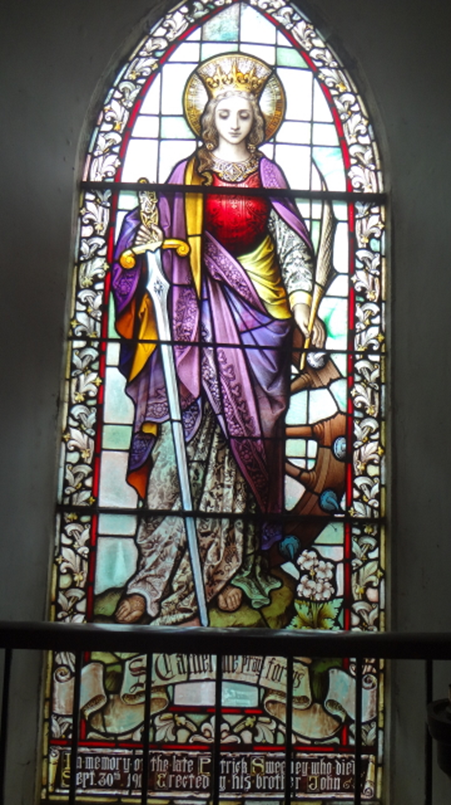
The St Catherine

Hegarty made a success of the St Peter, and went on to take over the newly built St Catherine in 1901. At 43 feet, the St Catherine was the fifth sea-going boat to be built in the Killybegs Boatyard.  James and his crew took the St Catherine to the summer herring fishing at Downings in 1901, along with the Teelin boats St McBreccan and St Carthach.  The St Catherine grossed £210 from mid-September to the end of November, as compared with the St McBreccan (£263), and the St Carthach (£73).  James’s daughter, Cassie, was born in 1905, and it is possible that he named her after his boat, and the Saint herself?  By 1906 James had paid off his boat and presumably continued fishing with the same crew.  Local folklore maintains that he spent some time in ‘the mining regions of America’ during his early years, and perhaps it was at this time he emigrated, He doesn’t appear again until 1913 when he skippered the new Zulu, Pimpernel, and later an older boat, the St Rian.  Owen McCloskey of Derrylahan was one of this crew.

Into Motor Boats

James disappears from the record until 1927, when he took on another vessel.  This was the 60 ft motor boat, Oliver Plunkett which had been repaired at the Meevagh Boatyard.  James skippered this vessel out of Teelin and Killybegs during the 1928-29 herring fishery, and was also mentioned as skipper of the Twilight Star, a very big motor boat at 71 feet in length, which was fished by a Kilcar crew during the 1930-31 season. At some date in 1931 the Twilight Star was laid up at Meevagh, which points to the fact that the Kilcar men did not continue with this venture.  

One of the motor boats similar to the Twilight Star.

The Sea Fisheries Association began building small motor boats of about 32 feet in the early 1930s in Killybegs Boatyard, and in James, as a member of the Association, applied for one of these.  The SFA assessed his application on the 12th April of that year but they did not respond to the applicant.  Finally, on 25th July 1934 Micheal Og McFadden contacted the authorities on James’s behalf. He wrote that James was:

one of the best fishermen on the Donegal coast; it is a shame how Hegarty’s application has been shelved.  He is anxious to have one of the boats now being built in Killybegs.  The SFA replied on the 8th August with the lame excuse that James’s application was one of 20 from Donegal fishermen who were on a waiting list. 

It appears that James was so disgusted with this treatment that he abandoned the application.

James now fades from the scene, and is mentioned only once again – in his obituary.  He died at Derrylahan on 6th September 1941, at the age of 69, leaving his widow, Bridget, and his three daughters to mourn his loss.   I am aware that there are many gaps in this narrative, but there may be some in the Kilcar area who could fill in some missing areas.

End of Part One.

GOLF IN KILLYBEGS

Killybegs has had several golf clubs or societies.  This article is about clubs formed in 1925 and in 1940, and is not concerned with later clubs such as the Golf and Social society of 1980.  Golf was started in Killybegs by Jack Sheridan and the staffs of the two banks, Ulster and National. Senior bank staff, arriving from larger towns, tended to look around for the golf course, which, in this town, did not exist. 

The banking class found life of small-town Killybegs pretty humdrum, with only badminton, tennis, table-tennis, and the odd whist-drive to occupy their leisure time.

Jack Sheridan, who had married Mary Rogers of the hotel dynasty, and set up a drapery shop in what is now McGinley Drapers, led the project to establish a golf course.  In this he was assisted by local banking staff – managers and clerks.  Jack, with his daughter Margaret, known as Gretta, and son Charlie, would become very actively involved in the new club down through the years. Jack was grandfather of Irene McNern, Donegal Road, and John Sheridan, Bruckless.

After much preparation the first Killybegs course was opened in 1925.  The new course was established on a piece of ground on Dick Morrow’s farm, this being on the road leading to Conlin, and on the opposite side of the road to where the Guards’ houses were much later built.   The land on which the course was laid out was known locally as Dick Morrow’s Curragh.  It was the following year that the Club got around to formally leasing the Curragh, which was done by an Indenture dated 30th August 1926.  Dick Morrow had been Gardener at the White House, Killybegs, and had moved, with his wife Mary Jane and family, to a two-storey house in Drumbeagh at some time before 1926.  This house, which has been derelict for many years, lies at the end of an avenue, just above the Guards’ houses.  Morrow’s Curragh is now owned by Donal O’Donnell.  The Morrows had three sons, Stanley, Harold and Jack.  This writer remembers Stanley making his delivery of milk from his two ‘tin cans’ to households in the town in the 1950s.  He was the most gentle man in Killybegs, doing all his rounds dressed in a long raincoat, usually with a cigarette between his lips. Stanley had this ability to smoke a butt down to almost nothing.

The officers of the club in 1928 were: Rev. Willie J. Sheridan, C. C., (president); James Black, cashier, Ulster Bank (captain); and Willie Diver, N.T. of the Commons School (secretary). 

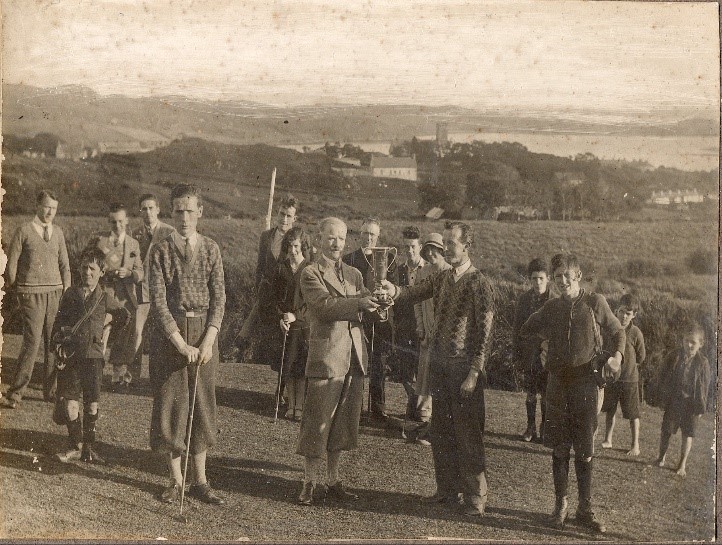
Esther Molloy is the owner of this fine photo, dated 1925, taken on the course, of Jack Sheridan, captain, presenting the cup to James Nixon, and for identifying others in the frame.

Left foreground – W. McGarrigle, Centre back: Paddy Daly (Customs & Excise) and his wife Gretta (Sheridan); Father W. J. Sheridan, C.C., Killybegs, Charlie Sheridan, Jack Sheridan’s son, and Mrs Lizzie Nixon in the cloche hat.  Is there anyone out there who could identify the caddies?  (Gretta Sheridan, Charlie’s sister, married Paddy Daly in the Pro-Cathedral on 4 September 1929, the ceremony being conducted by Father W. J. Sheridan, C.C., no relation).  This photo is remarkable in that it depicts those most powerful in Killybegs as well as the wee boys in their bare feet.   

When members of the I.N.T.O, held their regional meeting in Killybegs in August, 1928, Master Diver invited them to play on the new course.  They adjourned their meeting early to enjoy a ‘very pleasant game of golf on a very picturesque course’.  During the following year a correspondent described the Killybegs course:

Within a few minutes’ walk from the town, on Conlin Road, is a well laid out and very sporty nine-hole course.  Probably those who have reached the standard of driving a ball 250 yards or more would have few opportunities of exerting themselves to the utmost, but to the average player the links provide a delightful variety of shots, with little intricacies in abundance.  The soil is naturally damp, so that the greens retain a delightful verdure all through the summer.  With single figures handicap, players would be looking for rounds of thirty, and even those with handicaps well up in the teens, should manage an average of fours.  From the course a charming view of the harbour is obtained.  Looking south, driving off the 8th tee, Bruckless Bay and Donegal Bay seem like lakes, whilst Bundoran is plainly visible on the distant shore.

Jack Sheridan replaced the Ulster Bank cashier, James Black, as captain in 1931.  Unfortunately very little is known about this first Club, which seems to have faded out by 1933.  

THE 1940 CLUB

The Killybegs Club was revived in 1940, due to the efforts of some of the bank clerks, with Thomas Hussey of the National Bank (later Bank of Ireland) to the forefront.  The promoters hoped to have an opening on the 26th June, but the workmen were still on site. In the first week in August the course was opened by Eamonn Reilly, acting secretary of the Killybegs Club. 

Dr Falvey, Ardara, was to do the honours, but he telegraphed that he was detained on a case. The course would undoubtedly have been opened by Dr John J. Walsh, the extremely popular Killybegs M.D., but he had died in hospital in Dublin in January of this same year. In the interim, Dr Malachy McCloskey had been doing locum at Killybegs, and Dr Michael O’Boyle had not been appointed until December.

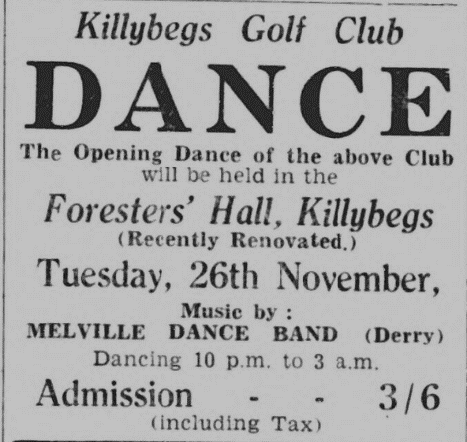
The Club raised their funding by running dances and whist drives in the Foresters’ Hall.  This notice is from November1940:

At their meeting in July 1941 the Club appointed the following officers for the ensuing year: Captain: Jack A. Corcoran; president: Jack Sheridan; treasurer: William Reilly; secretary: Thomas W. Hussey.  Greens committee: Joseph McBrearty, Charles Sheridan, Patrick Cunningham (solicitor), J. Cole, J. Langmore, and Willie Diver, N.T.  At this time they decided to hold a weekly tournament on each Wednesday evening, and to make arrangements for a club match between Portnoo and the local Club. In the final of the Nixon Cup played on the Killybegs course in September 1941, James A. Black, manager, Ulster Bank, defeated R. J. Langmore.  The cup was presented to the ‘magnificently attired’ Black by Jack Sheridan, president of the Club.    Second prize went to Joe Herron, the Ardara businessman.  Fifty competitors entered for the opening competition, in which Dr McCloskey, holed in one.  In a separate development: on Sunday 21st June 1942, the proprietors of Fintra House Hotel opened a nine hole Links course on their grounds, but by 1948 it had fallen into disuse. In October of that year it was reported that ‘Fintra Strand is fitted with a most up-to-date golf course’.

Officers of the Killybegs Club for 1943 were: Patron: Very Rev. James Canon Brennan, P.P., president: Allan Rogers; treasurer: P. McShane; secretary; Mrs Annie Furey; captain: Mrs Hancock. (Annie Furey was a grand-aunt of Mary Fitzgerald Lafferty; Allan Rogers was grandfather of Siobhan Gordon Clarke.

This article has been compiled from the meagre information available, and may be subject to alteration, as more data comes to hand. Contributions are welcome.

The photograph preserved by Esther Molloy gives us a useful look into the 1920s when social outings such as golf were much as they are today, although having a strong class structure during those years. 

A SHORT HISTORY OF BROOKEHILL – PART II. TENANTS AND OWNERS

1

The head landlord in the Corporation part of Killybegs, the townland in 1900 was Horatio Granville Murray Stewart, and he leased the Brookehill lands to James Stuart Brooke on 13th February of that year, for a term of 999 years.

The first tenant of Brookehill, following the departure of the Brookes was John O’Gallagher, N.T., Meentinadea N.S., and family, who, on his retirement in 1914, lodged first in Drumbeagh House, and later took up residence in Brookehill.  Their daughter, Veronica married William Griffin, a Glasgow shopkeeper, in 1916.

When James Stuart Brooke left Killybegs in 1919 he sold Brookehill to Mr Griffin in November of that year.  Mr Griffin was dealing with a firm distillers, Train & McIntyre, of Glasgow, and had mortgaged his property to them in 1926 as security.  As a result of some business dealings in 1934, the whole premises were assigned to Train and McIntyre for the residue of the 999 years.

Later in 1934, Allan Rogers, owner of the Bay View Hotel, bought Brookehill from the distillers for £430, but lived there only occasionally. Allan was father of Gwen Quaid, Galway, and grandfather of Siobhan Gordon Clarke, Karen Gordon Gallagher and Natasha Gustafsson Amiarouche.

On 5th September 1938 Mr Rogers sold the premises to Mick Kelly, his father-in-law, who had returned from Glenties where he had been Station Master on the Railway.  Mick Kelly soon moved down to the old Kelly home on Upper Main Street, (later Mrs Kathleen Thornton’s drapery shop) and Brookehill became vacant.

2

View from the front lawn – not dated.

3

Vincent O’Brien

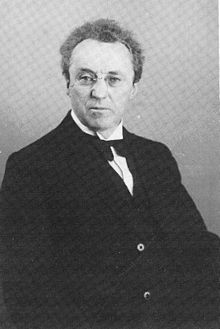
In the summer of 1939, Dr Vincent O’Brien, the distinguished musician, who taught John McCormack and others, spent a holiday period in Brookehill.

The next tenants were the newly married Dr Michael O’Boyle and his wife Mary Rogers, in 1942.  Mary was a cousin of Allan Rogers.

Thomas Charles Gilmore came to the Ulster Bank, Killybegs,  in 1911 as cashier and found lodgings with the widow Mary Nixon on Upper Main Street.  Mary was a daughter of retired Coastguard carpenter, Grant Dudgeon whose family consisted of five girls and a boy. In 1867 Mary had married Thomas Nixon, a police constable based in Glen, but he died within three years. With her two unmarried sisters, Kate and Sarah, Mary ran a drapery shop to make ends meet. Sarah died in 1908, and Kate in 1909, and so Mary was left alone. The house in which they lived is located immediately to the east of Mrs B’s Coffee House, and has been vacant for some years. Several tenants have occupied this premises, which was the former residence and shop of John Carr, grandfather of Eileen Kennedy, Conlin Road, Gerard Cunningham, Church Road, and Joey Cunningham, Kilcar.  John, who came from Firbregas, Killybegs, married, in 1902, Ellen McGuinness of Carricknamohil, and, when walking to St Mary’s church for the marriage ceremony, observed the massive blaze which demolished Michael Gillespie’s grocery and hardware store.  This is the building in which Mrs B’s Coffee House is now located. (product placement).

Return now to Thomas Charles Gilmore. He married Lucinda Wilhelmina Ruth Hamilton of Carricknagore, Killybegs.  Lucy, as she had to be called, was a daughter of William Hamilton and Charlotte Wilhelmina Caroline Sophia Barrett, daughter of William Barrett, Crown solicitor, and his wife Mary Sophia De la Tour d’Auvergne Folvil, daughter of Captain Stephen Folvil, R.N., of Carricknagore House. It is not known when Thomas C. Gilmore and Lucy moved to Brookehill, but she died there in May 1945, and her husband died in Paisley in 1953.  They are both buried in St John’s graveyard.

Group Captain Nicolas Tindal

TinPic

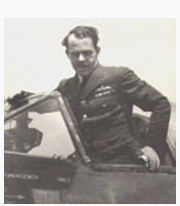
As the career details of James Stuart Brooke are not readily available, it must be conceded that Captain Nicolas Tindal was the most distinguished tenant of Brookehill.  Captain Tindal, the father of Charles of Bruckless, had a colourful career as a bomber pilot in the RAF, being shot down over France during World War II, and imprisoned by the Germans from 1940 until 1945.  This prison, Stalag Luft III, was located in what is now Poland, and was used as a place of detention for British prisoners of war.  The British prisoners had dug a series of underground tunnels to escape the prison, but Tindal gave his place to a Polish internee whose wife was pregnant, and living in England.  Tindal was the mastermind who made up fake official papers for the escapees, so that, if caught on the outside, they could ‘prove’ they were ordinary citizens.  The 1963 film The Great Escape, was about this breakout, and starred some of the Magnificent Seven actors, including Charles Bronson, Steve McQueen, and James Coburn.

Captain Tindal retired to Donegal in 1949, taking up a temporary tenancy in Brookehill in the early part of that year.  Ballyloughan House became available by the departure of Major Sinclair, and was purchased by the Captain and his wife, Winifred, and they moved there in April 1949.  They immediately began farming operations, involving a herd of pedigree Ayrshire cattle, and reviving the orchard.  An acre of strawberries was planted, certainly a pioneering effort in this area.  In 1950 Captain had 60 tons of apples ready for sale, but the Department of Agriculture had lifted a ban on the importation of foreign apples, so that the price in Ireland was so depressed that the Ballyloughan apples were difficult to sell.  The Captain became a respected and experienced livestock farmer, and was in demand as a judge at the Glen and other Agricultural Shows.   

The Tindals are well remembered in Killybegs by those of a certain age, whose attendance at church was enhanced by the sight of this elegant family proceeding up the centre aisle of St Mary’s Church, Killybegs, to take up a whole seat on the Gospel side.

The McDevitts

Paddy and Anna McDevitt bought the house as a residence in 1957, while he was the proprietor of the Pier Bar.  The next owner was local man, Seamus Tully, CEO, Killybegs Fishing Enterprises, etc., etc.  Mr Tully later passed it on to Jackie O’Neill, proprietor of Harbour Lights Nursing Home.  Thus ended the first historic period of Brookehill, and it only remains for me to acknowledge the help of Mr Seamus Tully in compiling this short account of one of the most interesting buildings in Killybegs.

A SHORT HISTORY OF BROOKEHILL – PART I.

Brookehill House was built for James Stuart Brooke, a surgeon working in India, who planned to retire to Killybegs.
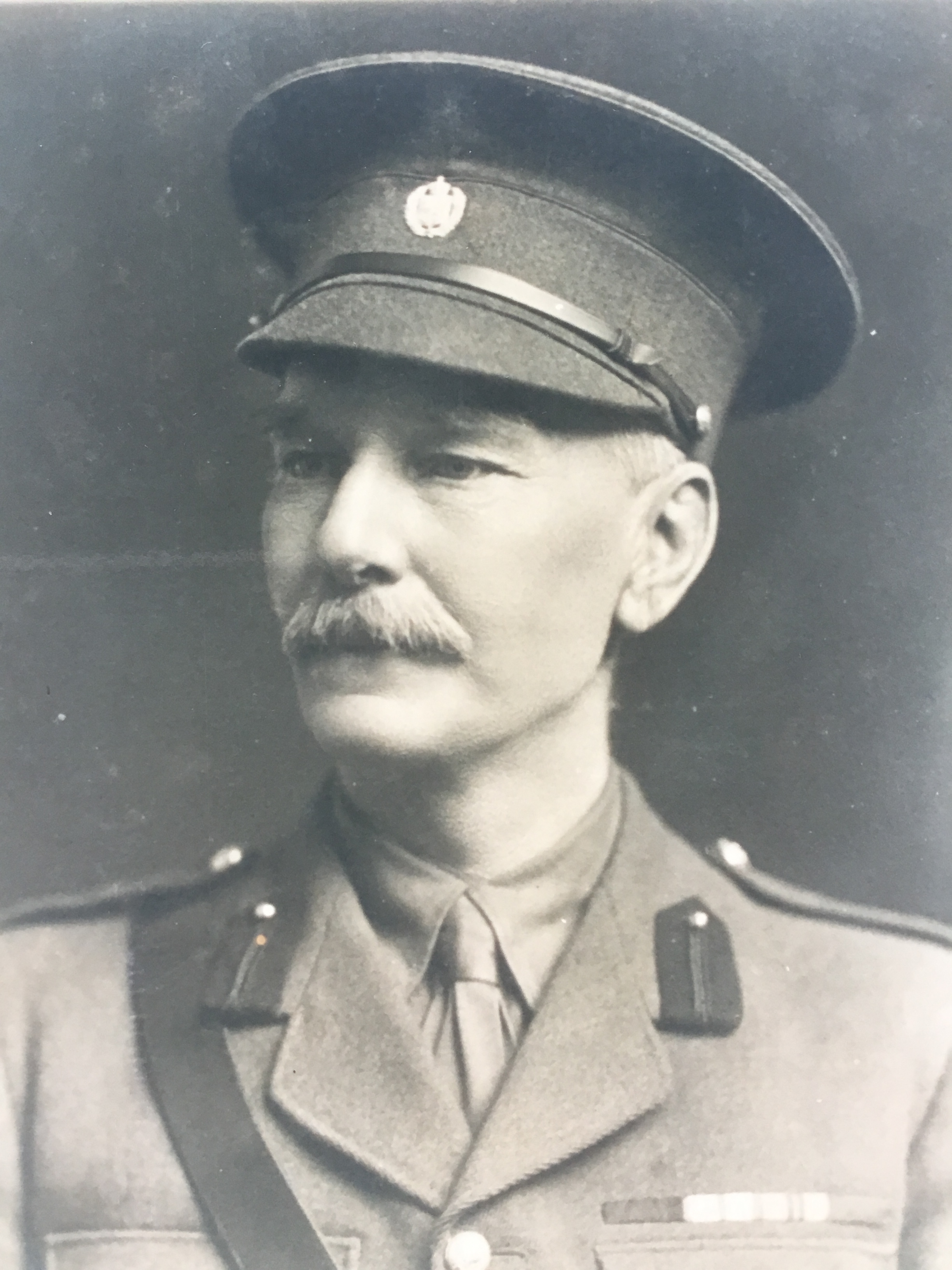
JSB

James Stuart Brooke

As a result of recent developments, one of my grandsons mentioned Brookehill House the other day, and I began to bore him to death with tales of how I, as a child, used to explore Brookehill with my buddies. It was a bit of an adventure to explore those woods, but we never interfered with the house, which was usually vacant.  Sergeant Mark Thornton, a great believer in preventing ‘crime’, used to tail us at a discreet distance, but he never got enough ‘evidence’ to haul any of us in. My grandson used to ramble round that area as well, so I think generations of Killybegs kids did that.  How many reading this can recall rambling through those woods long ago?

Now to the question of the date of building of the house. In fact Brookehill is the only ‘big house’ in this area that can be dated precisely.   In June 1899 building materials started arriving at Killybegs Railway Station for it.  We know this because the building foreman complained to the Railway Company which was charging freight of £2 per wagon load of 2,000 bricks, and they would need from 25 to 30 wagons of them. These were red bricks, manufactured in a location in the Lifford area, and used for the surrounds of windows, doors, and for the chimneys, etc.  Again, as to the date of building, Elizabeth Leschallas, a granddaughter of James Stuart Brooke, told me some years ago that the house was completed in 1902.

The foreman on the site was John Mulreany, who was a grand-uncle of Angela Mulreany Brady, now living in Sligo.  In recognition of his assistance Brooke presented him with a gold pocket watch, which I had the pleasure of examining a few years ago, courtesy of Chrisanna Lynch, Ardara.  I was allowed to photograph the watch, but the image is not great, as the phones then were primitive, and at that time an iPad was something you put over a sore eye.

Recent activity at Brookehill has generated a lot of interest locally, so I cobbled together this two-part background information on the place, and the people who owned it and those who rented it.

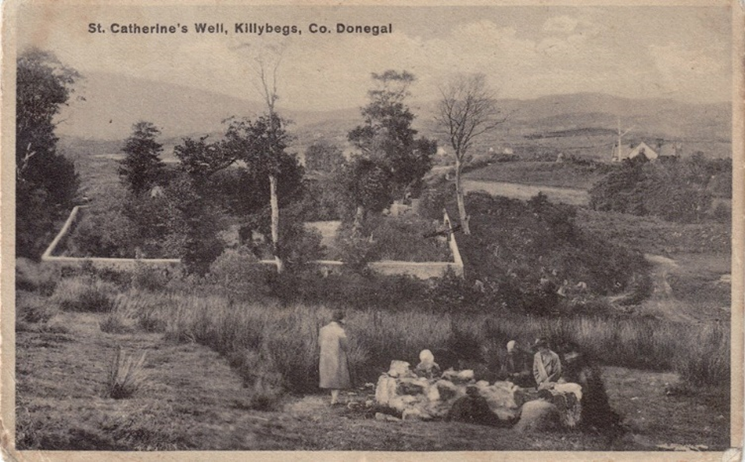
There were three branches of the Brooke family in Killybegs, from 1866 until about 1920.  Their residences were the White House, Brookehill, and Carnaween. The Brookehill branch is the subject of this blog.  The family claim descent from Sir Basil Brooke, who was granted Donegal Castle at the Plantation of Ulster.  It is not necessary to go into all that, and besides my readers will have to be introduced gently to the British Ascendancy period of Killybegs history.  You may have noticed down the years that the type of local history being promoted in Killybegs has been almost exclusively concerned with the Catholic/Nationalist culture of our district.  I introduced what was probably the first ‘ascendancy’ history in my book, Bygones, many years ago, but that part of our experience has unfortunately not been followed up since, what with the emphasis on the old McSwyne church and St Catherine’s Well.  So – get ready for a journey deep into British Killybegs.  I will try and make it as painless as possible but those of a strong Nationalist/Gaelic sensibility look away now.

James Stuart Brooke registered his degrees from the Royal College of Surgeons in Ireland, on 11th March 1881, and ‘signed up with the East Indian Railway Company five days later.  His first contract was for four years from 1881, at a salary of 400 Rupees per annum (haven’t a clue). His title was chief medical officer and medical Storekeeper to the Company, and he was also a surgeon Lieutenant-colonel in the East India Royal Volunteer Rifles.  It is thought that he married his wife, Caroline Foster Bradley either before he went to India, or shortly afterwards.
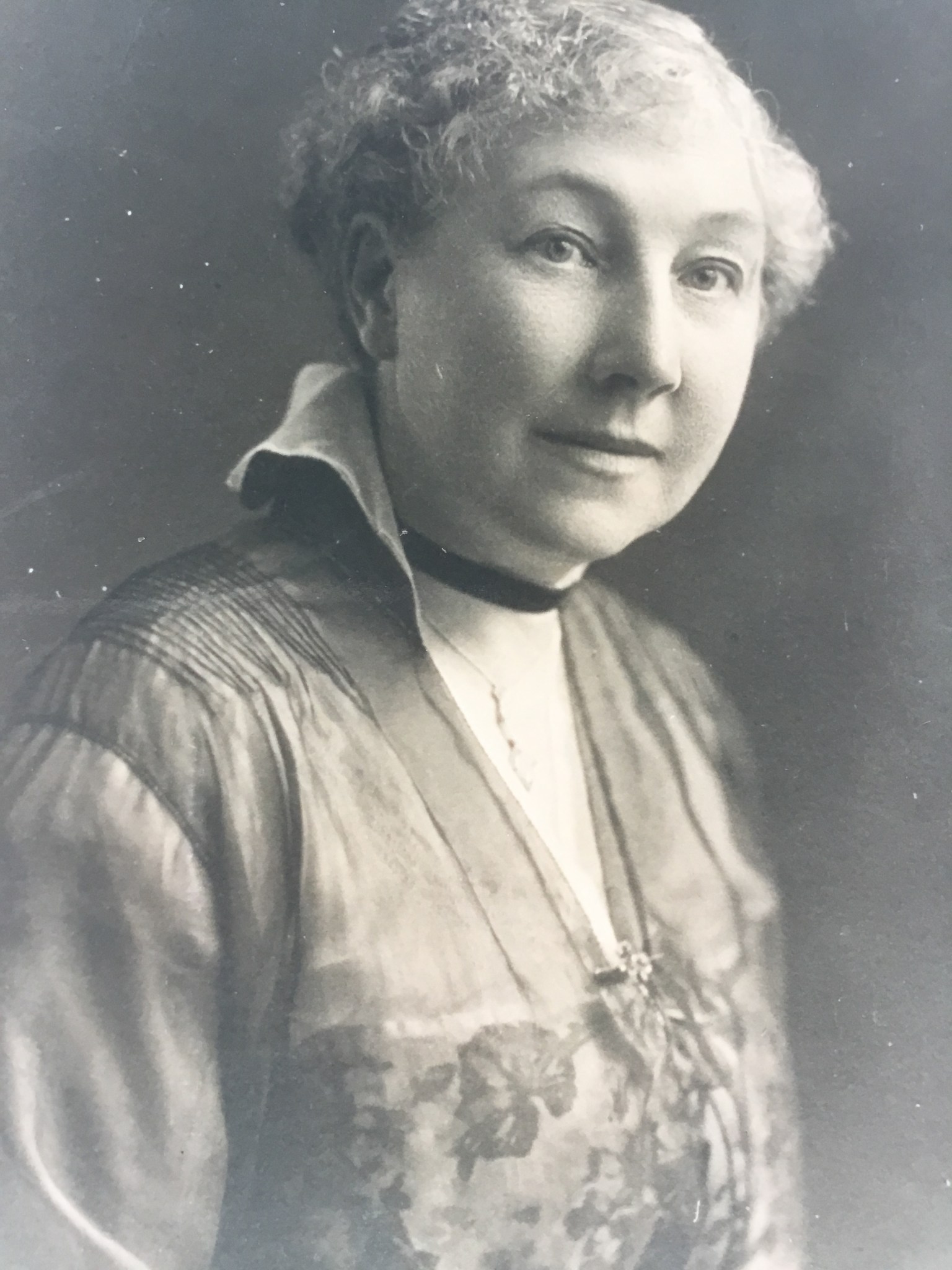
CB

Caroline Brooke

Although the house was finished in 1902, the Brookes did not arrive in Killybegs until 1912.  In the meantime James’s brother, Arthur, Agent of the Murray estate, who lived in the White House, Killybegs, had provided the site, and supervised the building arrangements for the new house.  When his brother was delayed in India, for whatever reason, Arthur advertised the new house for letting (in the Ascendancy papers only – sending out a strong signal that only a certain class would be considered) in April 1904:

ADV

One of the first domestic staff in Brookehill was Mary Anne Kelly, nee McSorley, from Park in Co Derry.  She married Barney Kelly in January 1908 and was employed in Brookehill at a time  not precisely known. At his time of marriage, Barney, 28, was running his elderly mother’s drapery shop on Upper Main Street in Killybegs, These premises are now vacant, and in the ownership of Pat and Celia McGee, M.P.S.I.   It will be well known to those of a certain age as ‘Mrs Thornton’s’, where Kathleen Thornton ran a very customer-friendly drapery, supplying all household linens, and the ladies with their necessaries. She had the large picture window installed, and the black marble surround was pure New York style.There is a period up until 1912 when no records have so far been found of any occupants of Brookehill, but this information is sure to turn up.

At this time Barney Kelly’s mother, Anne, who was a widow, also owned the premises which stood on the site of the present Anvil House. It was a dwelling house, with the entire left side interior configured as the Petty Sessions Court house for the Killybegs district.

In 1908 Anne Kelly gave notice to the Co. Council to quit the Court house premises in order to accommodate Barney and his new wife.  Mary Ann McSorley/Kelly died in the Court House, Barney’s residence, in 1941, being nursed in her last years by this writer’s mother.  Hence the strong relationship with our family and the Kellys.  As you will know, Barney was the late Anne Jane Kelly’s father.  The premises on Upper Main Street, mentioned above, (Kathleen Thornton’s shop) was where Josephine Kelly Rogers, proprietor of the old Bay View Hotel, mother of Gwen Rogers Quaid, (Galway), and grandmother of Siobhan Gordon Clarke, was born. It was originally the home of the Kelly family who had come from Ballyshannon, and were quite prominent people in Killybegs.

To put it mildly, the Brookes of Brookehill kept a low profile, and reports of them appearing in the dock in the Petty Sessions Court House are just not to be found.  The three main ‘crimes’ committed by the locals in Killybegs then were trespass of cattle, allowing a pig to wander on the public road, and being d & d on the public street. The Brookes were never charged with any of these.  Instead, it is possible to find reports of more genteel activities by them, such as getting married to people strictly of their own class.  The usual wholesome names such as ‘Paddy’ and ‘Bridie’ will seldom be found in connection with the Brookes.

The first of that family to be married out of Brookehill, was a daughter, Grace Ledlie Brooke, who married, in 1915, Pierce Grove-White, who was Captain, Duke of Cambridge’s Own Middlesex Regiment, Doneraile, Co. Cork.

Next up was Kathleen Carrie, her sister, who wed, in 1912, Captain Cadwallader Edwards Palmer, of the Indian Medical Service, she being 28, and he 31.  These marriages took place in St John’s church, with the receptions being held in the bride’s house.  As far as Killybegs was concerned, the ceremonies and receptions were high society affairs, and remote from the day to day humdrum life of the village.   The senior Brookes seem to have departed Brookehill in about 1919, and the house was then occupied by the daughter, Grace and her husband Pierce Grove, who may have used it as a holiday home.   A female Grove presided at the organ in St John’s church during a Harvest Thanksgiving service in 1913.

Adelaide Grove, a resident of Brookehill, married, in 1918, Claudius Willoughby Chaloner, of the Royal Irish Inniskilling Fusiliers.

From Independence time Brookehill seems to have been vacant, and changed hands a few times, and was leased out to a variety of tenants.

Next up will be the later owners and some of the temporary occupiers.

ACCIDENT AT KILLYBEGS

A boy about ten years of age named McGinley, who was residing with his grandfather at Conlin, Killybegs, was, during the first week in September 1874, thrown by a horse which he was riding, and killed on the spot. His parents, who some time ago, went to America, had forwarded £15 to have the boy fitted out and sent to them, but, just five days before that on which he was to leave, the sad accident occurred which deprived him of life.

Ward Cured

MIRACULOUS CURE AT DOON WELL.

On Sunday 14th September 1913 a very large number of people travelled on special trains on the Donegal Railway’s lines and the Burtonport line, to the Holy Well. Among those was a man named Ward from the Killybegs district. Ward, who is apparently about 35 years of age, was working in Scotland up to two years ago, when, in handling iron bars his spine got so injured that for about a year he with great difficulty moved painfully with the aid of two crutches. On Sunday his appearance, getting with the aid of friends and supported by his crutches from one railway station to the other at Letterkenny, excited pity in beholders. After having made the, to him, second weary railway journey on the Burtonport Railway, performing the devotions required of pilgrims at the Holy Well, he on return to Letterkenny, where the excursion party had an arranged delay for refreshment purposes, gladly announced to many that he found at the Well that he no longer required a crutch, and left them there. Several persons who had been speaking to him in the morning found it hard to realise the miraculous change in his appearance. He walked strongly erect and with perfect freedom. These are his simple facts.

Marriages (4)

Brady & McFadden – February 7, 1906, at St Mary’s Church, Killybegs, by the Rev Michael Ward, C.C., Connell Brady, The Island, to Annie, eldest daughter of the late Edward McFadden, Ferbregas, Killybegs.

O’Byrne & Carre. February 11, 1878, at St Mary’s Catholic Church, Killybegs, by the Rev Thomas Slevin, C.C., Mr John O’Byrne, grocer, Skarem, Scotland, to Miss Mary Carre, teacher, Killybegs National School.

Flynn & Cunningham; September 1937: At St Kevin’s Church, Harrington Road, Dublin, the contracting parties being Mr Joseph Flynn, insurance inspector, Donegal, son of Mr Flynn and the late Mrs Flynn, Leitrim, and Miss Margaret Ann Cunningham, daughter of Mr J. Cunningham, Ballyara, Killybegs. The bride was attended by her niece, Miss Mary Frances Cunningham, Killybegs, and the best man was Mr Hugh Flynn, N.T., Fermanagh (brother of the bridegroom).   The bride, who was given away by her brother, Mr John Cunningham, P.C., Killybegs, looked charming in a two-piece navy suit, with hat, veil, gloves and shoes to tone. The bridesmaid wore a white silk frock, with hat, gloves and shoes to match. The officiating clergyman was Very Rev. Archdeacon Grimes, P.P. [Margaret was a sister of Johnny Cunningham, founder of Cunningham’s grocery, hardware, etc., stores, Killybegs]

Dunne & McBrearty. September 30, 1870, at St Mary’s church, Killybegs, by the Rev Mr. Stephens, P.P., Mr John Dunne of H.M. Revenue Cruizer, Fly, Killybegs Bay, to Mary Jane, eldest daughter of Capt. James McBrearty, Schooner Fashion, Killybegs.

McBride & Doherty. August, 1941, In St Mary’s Church, Sergt. Michael McBride, L.D.F. Drill Instructor, Dungloe, and Miss Mary Doherty, eldest daughter of Mr and Mrs Jack Doherty, Killybegs. The bridegroom is the eldest son of Mr and Mrs Denis McBride, Downings. Bridesmaid: Anne Gallagher, Glenties; Best Man: Frank Rogers, Main Street, Killybegs.

Conwell & Coane. February 4, 1869, at St Mary’s Church, Killybegs, by the Rev James Stephens, P.P., assisted by the Rev P. Kelly, C.C., Mr Patrick Conwell, Straleeny, to Miss Ellen Coane, Killybegs.

Hamilton & Hamilton. July 1835, in St Mary’s church, Dublin, Micah Cary, youngest son of Charles Hamilton, Esq., of Ballyfatton, county of Tyrone, to Kate, fifth daughter of the late Richard Hamilton, Esq., of Fintra, Killybegs, county Donegal.

McFadden & O’Donnell. 1 January 1871: In St Mary’s church, Killybegs, by the Rev James Stephens: William McFadden, Craigadoos, (nr St Johnston), and Mary O’Donnell, Port Na Croise, Killybegs.

Boyd & Watson, 24 February 1916: At St John’s Church, Killybegs, by the Rev H. Deazley, John James Boyd, son of Daniel Boyd, Lackaduff, Drumitten, Ardara, to Sophia Watson, daughter of James Watson, Largysillagh, Killybegs.

McElhinney & Strain – July 28, 1909, at St Mary’s Church, Killybegs, by the Rev. D. E. Coyle, C.C., Patrick McElhinney, merchant, Claudy, Derry, to Bridget Ellen Strain, Killybegs.

Back Again.

My readers no doubt have noticed (!) that this blog has been missing for a few weeks. Problem: Laptop decided it wanted to change to Windows 10 instead of 8, and that messed up a lot of things. Also summer (!) weather was against sitting in blogging.

The blog for July 1st (which did not get published) was to commemorate young Tommy Chesnutt, of The Green, Killybegs, who died aged 21, on the first day of the Battle of the Somme, 1916. Also Paddy Murrin, an uncle of Mary Hegarty and Joey Murrin, who died in that war (5 April 1916); Patrick Hegarty, Granhey, Killybegs, (3 September); and James McCullagh, Aghayeevoge, Killybegs. (27 May 1916). R.I.P.  Several other Killybegs men died in WWI: see my first blog.


To get back on track, this report of a children’s concert in the Foresters’ Hall makes easy reading although many of them have passed to their reward:


Killybegs Children’s Concert on 3rd January 1937

The success of the concert was due to the arduous preliminary work of Mrs B. C. Ward, N.T., (and her sister, Imelda Gallagher).   The first item was the opening chorus, An Chuacin Bhinn by Peg Cunningham, Mary Dowds, Katie Murrin, Greta McMenamin, Anna Conwell, Alice Flood, Sarah Gallagher and Joan Cunningham; Johnny Murrin, Josie Ward, Josie Dowds, Seamus McGroarty, Josie Paris, Terence Doherty, and Paddy McMenamin. Feis prizewinners, Little Soldiers by W. Flood, John Murrin, B. McNelis, Hammy Kyles, Liam Conwell, and P. McMenamin, was a treat.

Paidin Fionn, solo, by Anna Conwell, Killybegs, was well received.

Old Black Joe (Darkie song) by Josie Paris, Paddy Dowds, Hammy Kyles, Bernard McNelis, Josie Dowds and Paddy McMenamin, was a scream.

The Garden Gate, song, by Nora Conwell, Killybegs, was loudly applauded. Rallying Song, Bernard McNelis, Paddy McMenamin, Seamus McGroarty, Paddy Dowds, Josie Ward, Frankie Rogers and Francis McNelis, revealed promising talent.

Alice Blue Gown by Anna Conwell and senior girls provided no end of amusement.

Barefoot Days, solo, by Terence Doherty won merited applause.

Tenting Tonight, (action song) by Terence O’Doherty, Frankie Rogers, Josie Ward, Josie Dowds and John Murrin, was of a high standard. Polly Wolly Doodle was pleasantly sung by Kathleen Flood. A cowboy song was rendered in winning style by the senior boy pupils of the Niall Mor School.

Play – The Pensioner, Cast: Peg Cunningham, Lena Cunningham, Seamus McGroarty, and Josie Paris, impressed the audience by their wonderfully true interpretation.

Junior chorus: Samhradh by Veronica Dowds, Nora Conwell, Clare Cunningham, Sally Flood, Bridie Cunningham, Mary McGinn, Mary Molloy, Sheena Cannon, and Kathleen Flood; Sean McMenamin, Con Breslin, Denis Kinsella, Liam Conwell, Seamus Murrin, and Frankie McMenamin. This item charmed the audience. Scout Song, by the Killybegs Catholic Boy Scouts, was worthy of prolonged applause.

Eight Little Mothers, (action song) by Bridie Cunningham, Bridie Murrin, Sally Flood, Mary McGinn, Ethna Fagan, Kathleen Gallagher, M. Molloy, Sheena Cannon, and Clare Cunningham, provoked much laughter.

Model Parliament, (action song): T. Doherty as Mr Speaker; John Murrin as Prime Minister; Paddy McMenamin as Parliamentary Policeman, was enthusiastically received.

Could we but Rule, (action song) by Peg Cunningham, Bridie McGroarty, Bridie Murrin, Greta McMenamin, Nora Conwell, Moira Molloy, Annie Kenny, and Mary O’Donnell was faultlessly performed.

Miss Nora Conwell was heard to advantage in solos, Sky Lark and Mammy Mine.

Gipsies, by Anna Conwell, Nora Conwell, Bridie McGroarty, Sarah Gallagher, Mary Cunningham, and Annie Kenny reflected credit upon themselves and their teacher.

Sailor’s action song and sailor’s hornpipe by Frank Rogers, Josie Dowds, Bernard McNelis, Francis McNelis, Terence Doherty, Josie Ward and John Murrin was a pleasant item. Twenty Miles from Nowhere, Cowboy song: Hammy Kyles, Paddy McMenamin, Paddy Dowds, Frank McNelis, Josie Paris, and Seamus McGroarty, was deservedly applauded.

Dirty Boys (action song) by senior boys and girls of the Niall Mor School gave the audience some side-splitting laughter. Closing chorus, Samhradh, by the first prize-winners of the Donegal Feis last year received a hearty encore.

During the intervals Edward, Patrick and Michael Hegarty (violinists) entertained the audience with selections of Irish traditional music.

B.C. Ward, N.T., and Miss Imelda Gallagher were accompanists. Brian McNelis, N.T., Killybegs, discharged the duties of M.C.

[I assume the Josie Ward above was Surgeon Joey Ward who died in New York in July 2012]