ROBBERIES AND OUTRAGES

It has been said, with some truth, that this blog is not that lively; indeed it could be described as dull and sometimes uninteresting.  So, to give some balance, there will be a departure from the usual doom and gloom to a different variety of gloom and doom.

The blog has no wish to promote what may be called shocking events of a tabloid nature, but sometimes life is not a bed of those plants with thorny stems that grow in gardens.  Shocking things happen, and there is no harm in reporting them, it might even serve as an advance warning to vulnerable people.

From time to time the media carry reports of robberies committed on elderly and defenceless people in remote areas.  Terrible as these incidents are, they have a long history, as this report from July 1851 shows:

ROBBERIES AND OUTRAGES

Since the month of February, not less than thirty six robberies have been committed within two miles of Letterkenny, and not a single detection, save in one instance, although most of them were of a very serious and aggravating nature.  You cannot travel out almost any distance in any direction without meeting some party either going to the doctor to have their wounds dressed.  Or people enquiring after some stolen property, horse or cow, meal, money, bed and back-clothing, or other effects of which they have been plundered by these daring and heartless robbers.  One man is lodged in Lifford gaol at present, for being one of the 18 who came by night to the house of an unprotected widow and her son, and a relative who was as servant in the house; When the robbers had broken down their strength so they could offer no further resistance, and that they might not recognise any of the party afterwards, they bound their clothes around their heads, and their arms with ropes, and threw them all into a bed, shutting up the apartment.  This done, they struck [lit up the lamps], kindled a fire, and collected all the butter, milk, eggs, and bread in the house.  On this they feasted for one hour without any apprehensions of danger, no neighbours being near.  When this scene was over, then the work of plunder commenced.  One party collected all the linens, sheets, back-clothes and bed-clothes, all the knives and forks, etc.  Another party collected the sacks, and filled them with meal, not leaving one pound behind.  Another party loaded their own horses first, and then broke open the stable door and took out a horse to carry off what remained.  They left the widow’s house a complete waste, herself, son, and servant, bound with ropes, full of large wounds.  They were bleeding profusely, and rolled up as they believed in their bloody grave-shrouds, without a single article of food or raiment, should they ever require it.  Indeed “so cruel” relates the aged widow, who survives, through greatly disfigured from many large wounds on her face and other parts of her person “was the human monster, who inflicted on her all her sores, that when he had broken down her strength, that she could make no further resistance, and was in the act of binding her with ropes, he stooped down and chewed off part of her nose with his teeth”.

FINTRA CLOCK TOWER: THE LAYING OF THE FOUNDATION STONE

On Thursday, 23rd July, 1896, Mrs Gorringe, wife of the Fintra estate owner, laid the foundation stone of the new clock tower and stables. The evening was given up to a supper, followed by music and singing for the estate workmen, the constabulary, and the Killybegs railway staff.

As landlords the Gorringes kept on good terms with their Fintra tenants. The Fintra estate was made up of the townlands of Coolnagoppoge, Gortnamuck, Gortnagolan, Tullig, Island, and Lisnacleha. The 90 tenants of the estate paid rent to their landlord, T. J. Gorringe.

Having built new out-offices, including a meeting hall, Gorringe decided, in 1896 to add an ornamental tower, which would include a clock, and be surmounted by a weathervane. He arranged a formal laying of the foundation stone, and at the same time, threw a party for his tenants.

The celebrations started on Monday, July 20th, 1896, and lasted over three days. On the first evening he invited all the elderly or principal tenants. They all sat down to a feast of beef, mutton, and vegetables, followed by plum pudding, and whiskey or water to drink. The ladies of the manor had decorated the dining space with bunting, evergreens and plants. These women were Mrs T. J. Hamilton Gorringe and Mrs Twigg, helped by their daughters. (Annie Wilhelmina Hamilton of Fintra House married John B. Twigg of Dublin in September 1866).

During the speeches which followed the meal, a toast was made by Mr McGinty, who proposed the health of the landlord, wishing him health and prosperity. Mr Gorringe, returned thanks to McGinty and the Fintra tenants. He said he was very pleased and delighted to meet them all on such an occasion, and hoped in the future he would have the pleasure of meeting them all there again.

James Hegarty then proposed the health of Arthur Parsons-Guy, the agent to the Fintra estate, speaking well of his energy and interest in the welfare of the tenantry. Guy, responding, said that a better lot of tenants than those on the Fintra estate he could not do business with; he always found them honest. He was proud to say there were very few arrears on the estate, and by next year he hoped to see everyone clear.

The toasts over, the evening passed off very successfully with singing and music, the latter aided by a large musical box placed on the platform of the hall.

Pipes and tobacco were provided for the men, and for any of the old ladies who indulged in the nicotine habit, while several accepted the packets of snuff from Mrs Gorringe herself.

The following evening the sons and daughters of the tenants, numbering 102, came in for their share of the festivities. Tea was laid on in the hall and afterwards the tables were removed and dancing began. The music was provided by two violinists specially hired from Strabane, and dancing was kept up till 3.30.a.m. During the evening the whole frontage of the residence was brilliantly illuminated with hundreds of fairylights, and a display of fireworks was given, to which all the neighbourhood was invited.

Finally, the foundation stone, with a suitable inscription, was laid by Mrs Hamilton Gorringe. Underneath a hole was cut, and papers of the day and coins of the year were placed inside.

On the Saturday afternoon the gala week concluded with a tea and magic lantern entertainment, to which all the little children on the Fintra estate were invited.

Killybegs 400

In December this year Killybegs will celebrate its 400th anniversary as a town.  Local historian Pat Conaghan has made a lifelong study of Killybegs, and has written four books on local history.  Here he outlines the process of creating a brand new town adjacent to the ancient Cealla Beaga at the beginning of the seventeenth century.  This new town was never Na Cealla Beaga, which was the old monastic settlement on the south side of the harbour.

The Borough of Killybegs, 1615.

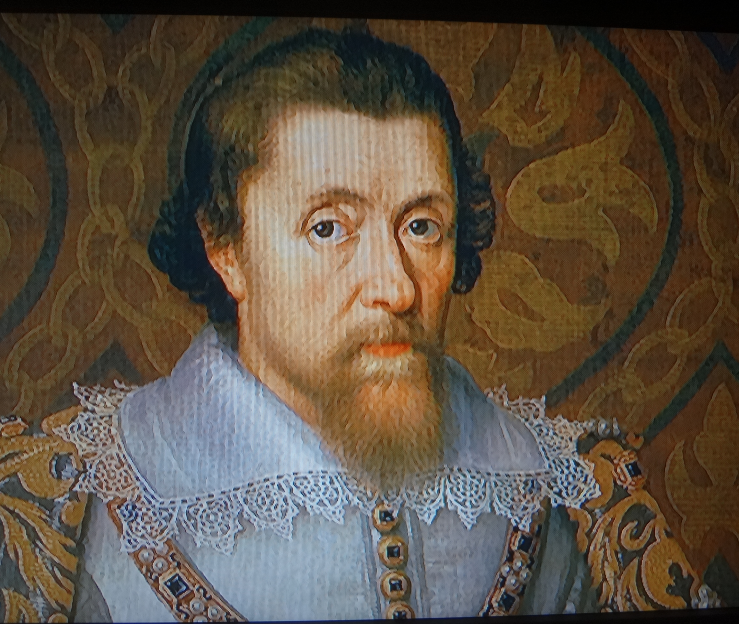
King James VI and I

King James VI and I

The new town of Killybegs was founded by King James VI four hundred years ago.  It was built on the north shore of the harbour, and came officially into existence on 14 December 1615 when it received its Charter.

Following the Battle of Kinsale in 1601-02 the British were free to overrun all of Ulster, right out to the western islands of Donegal.  During the following decade they confiscated the lands belonging to the Donegal chieftains and allocated them to British settlers.  Thus the Plantation of Ulster began.  The Plantation scheme had three main objectives: One, to lock down Ulster because they believed O’Neill and O’Donnell, supported by Spanish forces, could regroup.  If such an attack was planned, Killybegs would surely be chosen as the landing port.   Two, to control and ‘civilise’ the ‘wild’ Irish.  Three, to introduce the Protestant religion to the last unconquered Gaelic/Catholic region of Ireland. Also, the King, always short of funds, would be able to draw revenue from the conquered lands.

King James also had a political problem.  He planned to hold a parliament in Dublin in 1613, but knew that his party was short of MPs.  At that time he could create new MPs by setting up new towns, or corporations.  Each town was entitled to send two members to parliament, and so the King ordered the creation of new towns in Donegal.  These were Donegal, Ballyshanon, Lifford, and Killybegs, and St Johnston.

The towns were set up in strategic locations, where a castle or important pass already existed.   Killybegs was chosen because of its strategic harbour and the McSwyne castle which stood on Castle Point. (Mooney Boats occupies this site).  The British kept a small force of a constable and 20 soldiers in Killybegs in 1606 but it was thought they were vulnerable to attack.  The Lord Deputy, Sir Arthur Chichester, recommended that a fort should be built at Killybegs, which would ‘resist great forces, and have a strong ward and much ordnance’. The Plantation had not begun, but it was time to make arrangements for the corporate towns to be set up.

Roger Jones, the Provost of Sligo, was tasked with building a new town within Killybegs harbour.  Jones was a Devonshire wool merchant who had fought in Queen Elizabeth’s wars in Ireland, and who had made good in Sligo.   He was granted a parcel of land within the harbour, and was instructed to build the town on that site.  The instructions laid down nine or ten main conditions which Jones had to carry out:

One: To mark out an area of 224 acres for the town and its fields, or ‘parks’.  The strip of land he chose lay northwards ‘across the water’ from the old settlement of Na Cealla Beaga.  The new site extended from its western end at the Bridge River, for about two and a half miles eastwards.  That eastern boundary is today the line between the townlands of Corporation and Straleeny.  The strip of land was only about a half a mile wide, from the shoreline, and adjoining the townlands of Drumbeagh, Croaghlin, and Faiafannan.  Jones paid the Treasury 24 shillings per year for this land.

Two: To lay out a town, with streets marked out ‘as well for defence as convenience’.  Jones decided to build the town at the western end of the strip, that is, adjoining the Bridge River and the harbour, and extending eastwards to what is known today as ‘Mulreany’s Brae’.

Three: To build twenty houses of stone or timber, like the type of houses in England.  He had to build five houses per year for the term of four years.  He divided the site of the town into areas of one acre, which would contain a house and garden.  These were called the ‘principal houses’ and each house was allocated two acres in the fields to the eastward of the town, for its hay and livestock.

Jones was instructed to allocate each of these houses to twenty persons of ‘civil education’ and could charge each tenant a rent of two shillings per annum.

Four: Set apart ten other acres for ten smaller houses, with one acre for each house. Rent for each house: One shilling and sixpence per annum.

Five: Provide a site for a Market House within the town.

Six: Provide a convenient site for a church and a cemetery, provided there was no church or cemetery already there.

Seven: Set apart 30 acres to be known as ‘the Burgesses Field’.

Eight: To set apart another area of 30 acres for the ‘Commons’ of the town, for the use of the official inhabitants.  They would have this land in common, and rent-free.

Nine: Set apart two acres ‘lying in and near the said town’, for a school.  Half an acre for the school site, and an acre and a half for a playground.  Jones never built on this site, and it lay vacant until the first ‘Commons School’, then known as ‘Killybegs School’ was erected on it in 1834.

The Government of the town.

The committee or ‘corporation’ to run the new town consisted of a Provost and twelve burgesses.  Roger Jones was appointed as the first Provost, firstly for a year, to be re-elected thereafter. The burgesses were hand-picked men who, with the Provost, would make up the legal entity called the Corporation of Killybegs.  This entity, under English law, would be entitled to return two members to parliament.

The names of the first burgesses were: HENRY JOHNES, WILLIAM RASTOLE, EDWARD CARPENTER, RICHARD SMITH, JAMES MAIO, HENRY BLAGNE, WILLIAM LINCHE, FRANCIS BLAGNE, HENRY HARWOOD, THOMAS SMITH, RICHARD BAROWE, AND WILLIAM HOWELL.  These officers have disappeared from history, seldom if ever making an appearance.  Their sole function seems to have been to vote for the chosen candidate for MP from time to time.  It is notable that each burgess was obliged to take the Oath of Supremacy, pledging his allegiance to the British monarch as head of the Church of England.  This effectively excluded Catholics from holding the office of Provost or burgess.

It will be noticed that thirty houses were built although only thirteen possible ‘householders’ were mentioned.  It is known that Jones owned one of the houses, and he probably lived there at times during the years of construction.  Also, it cannot be denied that the burgesses lived in their new houses. Jones’s instructions allowed him to accept as tenants ‘cottiers and other inferior inhabitants’, so that he most likely found occupants for all of the houses.

Finally, the Corporation of Killybegs was granted several privileges, including:

A Court with jurisdiction to forty shillings, to be held regularly.

A Market every Tuesday and an annual fair to be held on Easter Monday.  The British Exchequer to receive six shillings and eight pence annually from the market and fair.

The Corporation to appoint two sergeants at mace, and to have a common seal.  The Corporation was also empowered to make bye-laws.

No retail sales were allowed within three miles on either side of the town, except by permission of the Corporation. This was to protect the monopoly of trade granted to the Provost and burgesses.

The politics of the town was soon taken over by the Conyngham family of Mountcharles and Slane, who controlled the political system and nominated the two candidates for parliament. It was easy for a wealthy ‘patron’ to influence the small number of voters in the Corporation.

The Corporation title is continued today in the official name of the townland of that name, which corresponds to the land that was granted to Roger Jones. The name Corporation appears in one other place in Killybegs, that is, on the tombstone of Paddy Finison, a former Provost, who died in 1703. A piece of doggerel verse on his headstone reads:

HERE IN THIS TOMB A PROVOST LIES

THAT WAS BOTH PIOUS JUST AND WISE.

HE WAS BOTH PLEASANT AND SINCERE

THE GOOD HIM LOVED THE BAD DID FEAR.

AND WHEN HIS TIME WITH YEARS WAS SPENT

THE CORPORATION DID LAMENT

The Corporation of Killybegs, if it was still in existence, came to an end on January 1, 1801, with the union of Britain and Ireland.  A commission in 1834, visiting Killybegs, found that there was no memory of the old Corporation.

KILLYBEGS MEN KILLED IN THE FIRST WORLD WAR

One hundred years after the start of the First World War, it is appropriate to remember those who gave their lives in that conflict. In particular we remember the young men of Killybegs who died far from home:


John Boyle, Private. Johnny and his twin sister Lizzie were the youngest children of Condy and Kate Boyle, (nee Murrin), Stragar North. He also had a sister, Catherine, three brothers, Condy, James and
Hugh, and four other siblings. No. 65815. 13th Battalion, Royal Fusiliers. Died 3rd October 1917. Age
26.

Thomas Chesnutt, Private, son of Thomas and Annie Chesnutt, (nee Morrow, daughter of George Morrow, Scotties’ Hill, Killybegs), The Green, Killybegs. Thomas had five sisters: Margaret, Annie, Cassie, Aggie and Mary. No. 14147. 11th Battalion, Royal Inniskilling Fusiliers. Killed at the Battle of the Somme, 1st July 1916. Age 21. Interred St John’s graveyard, Killybegs. Private Thomas’s father was skipper of a smack at Killybegs and a son of Moses Chesnutt of Roxboro, Kilcar.

John Conaghan, Private, Killybegs. 15875. 5th Battalion, Princess Victoria’s Royal Irish Fusiliers. Lived Maryhill, Glasgow, and enlisted there. Killed in action, Gallipoli. This Conaghan family was originally from Largymore, in the parish of Kilcar.

Andrew Elliott, son of John and Elizabeth Anne Elliott (nee Cassidy), Aghayeevoge, and brother of Charles, Anne Maria, John James, Thomas, William and Robert. 11205. 2nd Battalion, Irish Guards. Killed in action 7th March 1917. Age 20. Interred Sailly-Saillisel British cemetery, France. V.I.3.

Alexander Hamilton. Bo’sun. Son of Alexander and Isabella (nee Given) Coastguard Station. Born Killybegs 12th October 1881. Brother of Robert John and Sydney. Served on SS Royal Edward, Toronto Mercantile Marine. Presumed drowned, age 33, on 13th August 1915. Tower Hill Memorial, London. Alexander’s father had retired from HM cutter Victoria and joined the Coastguards at Killybegs.

Patrick Hegarty, Private, son of James and Anne, Granhey, and brother of Anne, John James and Mary Ellen. 5948. Enlisted Glasgow. Died 3rd September 1916. Age 26. His brother John was a crewman on the Nobby Emerald II in 1907, and on the Catch Me If You Can in 1910, fishing out of Killybegs.
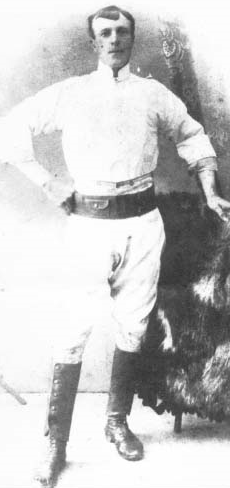
Sergeant_Bernard_KeeneyBernard Keeney, Sergeant, son of Patrick and Margaret Keeney, Granhey. uncle of Annie Harvey, and the late Paddy Keeney. 11966. 2nd Battalion, Scots Guards. Killed in action, 7th April 1918. Age 30. Interred Bailleulmont Communal cemetery, Pas de Calais. C.3.

Stanely May, Leading Seaman, H.M.S. Gossamer. Son of John and Mary May, Killybegs. Husband of Bridget (nee McNelis), Bridge Street, Killybegs (Bridget was a grand-aunt of Terry Lee, Kilcar). J/2794. Drowned 20th March 1918. Age 26. Interred Oban Pennyfuir cemetery, Argyllshire. No. O.182. It was reported that Stanley was the only man drowned from the Gossamer.
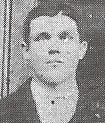
Private Paddy Murrin

Patrick Murrin, Private. Son of John and Anne Murrin (nee McIntyre), New Row, Killybegs, and an uncle of Joey Murrin. Brother of Maryanne, John, Charles, James and Joseph. Paddy was a prominent player with Killybegs Emeralds AFC. Prior to enlisting in the Army he worked as a Porter at the Railway Station where his brother Jim was also employed. Paddy walked to Dunkineely to enlist. No 2247. 1st Battalion, Irish Guards. Died 5th April 1916. Age 32. Interred Guards cemetery, Windy Corner, Cuinchy – Pas de Calais. I.F.20.

James McCullagh, Lance Corporal. Son of Andrew and Mary Ann McCullagh, Aghayeevoge, and brother of John, Bessie, Andrew, Thomas, Susan, and Janie. No. 439274. Canadian Infantry, Manitoba Regiment. Died 27th May 1916. Age 24. Interred Maple Copse cemetery, Zillebeke, Ieper, West-Vlaanderen. II.A.2. When James joined the Canadian Army both his parents had died – his father in August 1914 at 95, and his mother in October of the same year, aged 68.

Arthur McShane, Lance Corporal. Son of Joseph and Minnie McShane, 35, West College Street, Anderston, Glasgow. Native of Killybegs. 201158. 1st/5th Battalion, Highland Light Infantry. Died of wounds, 28th August 1918. Age 22. Interred Ligny-Sur-Canche British cemetery, Pas de Calais. A.25.

Charles Francis O’Donnell, Lance Corporal. Born Killybegs. Son of Anthony and the late Margaret (nee McMonigle, daughter of Pat McMonigle and Catherine McShane), Elmwood Terrace. S/29108. 2nd Battalion, Rifle Brigade. Formerly King Edward’s Horse. Killed in action in France, 19th November 1917. Age 33. Charles was a grand-uncle of Mary and Kathleen Cunningham, Elmwood Terrace. Prior to enlisting in the Army he worked as a clerk at the Railway Station beside his home. His mother, Margaret, died during a concert in the Foresters’ Hall in March 1905.

G. O’Malley, Private. Son of George P. and Hannah O’Malley, Killybegs. 73501. 28th Battalion, Canadian Infantry, Saskatchewan Regiment. Killed in action 18th July 1918. Age 38. Interred Wanquetin Communal cemetery extension, Pas de Calais. II.B.16.

Albert Victor Patton, Sapper. Son of Frederick Thomas (Coastguard) and Pricilla Patton, Killybegs. Born 24th December 1892.

William James Pudner, Corporal. Son of Thomas (Coastguard carpenter) and Mary Maria Pudner (nee Cooke), 13, St Aubyn Street, Devonport. Born, Coastguard Station, Killybegs 19th March 1889. 8342. 1st Battalion, Devonshire Regiment. Died 21st October 1914.

Daniel Quigley, Private. Son of Joseph and Annie Quigley (nee Gallagher) Bridge Street, Killybegs. Born 4th June 1896. 7606. 2nd Battalion Cameronians, Scottish Rifles. Died 24th May 1915. Interrerd Merville Communal cemetery, Nord, France. III.G.7.  Daniel should not be confused with Dan Quigley, proprietor of Quigley’s store on Bridge Street, who married Elizabeth Conwell of Killybegs (she lived where Hegartys’ shop is located). Dan was a nephew of Cardinal O’Donnell, and was a member of the Killybegs Red Cross, Lighting Committee, A.O.H., Sports Committee, Killybegs A.F.C., and so on. Rosanna McGinn-Boyle remembers him well, and he is mentioned several times in the new book, St Columba’s Industrial School. Packie Manus Byrne bought his first ‘penny whistle’ in Quigley’s shop. Dan died on 21st January 1946.

Alexander Watson, Private. Son of James and Mary A. Watson,(nee Welch), Largy, Killybegs. 634171. Princes Patricia’s Canadian Light Infantry, Eastern Ontario Regiment. Died 26th August 1918. Age 27. Interred Feuchy Chapel British cemetery, Wancourt, Pas de Calais. V.J.9.

Richard Williams, Rifleman. Son of Thomas and Anne Williams, 14 Westland Gardens, Belfast. Born in Killybegs. 6390. 2nd Battalion, Royal Irish Rifles. Enlisted Belfast. Died 6th December 1918. Age 28. Interred Wulverghem-Lindenhoek Road Military cemetery, Heuvelland, West-Vlaanderen, Belgium. V.A.18. Richard’s father, Thomas, was a Petty Officer and gunner on HM ships Victoria, Imogene and Argus which were stationed at Killybegs from 1879 to 1889. His mother was Anne Boyd, daughter of James Boyd who owned Boyd’s public house, Killybegs. It can be seen in some of the Lawrence photographs, – the last building to stand in the centre of the Diamond. The Boyd family emigrated to New York where their descendants live.

Frank O’Hara, born 10 February 1886, Dublin, died 4 October 1917, aged 30. Regiment: Royal Naval Reserve. Service number: 10217 D.A. (Po.) Deck hand, H.M.S. Colleen. Killed accidentally on board.  Buried in Killybegs Catholic cemetery, (old), about 12 yards west of Stile entrance. Next of kin listed as Father, John, Killybegs.  (Ireland- National Roll of Honour, 1914-1921)